







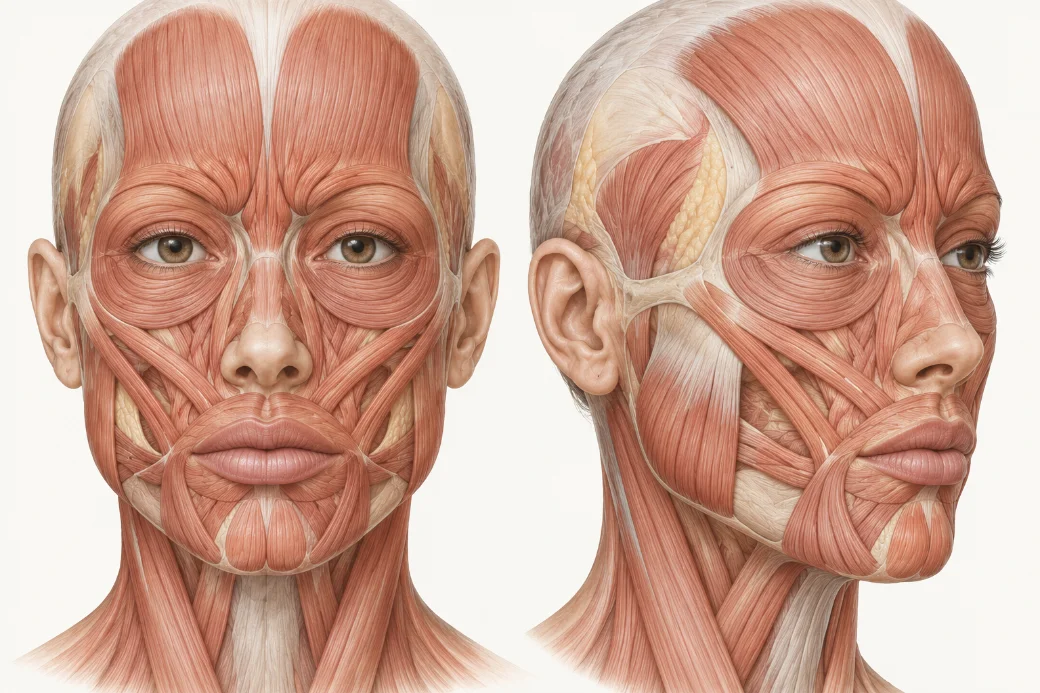
Neurotoxin injection is taught almost everywhere as a set of points. Points are easy to teach, easy to photograph and easy to reproduce, and they work for the average face. The trouble is that no patient is the average face.
The injectors who get consistent results are not using better points. They are reasoning about muscles — which ones are pulling, in which direction, at what depth, against which opposing muscle, and in a face whose anatomy may differ substantially from the diagram. This cluster is that body of reasoning, drawn from the teaching of Dr. Chris Croley and Melissa Pulcini-Buttine.
Start here: most complications are diffusion
Before any regional anatomy, one correction reframes everything else.
When a neurotoxin result goes wrong, the reflex explanation is that the injection was in the wrong place. Usually it was not. Spread from a correctly placed injection is the more common mechanism, and it is governed by variables the injector actually controls — volume, concentration, depth and proximity to the target's borders.
That distinction matters because the two problems have opposite fixes. A misplacement is corrected by moving the point. A diffusion problem is corrected by changing volume or depth while leaving the point exactly where it was. Most neurotoxin complications are diffusion, not misplacement works through the four determining variables and three worked examples.
Assessment: treat movement, not dots
A chart assumes a face. Watching the face in front of you tells you what the chart cannot: which muscles actually dominate, how strong each one is, and where this individual's muscle borders sit.
Four guides build the assessment habit. Treat movement, not dots is the sequence itself and explains why the same injector produces different results on different faces. Facial palpation and expression assessment adds what your hands find, and why the examination is repeated supine.
Two structural references sit underneath both. The four-layer model of facial aging reads a face from bone to skin and explains why the sequence runs deep to superficial. The product belongs in the plane of the problem is the rule that follows from it, with the two failure modes it prevents.
The upper face: an agonist-antagonist system
The frontalis is the only elevator of the brow. The glabellar complex depresses it. Treating either without accounting for the other is the origin of most upper-face disappointment.
Agonist and antagonist states the pair precisely, explains why depressors are usually addressed first, and sets out the failure modes of treating one side of a balanced pair.
Three guides cover corrugator reality. One muscle, two depths explains why the muscle does not sit at a single depth across its course and what is lying on top of it. Horizontal or vertical tails covers how much orientation varies between patients and why a standard glabellar pattern is a starting assumption rather than a plan. Together they answer the patient who says their last injector did it differently.
Two more address the frontalis specifically. The line of convergence is the landmark that decides how high placement can safely go, and how to find it on a live face. Spock brow after Botox explains why cautious injectors produce it more often than aggressive ones, and how to prevent rather than chase it.
When the brow does drop, the differential matters. Brow ptosis versus eyelid ptosis separates two complications with two different mechanisms, two different chairside tests and two different honest answers about what can be done.
The lateral face
Chasing lines into the lateral cheek reaches muscles that were never the target. The crow's feet trap traces the causal pathway from a reasonable-looking lateral injection to a zygomaticus complication, and gives five boundary rules that prevent it.
The lower face is less forgiving by design
The upper face tolerates imprecision that the lower face does not, and the reason is anatomical rather than a matter of skill.
Less forgiving by design explains what "forgiving" actually means, the specific anatomy that removes the margin, and the complication that defines the region. Depressor anguli oris, DLI and mentalis covers three overlapping muscles whose consequences when affected are not graded — they are distinct, and each is recognisable.
Extending below the jawline, the platysma Nefertiti lift follows the muscle from clavicle to modiolus and is honest about what the technique is genuinely good for versus what it is marketed as.
The masseter: a region with its own rules
Masseter treatment is the most requested lower-face neurotoxin procedure and the one where assessment most often gets skipped.
The bizygomatic-to-bigonial ratio is the measurement pair that defines the slimming candidate, with a necessary caution about normative thresholds and the clench-release-palpate examination that goes with it.
Mapping the masseter establishes the borders on a live face, the tragus-to-commissure line, what sits above it, and the depth error that is unique to this region.
Two clocks, one muscle separates the functional endpoint from the aesthetic one — they are different biological processes on different timelines, and conflating them produces a patient who thinks the treatment failed.
Finally, the screening question that protects your outcomes: who should not be slimmed covers why atrophy can make a jowl look worse, and the pause criteria worth applying before a first treatment.
How to use this cluster
Read diffusion first — it reframes how you interpret every complication that follows. Then the assessment group, which is what makes the regional material usable on a real patient. After that, work by region as your practice requires.
Specific dosing, unit distribution and injection coordinates are taught hands-on rather than published here. What is published is the reasoning that decides where those numbers should go.
Every guide in this cluster
 Clinical GuideMost Neurotoxin Complications Are Diffusion, Not Misplacement — Rethinking Root CauseMost neurotoxin complications come from diffusion into an adjacent muscle, not from injecting the wrong site. Here is how to tell which
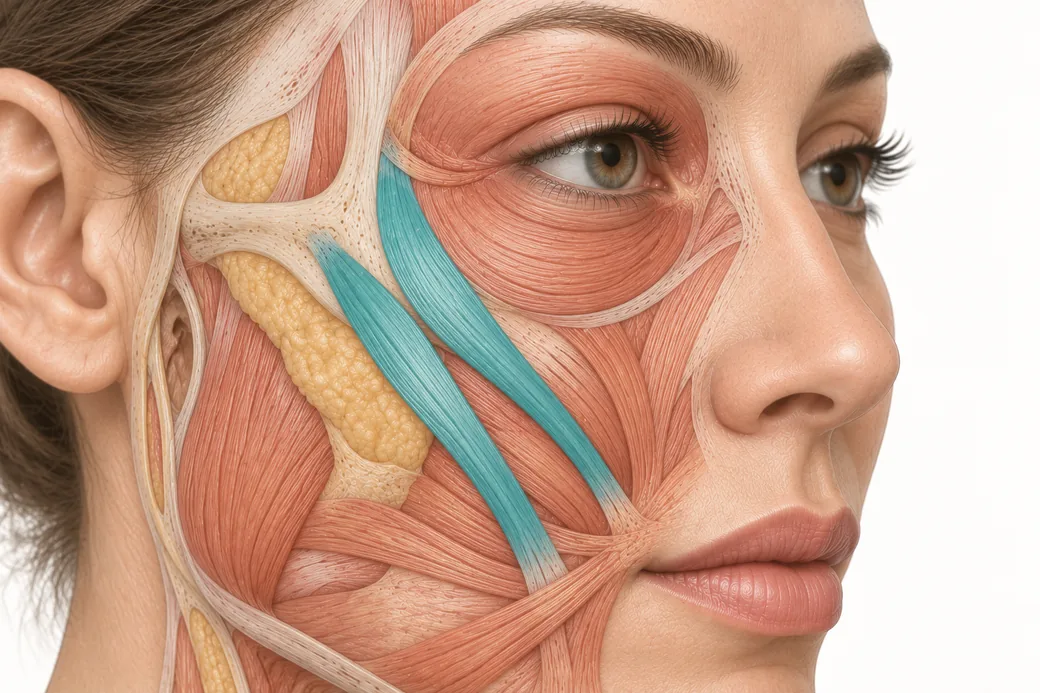 Clinical GuideThe Crow's Feet Trap — How Chasing Lateral Cheek Lines Reaches the ZygomaticusA zygomaticus botox complication after crow's feet treatment has one usual cause — chasing lateral cheek lines too low and too deep. Th
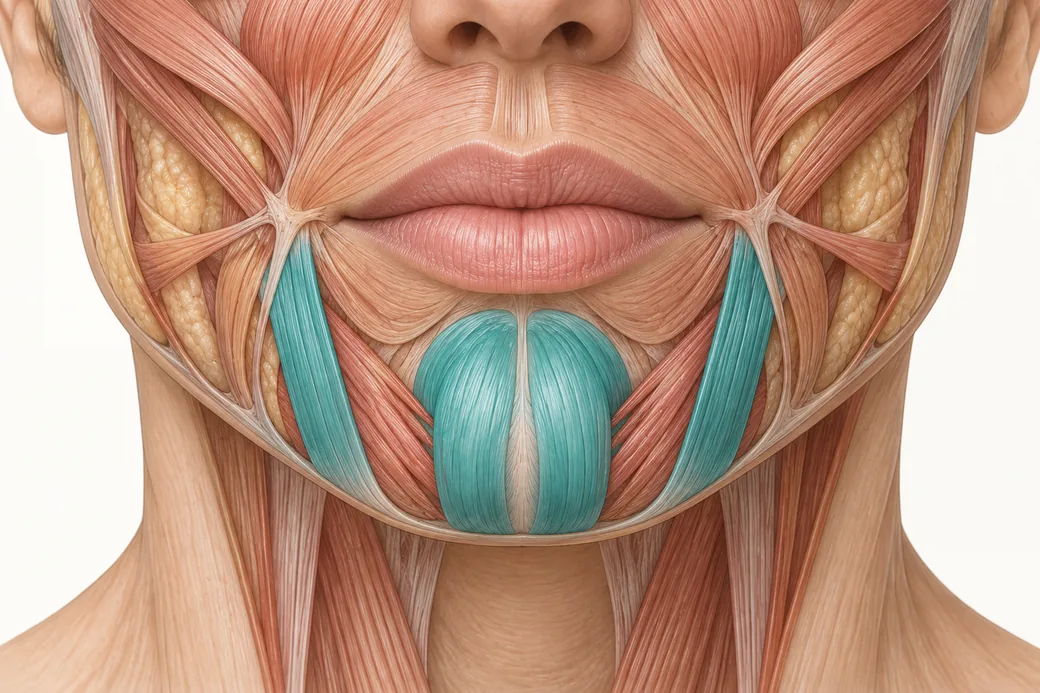 Clinical GuideDepressor Anguli Oris, DLI and Mentalis — Three Overlapping Muscles, Millimetres ApartDepressor anguli oris anatomy is a depth problem, not a map problem. The DAO, DLI and mentalis overlap in layers, and confusing them al
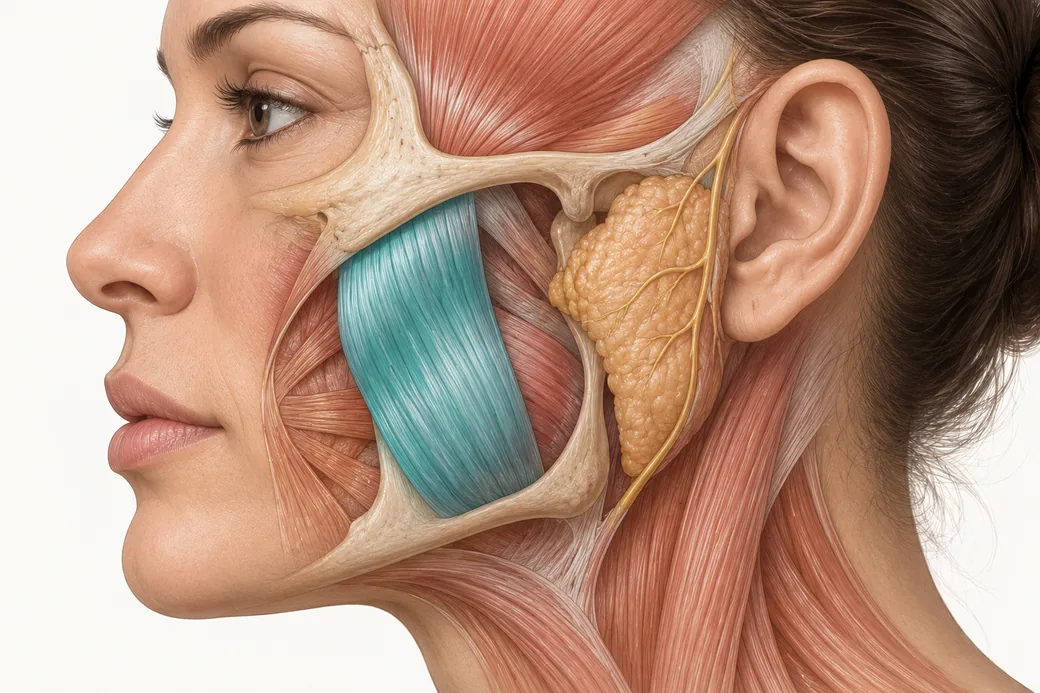 Clinical GuideTwo Clocks, One Muscle: The Masseter Botox Results TimelineThe masseter botox results timeline runs on two clocks — symptom relief in 1–2 weeks, visible facial slimming over months. How to couns
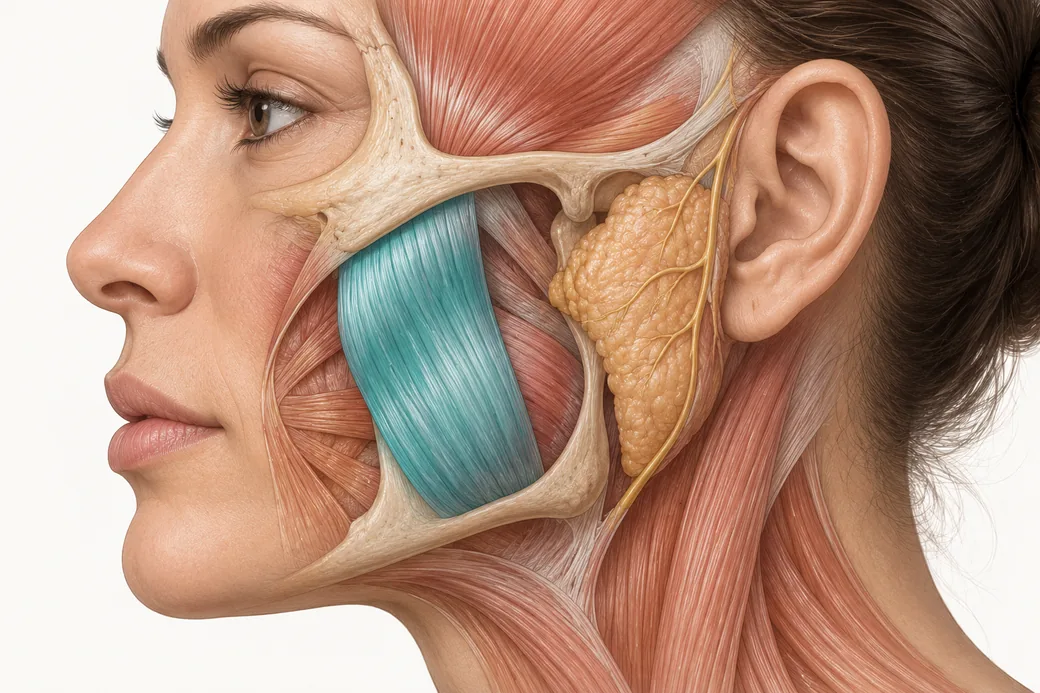 Clinical GuideThe Bizygomatic-to-Bigonial Ratio: Assessing the Lower-Face Slimming CandidateUse the bizygomatic to bigonial ratio plus a clench-release-palpate exam to select lower-face slimming candidates — a quantitative mass
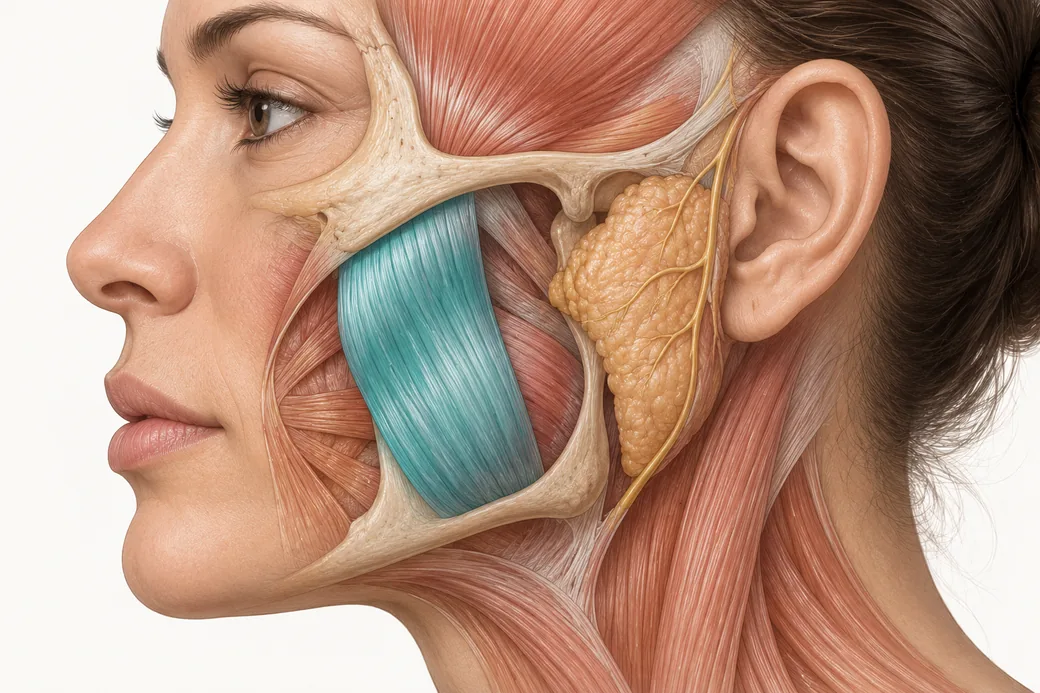 Clinical GuideMapping the Masseter: Borders, the Tragus-to-Commissure Line, and What Sits Above ItThe masseter injection safe zone in full — layered anatomy, the tragus-to-commissure line, anterior and posterior borders, depth, and t
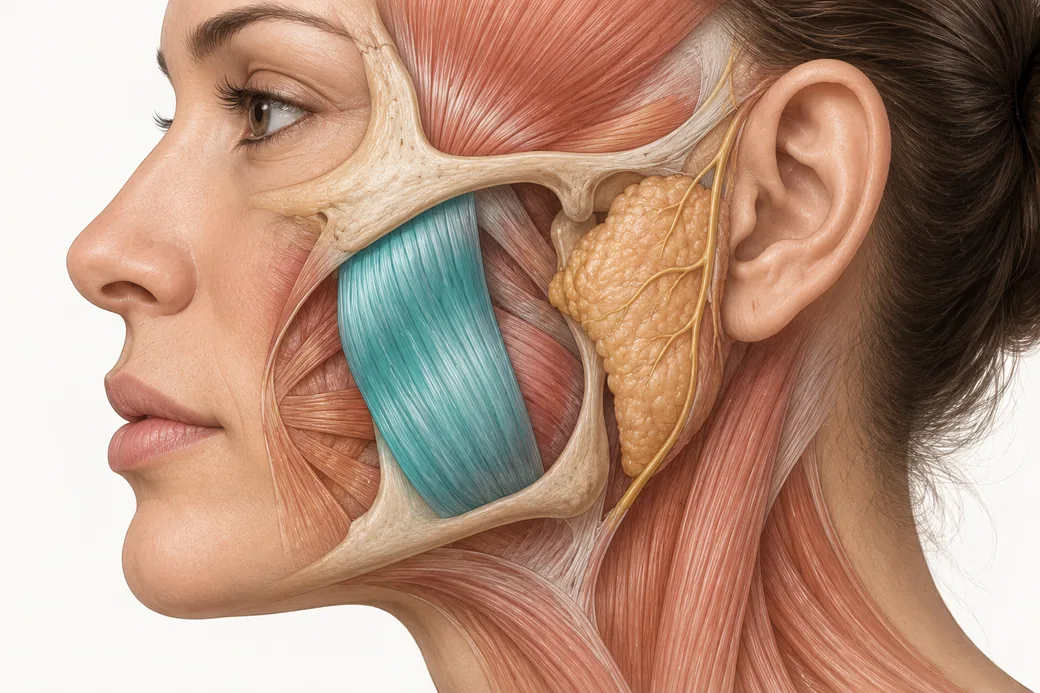 Clinical GuideWho Should Not Be Slimmed: Jowls, Skin Laxity and the Masseter Atrophy Trade-OffMasseter botox and jowls — the muscle provides structural bulk, so atrophy can worsen laxity. Candidate screening, combination therapy
 Clinical GuideBrow Ptosis vs Eyelid Ptosis: Two Toxin Complications, Two Different MusclesBrow ptosis and true eyelid ptosis look alike to the patient but arise from different muscles. The frontalis vs levator palpebrae diffe
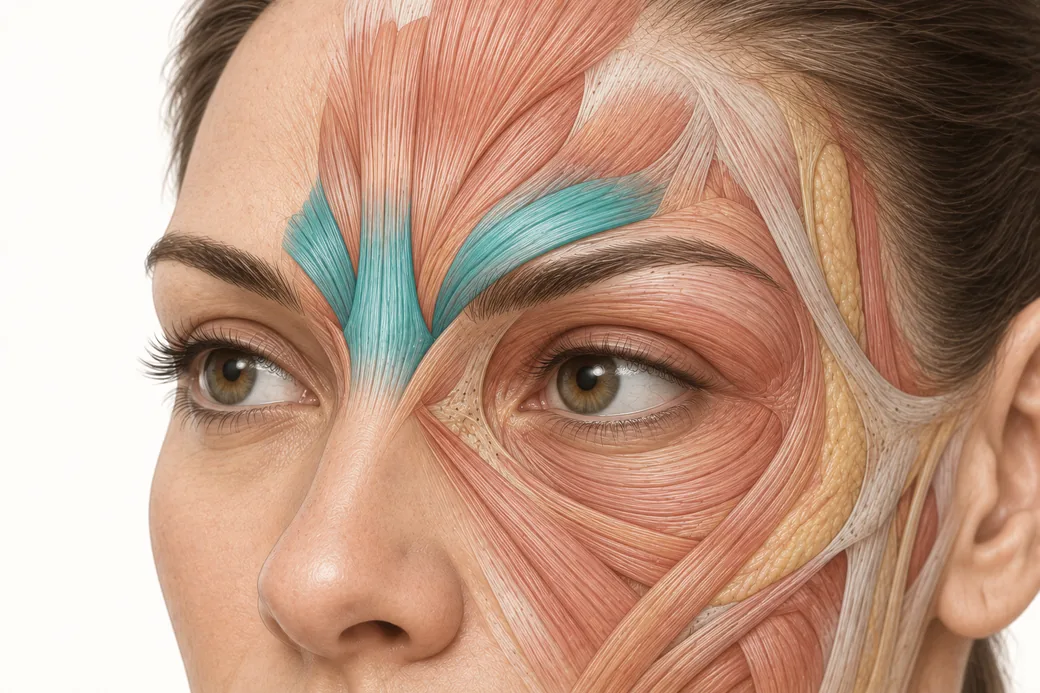 Clinical GuideOne Muscle, Two Depths: The Corrugator Injection Depth Rule and the Anatomy Behind ItThe corrugator needs two injection depths, not one. The anatomy of the medial head, the lateral tail, frontalis overlap and the antagon
 Clinical GuideTreat Movement, Not Dots — Dynamic Facial Assessment for NeurotoxinDynamic facial assessment for neurotoxin is what a chart cannot give you: reading movement, vectors and asymmetry on the face in front
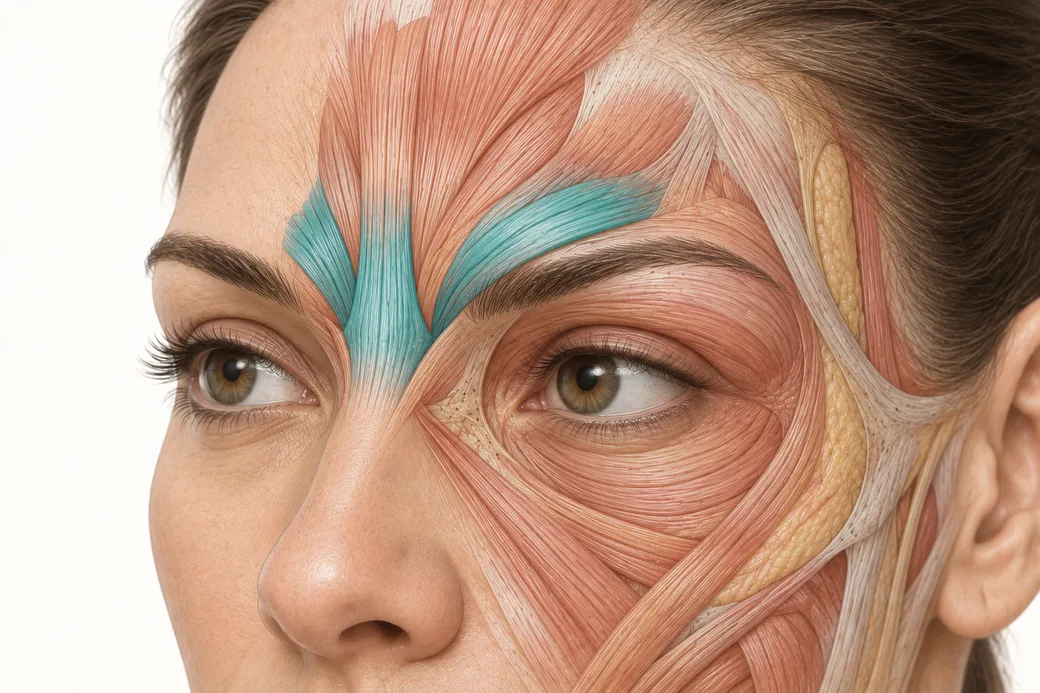 Clinical GuideAgonist and Antagonist — Why the Frontalis and Glabellar Complex Are Planned as One PairThe frontalis and glabellar complex are an opposed muscle pair. Why treating one without the other unbalances the brow, and why depress
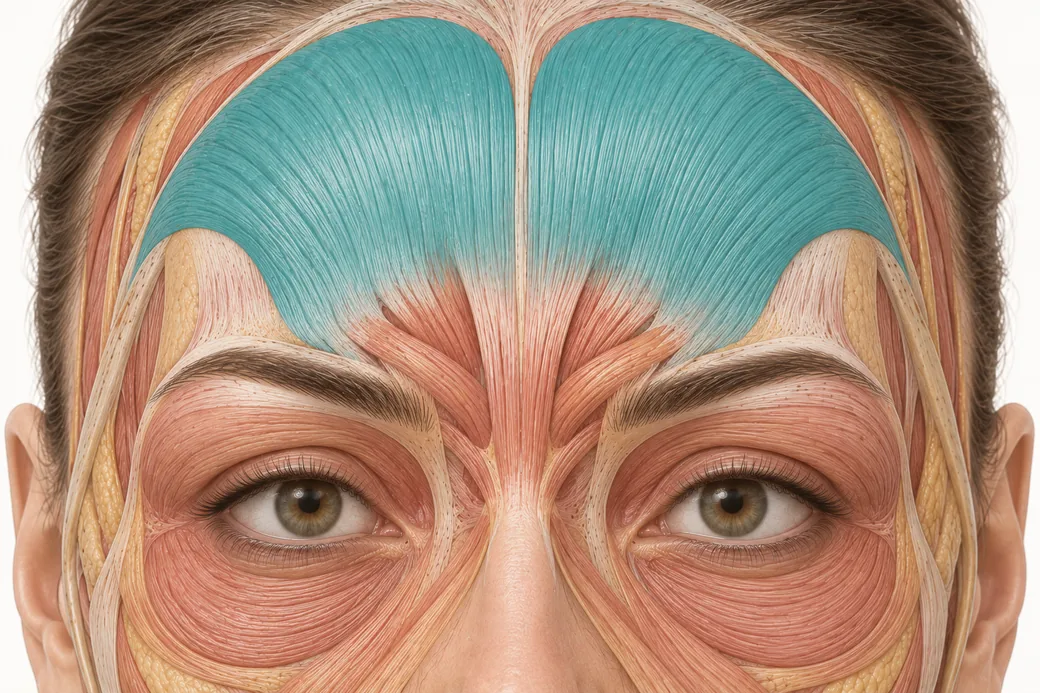 Clinical GuideSpock Brow After Botox — The Compensation Pattern Behind an Untreated Lateral FrontalisA spock brow after botox is compensation, not misplacement. How untreated lateral frontalis fibres recruit when the medial forehead is
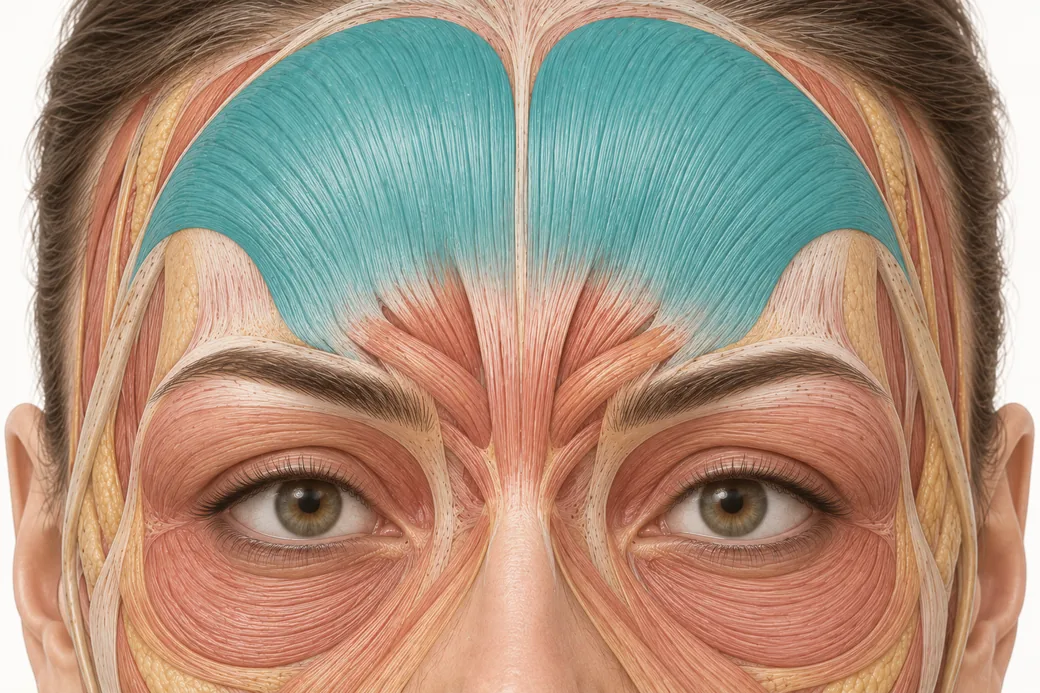 Clinical GuideThe Line of Convergence — The Frontalis Landmark That Decides Whether You Lift a Brow or Drop ItThe line of convergence is where frontalis movement reverses direction. How to identify it dynamically, and what the evidence does and
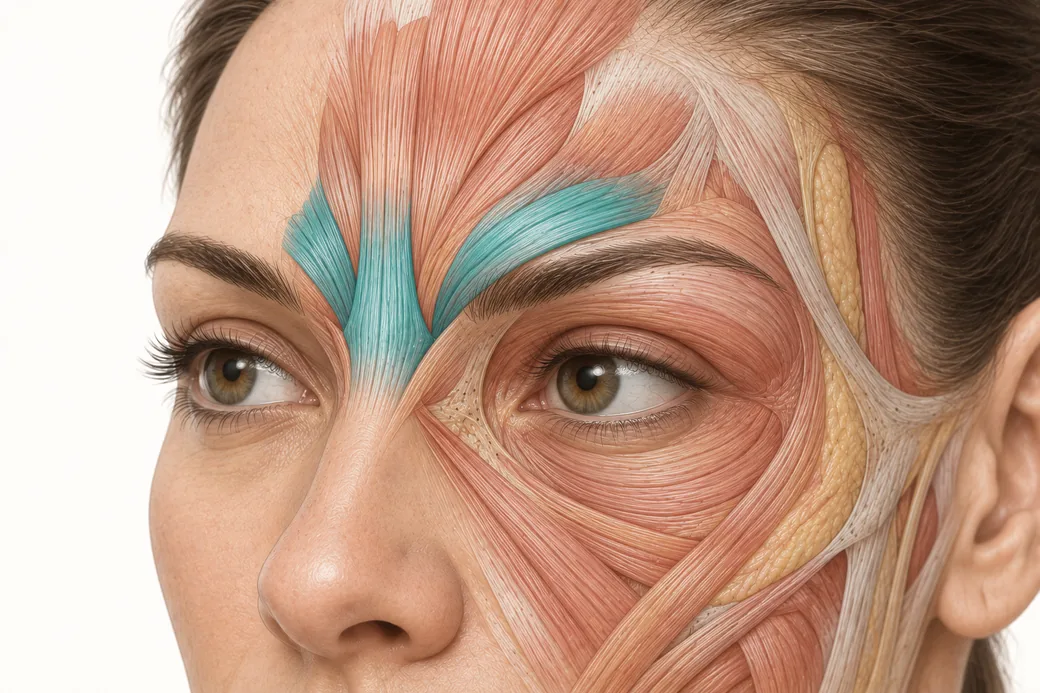 Clinical GuideHorizontal or Vertical Tails — Corrugator Muscle Variation, and Why Two Injectors Can Both Be RightCorrugator muscle variation explains why two injectors treat the same glabella differently, and how to read tail orientation on a movin
 Clinical GuideLess Forgiving by Design — Lower Face Neurotoxin and the Real Margin for ErrorLower face neurotoxin is less forgiving for structural reasons. What the margin for error actually is below the commissure, and what th
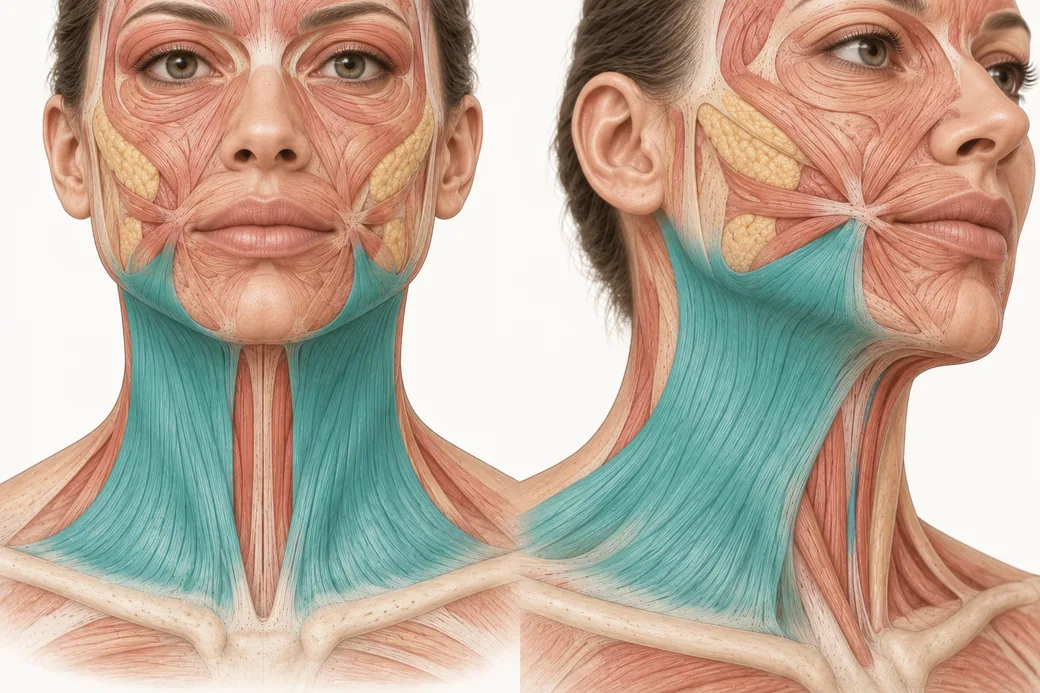 Clinical GuideThe Platysma Nefertiti Lift — From Clavicle to ModiolusThe platysma runs from the clavicle to the mandible, lower lip and modiolus. The anatomy behind the Nefertiti lift, and where the evide
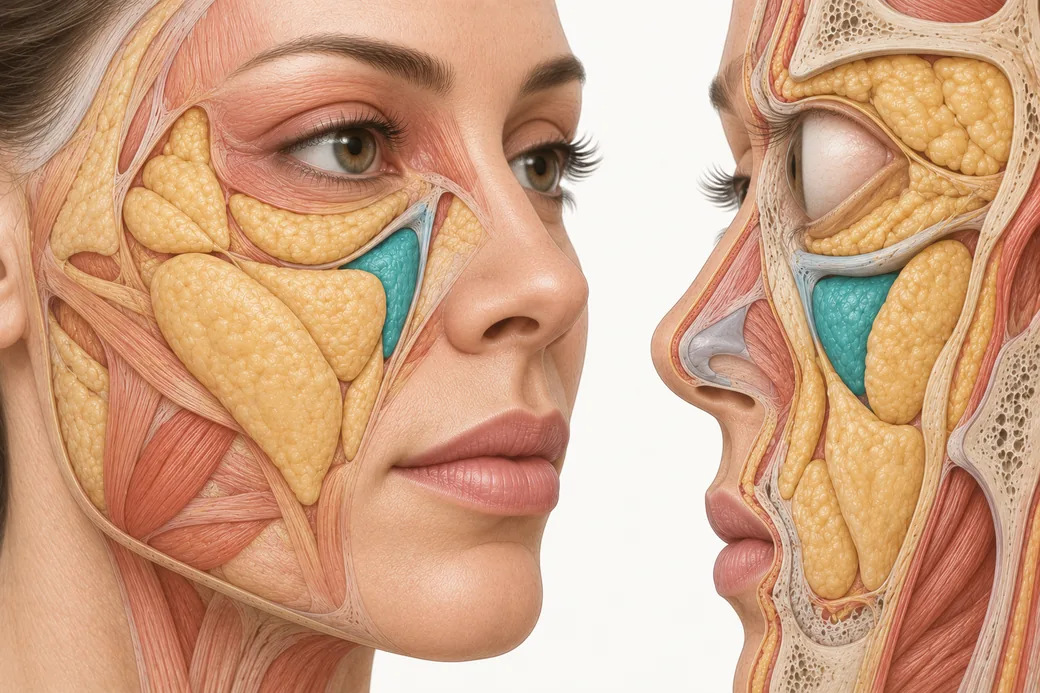 Clinical GuideThe Four-Layer Model of Facial Aging: Reading a Face from Bone to SkinThe four-layer model of facial aging — bone, fat, muscle and ligament, skin — used as a deep-to-superficial diagnostic sequence that se
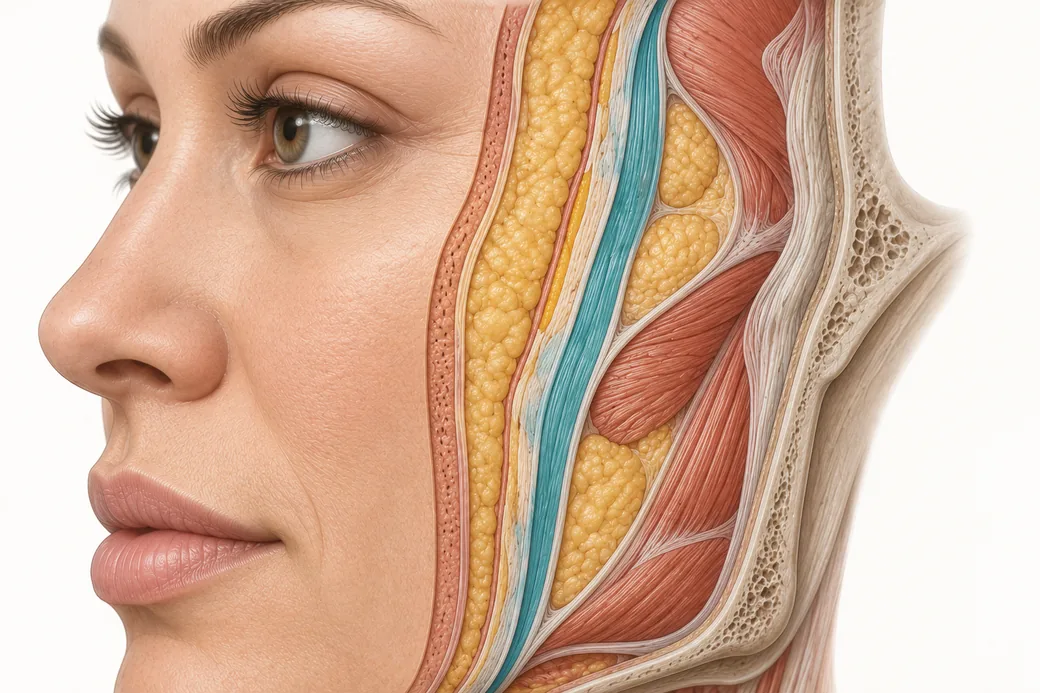 Clinical GuideThe Product Belongs in the Plane of the ProblemInjection plane selection, stated as one rule: the product belongs in the plane of the problem. The two failure modes, and how to know
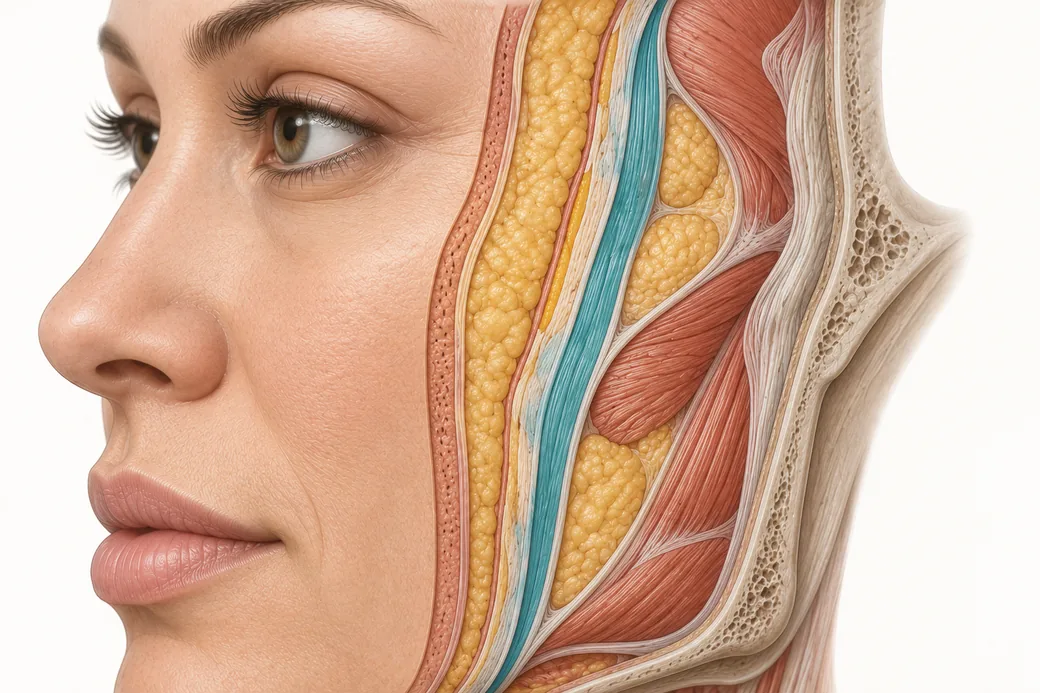 Clinical GuideAnatomy in Motion: Facial Palpation and Expression AssessmentFacial palpation assessment and expression reading for injectors — what your hands find that a diagram cannot, and the animation set to
Train with Empire
This guide is clinical education. The technique behind it is taught hands-on, on live patients, with faculty beside you.
Explore Botox Training & Certification → Claim Your Prize!