







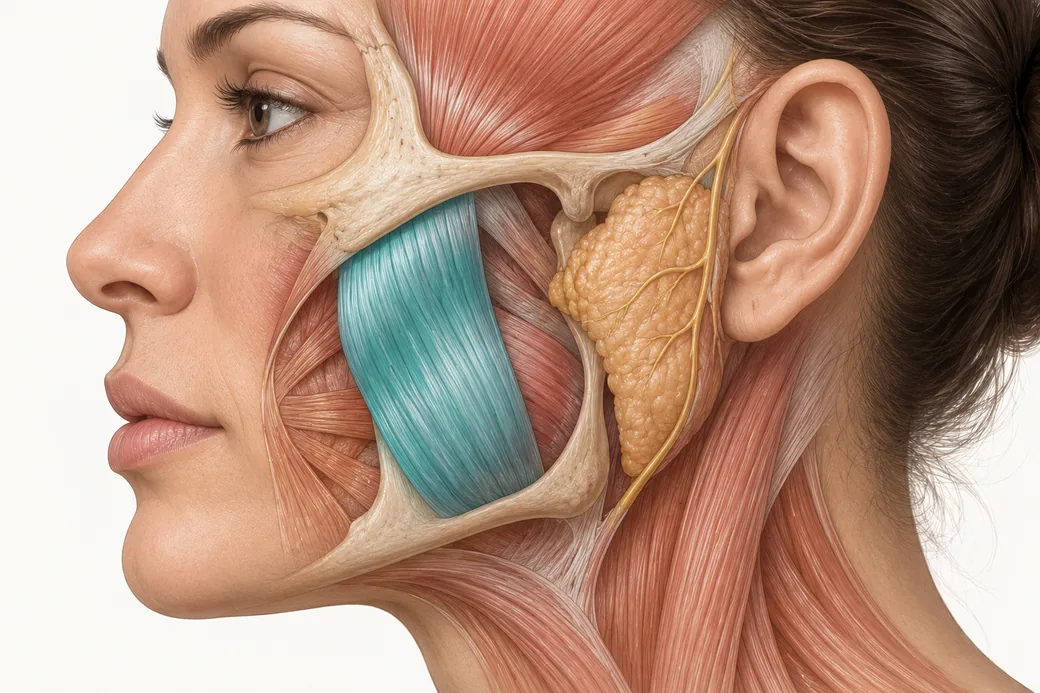
The masseter botox results timeline is the single most useful thing you can hand a patient at the consultation, because the same drug in the same muscle at the same dose produces two completely different answers depending on what you are treating. Treat the masseter for bruxism and the patient feels better in one to two weeks. Treat the same masseter for lower-face slimming and the patient sees nothing at two weeks, and that is not a failure — that is the mechanism working normally. Injectors who do not separate these two clocks at consultation spend the next month fielding phone calls from patients who believe their treatment did not work.
I treat this muscle constantly in Empire's advanced trainings, and it is one of the most common requests we get from our dental associates when they come in to learn neurotoxin. It is also the treatment where expectation-setting does more work than technique.
The two endpoints are not the same biological event
Chemodenervation and atrophy are different phenomena separated by months.
Endpoint one: force reduction. Botulinum toxin type A cleaves SNAP-25, blocking acetylcholine release at the neuromuscular junction. The masseter cannot generate its previous contractile force. That is a pharmacologic event on the ordinary neurotoxin schedule — clinical onset over several days, meaningful effect by one to two weeks. For a bruxing or clenching patient, that force reduction is the treatment. Nothing has to change shape for them to stop waking with jaw pain. This is the same clock a forehead or glabella patient is used to, which is exactly why they assume it applies to their jawline.
Endpoint two: volume reduction. Slimming requires the muscle to lose bulk. A denervated, unloaded muscle undergoes disuse atrophy, and disuse atrophy is a slow remodelling process, not a switch. In a review of 20 published studies of masseter neurotoxin, Ghatge and colleagues reported muscle thickness reductions of roughly 22–31% measured at three months by ultrasound and CT, with dosing across the literature clustering at 20–40 units per side and the explicit observation that doses below 20 units per side are inadequate (Ghatge et al., Bioinformation, 2023).
When patients worry about the difference between "my Botox worked" and "my face looks different," they are colliding these two endpoints. Your consultation has to pull them apart.
These figures reflect Dr. Croley's clinical practice as taught in Empire Medical Training's hands-on curriculum. Technique is learned under supervision; this article is educational and is not a substitute for training.
What the measurement literature actually shows — and where it disagrees
This is worth knowing because the evidence is not perfectly tidy, and a clinician who understands the disagreement counsels better than one who quotes a single number.
Studies that measure muscle thickness or volume — ultrasound, CT, three-dimensional volumetric imaging — generally show progressive reduction across the first twelve weeks, with the 22–31% figures landing at the three-month mark.
Studies that measure external surface contour can peak earlier. A prospective 3D structured-light scanning study of eleven bruxism and myofascial pain patients (30 U per masseter plus 20 U per anterior temporalis) found inward surface displacement of −0.716 mm at one month and −0.847 mm at three months, with no statistically significant further change between the two timepoints (Val et al., Toxins, 2026). Most of the measurable surface change had already happened by month one.
Those findings are less contradictory than they look. Sub-millimetre surface displacement is real and measurable by a scanner; it is not what a patient sees in a mirror or a photograph. The visible narrowing of a heavy lower face is a cumulative effect built over repeated treatment cycles, which is why the retreatment schedule matters as much as the first injection. The honest counselling position is the one I teach: tell the facial-slimming patient months, plan for repeated treatments, and do not promise a specific millimetre figure at a specific week.
The bruxism patient and the slimming patient need different consultations
The bruxism or clenching patient. They present with jaw pain that is worse on waking, tooth wear, headache on the side of the head, or a dentist's referral. Tell them one to two weeks, same as any other neurotoxin. Tell them their jaw may feel tired or their bite may feel weaker for a while, and that this is expected. Do not promise their face will change shape — if it does, it is a side effect of the therapeutic treatment, and for some of these patients it is an unwanted one. Our existing clinical material on botox for jaw clenching and the broader management of bruxism covers the symptomatic indication in more depth.
The facial-slimming patient. They present with a lower face they feel is too wide or too square, often a female patient asking for a heart-shaped or more tapered contour. They will come in expecting exactly what they get from their forehead treatment: inject now, look different next week. They will not get that. The consultation script that actually works is the gym analogy:
This muscle is large, the same way a biceps is large. If I quit going to the gym, my biceps do not shrink next week. But if I do not go to the gym for months, they get smaller and smaller, and it becomes harder to build them back to the size they were. Your masseter behaves the same way. Once we dose it and you stop chewing aggressively and stop clenching, it will shrink — but it will take months.
That analogy does a second job. It explains, without extra effort, why they will need repeated treatments and why the spacing of those treatments is not negotiable.
Where the timeline puts your appointments
The calendar I teach follows directly from the biology:
- Consultation and baseline. Full photographic documentation before anything is injected, including animation views with the patient clenching. You cannot demonstrate months-long change without a baseline captured at the same angles.
- Week 1–2. The bruxism patient reports symptomatic change here. The slimming patient reports nothing visible here, and should have been told so. If you have not pre-empted this call, you will get it.
- Month 3. Second treatment. The muscle has had a denervation cycle under reduced load and is beginning to recover function; retreating at this point prevents it from rebuilding.
- Month 6. Formal reassessment with repeat standardised photography. This is where I expect to see the majority of the patient's result, and where the before-and-after comparison finally becomes persuasive.
Booking the month-three and month-six appointments at the first visit converts an abstract promise into a plan, and it materially improves adherence to a schedule the result depends on.
Why spacing decides whether the atrophy holds
Ghatge's review found that the reduction in mastication force after masseter neurotoxin lasts roughly 8–12 weeks, and recommended repeat treatment at regular intervals — on the order of two to four sessions a year — to maintain the result. The same review cites a long-term series in which patients treated over 52 months received between one and eight injections at intervals ranging from one to nineteen months, and mean masseter thickness fell as the number of treatments accumulated.
That is the clinical point. A single treatment produces a reversible reduction. Durable slimming is a cumulative effect of keeping the muscle under-loaded across several cycles. If the toxin wears off at ten weeks and the patient does not return for five months, the muscle spends most of that window loading normally and rebuilding — and you are starting close to where you began. Back to the gym: returning after four to six weeks away is easy, returning after six months is a rebuild.
What can go wrong on each clock
Two timeline-specific failure modes are worth naming.
Premature judgement of failure. A slimming patient assessed at week four will look untreated, and an injector who responds by escalating the dose or adding injection points is solving a problem that does not exist. Assess contour at month three and month six, not at week two.
Atrophy arriving faster than the skin can follow. The masseter is not just a motor; it is structural bulk sitting over the mandibular ramus. As it shrinks, the soft tissue above it has to retract to match. A younger patient with good skin quality will retract and keep a sharp jawline. A patient in their fifties or sixties, or one with significant weight-loss history and reduced elasticity, may not — and the slimming result arrives together with visible sagging. In a series of 2,036 masseter neurotoxin sessions, sagging was recorded after 0.20% of treatments and sunken lateral cheek after 0.44% (Peng and Peng, Journal of Cosmetic Dermatology, 2018). Low-incidence, but entirely predictable in the wrong candidate, and worth discussing before you inject rather than at month six. The same issue drives our material on facial volume loss, and the combination-therapy options — poly-L-lactic acid, hyperdilute calcium hydroxylapatite, radiofrequency, microneedling — belong in the same conversation.
What this changes at the chairside
Three things you should do differently starting at your next masseter consultation:
- Ask the indication out loud and write it down. "Are we treating your jaw pain, or are we changing the shape of your lower face?" The answer determines which timeline you quote, which endpoint you photograph, and how you define success at follow-up.
- Quote the right clock, in weeks or in months, and never in both. One to two weeks for symptoms. Months, plural, and repeated treatments, for contour. Give the gym analogy verbatim; patients remember it.
- Book month three and month six before they leave. The result depends on cadence, and cadence depends on the appointment existing.
Masseter neurotoxin is a technically straightforward injection sitting on top of a genuinely difficult consultation. It is worth noting that this muscle behaves unlike the upper-face targets most injectors learn first, where the relationship between dynamic and static wrinkles sets expectations on a familiar two-week schedule. The masseter does not play by those rules, and the injectors who get consistently good outcomes are the ones who say so before the needle comes out.
If you want to work through masseter assessment, marking and injection on live patients under supervision, the muscle is covered in Empire's Advanced Botulinum Toxin & Filler Training and in Cosmetic Neurotoxins Training.
About the author
Dr. Chris Croley — Chief Medical Officer, Empire Medical Training. The clinical approach described here is what he teaches in Empire's hands-on neurotoxin curriculum.
Related guides in this cluster
Part of Facial Muscle Anatomy for Neurotoxin.
 Clinical GuideMost Neurotoxin Complications Are Diffusion, Not Misplacement — Rethinking Root CauseMost neurotoxin complications come from diffusion into an adjacent muscle, not from injecting the wrong site. Here is how to tell which
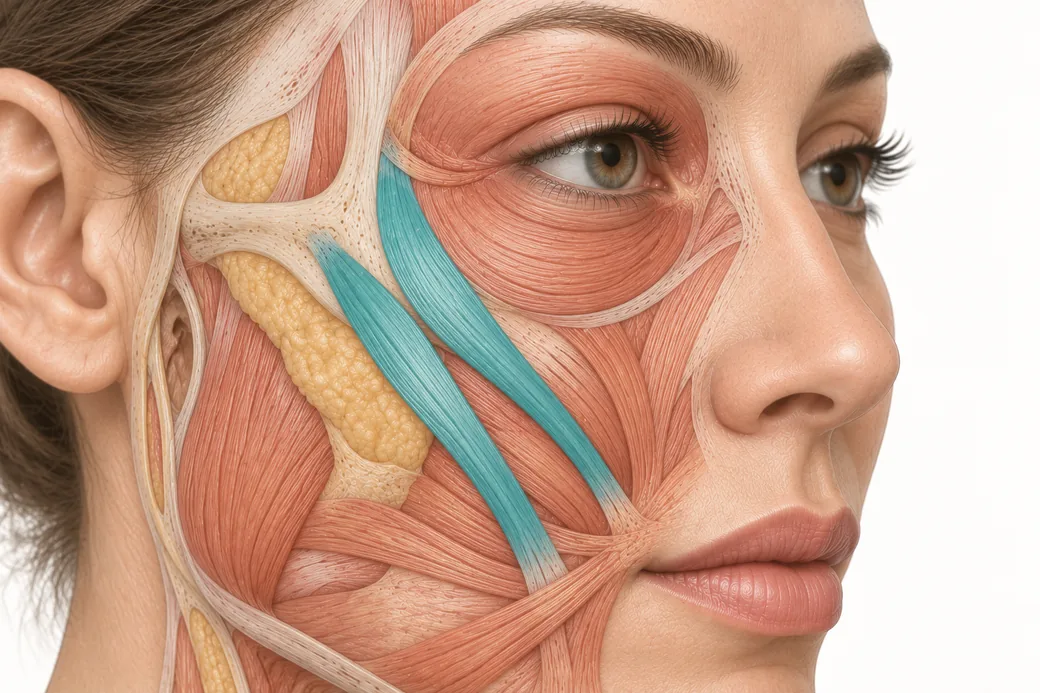 Clinical GuideThe Crow's Feet Trap — How Chasing Lateral Cheek Lines Reaches the ZygomaticusA zygomaticus botox complication after crow's feet treatment has one usual cause — chasing lateral cheek lines too low and too deep. Th
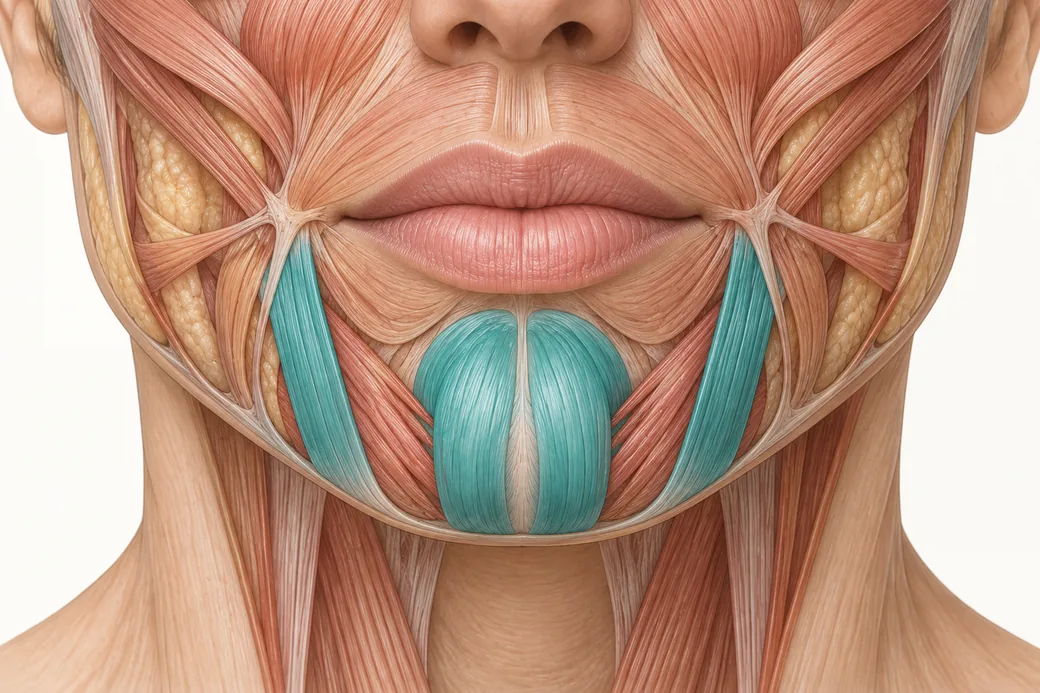 Clinical GuideDepressor Anguli Oris, DLI and Mentalis — Three Overlapping Muscles, Millimetres ApartDepressor anguli oris anatomy is a depth problem, not a map problem. The DAO, DLI and mentalis overlap in layers, and confusing them al
Train with Empire
This guide is clinical education. The technique behind it is taught hands-on, on live patients, with faculty beside you.
Explore Botox Training & Certification →Disclaimer
This article reflects the clinical opinions and experience of Dr. Chris Croley, Chief Medical Officer, Empire Medical Training, an independent faculty member contributing to Empire Medical Training's curriculum. The views expressed are the author's own and do not necessarily represent those of Empire Medical Training.
It is professional education, not medical advice, and is no substitute for hands-on training or independent clinical judgment. Licensed clinicians remain responsible for their own patient selection, technique and outcomes, for verifying current product labelling, and for practising within their scope and applicable law. Empire Medical Training accepts no liability for reliance on this content.
 Claim Your Prize!