








Submental contouring looks like one of the simplest procedures in aesthetics. A patient dislikes the fullness under their chin, there is an approved injectable that destroys fat cells, and the treatment area is small and accessible.
Almost every disappointing submental result comes from skipping the assessment, not from the injection. The product works. What varies is whether the thing under the chin was fat in the first place, whether the skin overlying it can retract once the fat is gone, and whether the injector understood which plane they were in.
This cluster is built around that assessment. Every section opens into a deeper guide.
The mechanism decides what the treatment can and cannot do
Deoxycholic acid is a bile acid. In tissue it disrupts adipocyte membranes, and the cells it lyses do not come back. What follows is an inflammatory clearance process — macrophages arrive, debris is removed, and the tissue remodels over weeks.
Two consequences matter clinically and both are counterintuitive.
First, the swelling is the treatment, not a side effect of it. An inflammatory response is the mechanism by which lysed fat is cleared. A patient who swells dramatically is not having a bad reaction; they are having the response the drug is designed to produce. How that is explained at consent determines whether the patient believes you afterwards.
Second, part of the visible improvement is not fat loss at all — it is the fibrous remodelling that follows. That is why results continue to develop past the point where the fat itself is gone.
How deoxycholic acid works covers the molecule, why it targets fat preferentially, and the histology day by day.
The pinch test is a diagnostic, not a gesture
The single most useful thing you can do in a submental consultation takes about ten seconds and requires no equipment.
A pinch tells you whether the fullness is fat, whether it sits above or below the platysma, how thick the fat layer actually is, and — critically — whether the overlying skin has the elasticity to retract once volume is removed. A patient whose fullness is largely skin laxity will get a worse-looking neck from fat destruction, not a better one.
The submental pinch test sets out how Maritza performs it, her thickness bands, and the four things a pinch can tell you beyond the obvious one.
Anatomy is the safety mechanism
The reason submental injection has a safety profile at all is that the target fat sits in a defined plane, and staying in that plane keeps you away from the structure that matters.
The marginal mandibular nerve is the concern. It is motor, it supplies the depressors of the lower lip, and an injury to it produces an asymmetric smile that is obvious in every photograph the patient will ever take. It is also recoverable in most reported cases, which is worth knowing before you have to have that conversation.
What protects it is not a memorised distance. It is understanding the layered anatomy of the neck superficial to deep, knowing that the preplatysmal compartment is the target and the postplatysmal one is not, and recognising where the submandibular extension changes the geometry. Submental anatomy for deoxycholic acid covers the layers, the plane, and both halves of the marginal mandibular question — what the nerve does and what an injury to it actually looks like.
Assess the neck in motion, not at rest
A neck photographed at rest tells you very little. The same neck at rest, on animation, in flexion and in extension tells you what is fat, what is platysmal banding, what is skin, and what is submandibular gland — four different problems with four different answers, only one of which responds to a fat-destroying injectable.
Dynamic neck assessment runs the four-position sequence and what each position is testing for.
Volume follows the anatomy, not a memorised number
The figure on the label is a density — an amount per unit area — not a dose for a patient. Treatment volume follows from the area you have mapped and the thickness you found on the pinch, and the histology supports that reasoning: concentration within the target plane is what drives the effect.
Why submental treatment volume is driven by the assessment explains the relationship between area, thickness and volume, what the grid does and does not do for you, and the order of operations. Patient-specific volumes are worked hands-on in the course rather than published here.
How to use this cluster
Read the mechanism first, because it explains the swelling conversation you will have with every patient. Then the pinch test and dynamic assessment, which together decide whether you treat at all. Then the anatomy, which decides whether you treat safely. Volume reasoning comes last, because it depends on everything above it.
The recurring theme: this is a procedure where the consultation carries more of the outcome than the injection does.
Every guide in this cluster
 Clinical GuideHow Deoxycholic Acid Works: Adipocytolysis, Inflammatory Clearance, and Why Swelling Is the TreatmentHow deoxycholic acid causes adipocytolysis, why the inflammatory swelling that follows is the clearance mechanism, and what that change
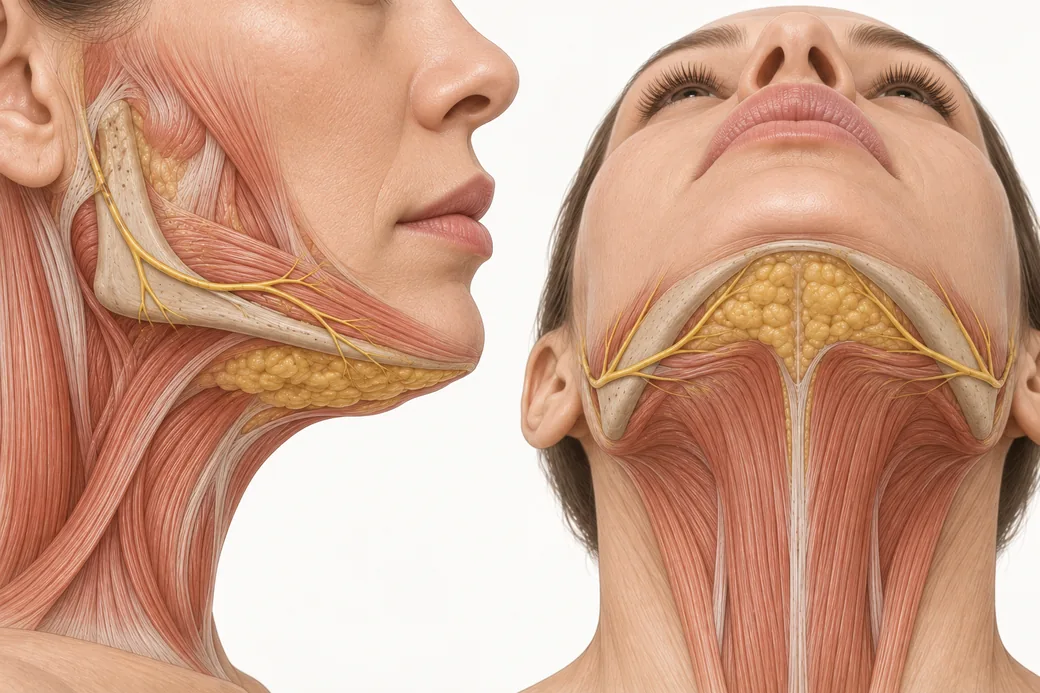 Clinical GuideThe Submental Pinch Test: Distinguishing Fat from Skin Laxity Before You Open a VialThe submental pinch test separates treatable fat from skin laxity. Maritza Mejia's thumb-and-index technique, thickness bands, and the
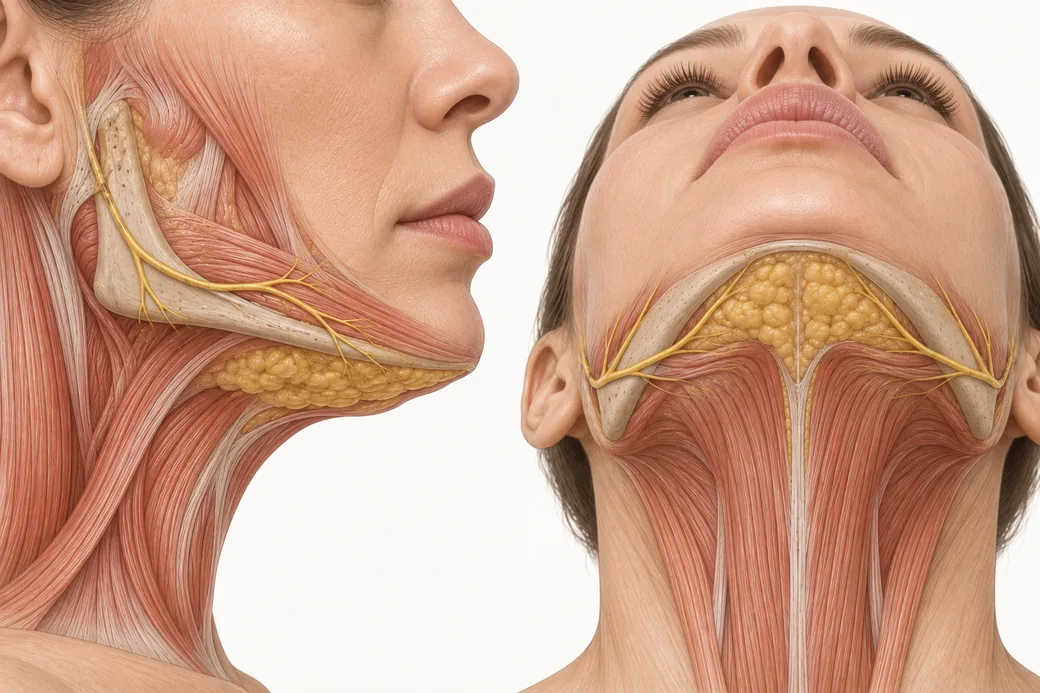 Clinical GuideSubmental Anatomy for Deoxycholic Acid: Compartments, the Submandibular Extension and the Marginal Mandibular NerveThe safety anatomy of the neck for injectors — preplatysmal versus subplatysmal fat, the submandibular extension, and where the margina
 Clinical GuideDynamic Neck Assessment: Resting, Smiling, Flexion and ExtensionA four-position neck examination for injectors — what rest, animation, flexion and extension each reveal that a static pinch cannot, an
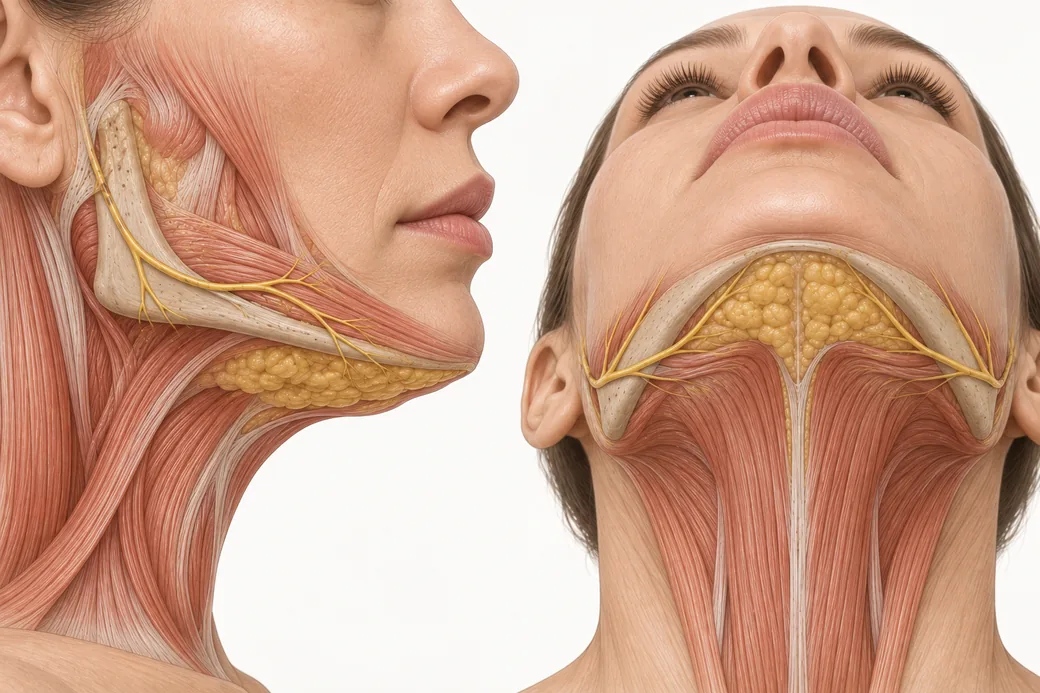 Clinical GuideDon't Memorise Doses: Why Submental Treatment Volume Is Driven by the Compartment, Not the ChartKybella dosing is expressed per square centimetre, not per patient. How to derive treatment volume from the compartment you mapped — an
Train with Empire
This guide is clinical education. The technique behind it is taught hands-on, on live patients, with faculty beside you.
Explore Complete Dermal Filler Training → Claim Your Prize!