








Thread lifting sits in an awkward place in aesthetic medicine. It is marketed as a non-surgical facelift, which it is not, and it is dismissed as a gimmick, which it also is not. Between those two errors is a procedure that does something specific and does it well, for a narrow group of patients, when the vectors are planned properly.
Nearly every unhappy thread patient is a selection failure or a layout failure. Very few are technique failures in the sense of the needle going somewhere unintended. This cluster is organised around that reality.
One polymer, three different jobs
Polydioxanone threads come in families, and the families are not interchangeable. Confusing them is the origin of a great deal of disappointed expectation.
Mono threads stimulate. They do not reposition tissue. Placed in a mesh, they provoke a collagen response over the skin they cover.
Screw threads stimulate more intensely over a smaller area, concentrating the effect where volume support is wanted.
Cog threads are the only family that mechanically repositions tissue. The barbs engage, and the tissue is lifted along a vector.
A patient who wants a lift and receives monos has been treated with the wrong tool, regardless of how skilfully they were placed. Matching the PDO thread family to the clinical job works through four common jobs and which family each one calls for.
Two clocks run at once, and they cross
This is the part patients are almost never warned about, and it is the most common reason for a distressed phone call at week four.
The filament hydrolyses on one timeline. The collagen response builds on another. Early on, the visible result is largely mechanical — tissue held by the barbs, plus post-procedure oedema. That mechanical component fades before the biological one has fully arrived.
The result is a mid-course drop: a patient who looked excellent at day three, less good at week four, and better again later. An injector who has not explained the two clocks in advance will spend that appointment defending the procedure. One who has will spend it reassuring the patient.
The two-phase PDO thread timeline sets out both clocks and where they cross, including what it means for combination planning.
Selection carries most of the outcome
There is a defined profile of patient who does well with threads, and a set of presentations that will disappoint regardless of technique: severe laxity with heavy tissue, established ptosis, infraorbital fat herniation, crepey or very thin skin.
The uncomfortable part is that several of these patients want threads specifically because they have been told threads are the alternative to surgery. Declining well is a clinical skill.
Who is not a thread candidate sets out what a good candidate actually looks like and works through each exclusion.
Direction decides the result
A vector is a direction of pull, and it should be derived from the direction the tissue actually descended — not from a diagram.
Read the descent first. Midface tissue does not fall straight down; it falls along a path determined by that patient's anatomy, and the lift that looks natural is the one that reverses that path rather than pulling tissue somewhere it has never been. Vector planning for the midface covers reading descent, the two midface directions, the V configuration, and how the entry point is constructed from the vector rather than chosen first.
The plane is found by feel
A millimetre figure cannot tell you what plane you are in, because tissue thickness varies between patients and between regions of the same face.
What tells you is resistance and glide. Resistance is a reliable alarm — it means you are somewhere you should not be. Glide is confirmation. The patient is a second instrument: what they report during the pass is information, not just discomfort.
Finding the plane by feel covers what resistance is telling you, why glide is the confirmation rather than the absence of a problem, and why aggressive handling is usually a plane problem rather than a force problem.
Two layout errors cause most dimpling
Dimpling after threads is common enough that many injectors treat it as inevitable. It is not. It has two main causes and they are distinguishable.
Crowded vectors — threads placed too close together, with overlapping zones of pull.
Over-correction — too much lift applied for the tissue available.
They can be told apart by timing, and density is judged by comparing the two sides rather than counting threads. Crowded vectors and over-correction works through both, plus aggressive handling as the third contributor.
How to use this cluster
Thread families first, because the wrong family cannot be rescued by good technique. Then selection, because it determines whether you proceed. Then vectors and plane, which are the procedure itself. The timeline guide is the one to read before your next consultation, since most of its value is in what you say rather than what you do.
Thread work is unusually dependent on supervised repetition. Entry points, specific vector coordinates and thread counts are taught hands-on rather than published here.
Every guide in this cluster
 Clinical GuideMono, Screw and Cog — Matching the PDO Thread Family to the Clinical JobPDO thread types explained by mechanism, not by brand. How mono, screw and cog threads differ in what they ask tissue to do — and how t
 Clinical GuideThe Two-Phase PDO Thread Timeline — and the Mid-Course Drop Nobody Warns Patients AboutThe PDO thread lift timeline runs two clocks — suture absorption and collagen response. The gap between them is when patients call disa
 Clinical GuideWho Is Not a Thread Candidate — Patient Selection That Protects Your OutcomesThread lift patient selection by failure mechanism — severe laxity, heavy tissue, crepey skin, fat herniation, and the expectation you
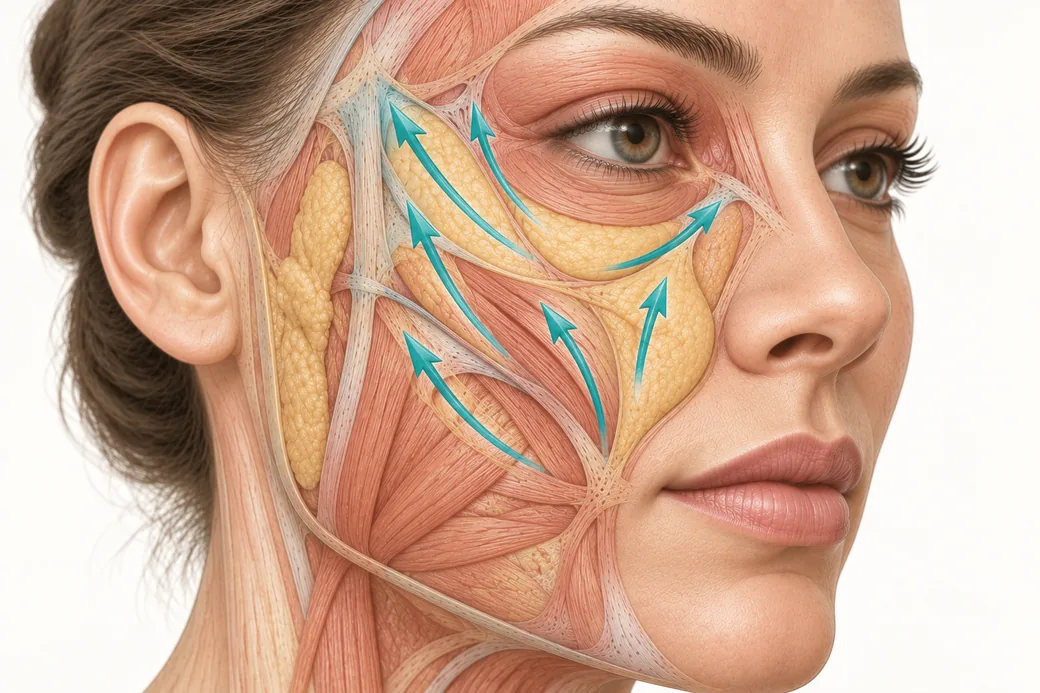 Clinical GuideVector Planning for the Midface — Why Direction Decides the ResultThread lift vector planning for the midface: why direction decides the result, how the V-configuration maximises lift, when to reverse
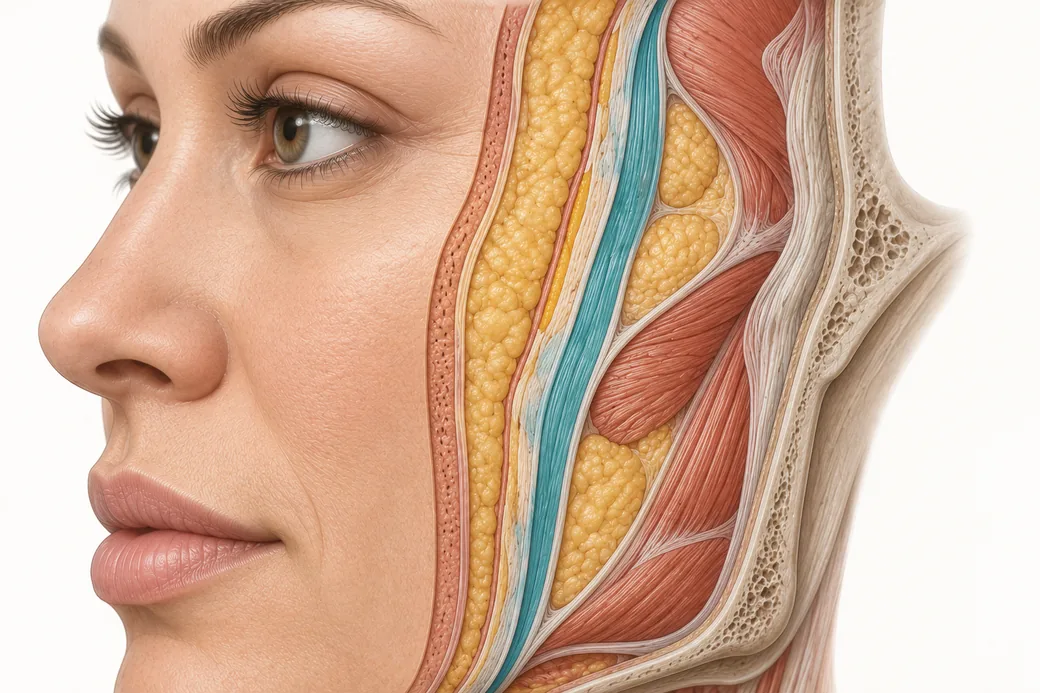 Clinical GuideFinding the Plane by Feel — What Resistance Is Telling You During Thread PlacementThe correct PDO thread insertion plane is found by feel, not by depth. Resistance means wrong plane; glide plus a comfortable patient m
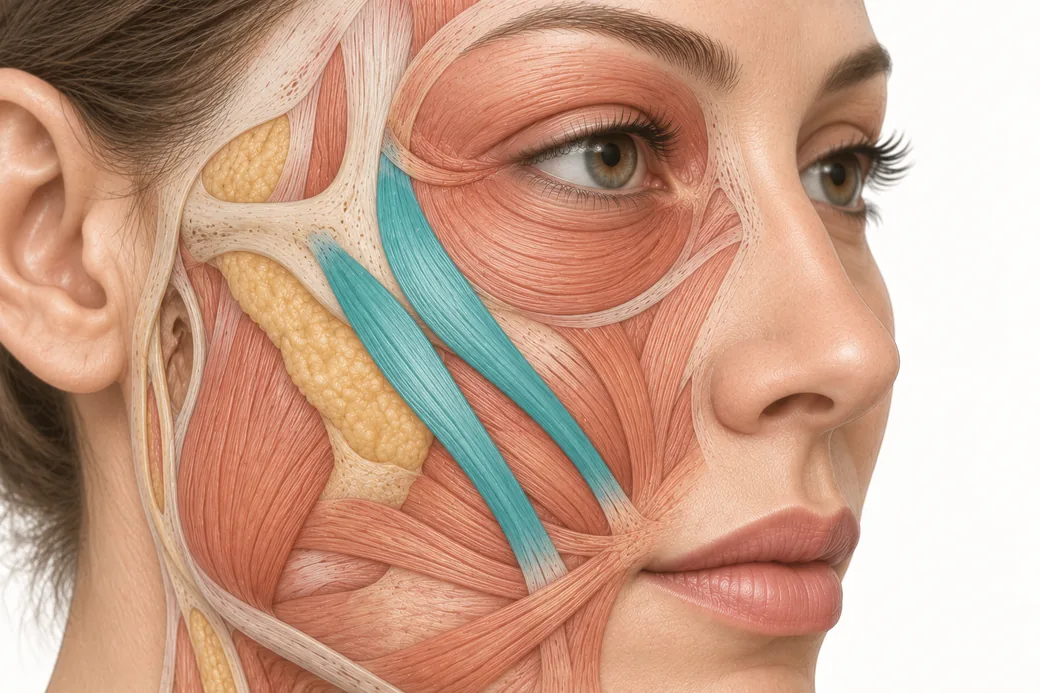 Clinical GuideCrowded Vectors and Over-Correction — The Two Layout Errors That Cause DimplingThread lift dimpling has two causes — crowded overlapping vectors and over-correction. They look alike, arrive at different times, need
Train with Empire
This guide is clinical education. The technique behind it is taught hands-on, on live patients, with faculty beside you.
Explore PDO Thread Lift Training → Claim Your Prize!