








Layering a treatment plan is the part of aesthetic practice that separates an injector with a menu from an injector with a plan. Almost every patient who walks in with a real complaint — not a single crease, but a face that has changed — needs more than one modality to get where they want to go. The difficulty is almost never choosing the modalities. Volume loss needs volume. Dynamic movement needs a neuromodulator. Pigment and surface texture need resurfacing. That much is obvious within thirty seconds of a good assessment.
What is not obvious is the order, the spacing, and the point at which you are allowed to judge whether any of it worked. Get those wrong and you produce a patient who has had four appointments, spent real money, tolerated real downtime, and cannot tell you what changed. Get them right and the same four appointments produce a visible, staged, documentable result that the patient can follow — and that you can defend.
"It's not one treatment fits all," Maritza Mejia teaches. "Assess your patient, so that way you can deliver the right treatment to your patient." This resource is the sequencing spine for that assessment: how she structures a combination plan across roughly six months, why each interval is what it is, and where the plan most often fails.
Sequencing is the skill; the menu is not
Combination treatment has become the default expectation. Patients arrive already knowing they want "tox and something for my skin." Product portfolios have expanded so that a single practice may offer three toxins, a dozen hyaluronic acid fillers, two or three biostimulators, microneedling with and without radiofrequency, and peels at three depths. The constraint on outcomes is no longer access to modalities. It is the discipline to stage them.
Three specific failure modes come out of un-staged combination work.
Attribution collapse. If you place filler, needle the skin, and run a peel inside a three-week window, you have made four or five simultaneous changes to a face. At the twelve-week reassessment the patient looks better. You cannot say why, which means you cannot repeat it, cannot economize it, and cannot tell the patient what to keep buying. You have traded a reproducible protocol for a single good-looking photograph.
Barrier stacking. Every resurfacing modality is a controlled injury. Controlled injury is only controlled if the tissue starts intact. Needling skin that is still inflamed from a peel, or peeling skin that is still in post-needling recovery, converts a predictable erythema into an unpredictable one — and in darker Fitzpatrick phototypes, converts a manageable inflammatory response into a meaningful risk of post-inflammatory hyperpigmentation.
Judging too early. Collagen-mediated change is slow. Inflammatory change is fast. In the first fortnight after any combination session, the thing the patient is looking at is edema, not result. If you reassess into that window you will either over-treat a face that is still swollen or under-treat a face whose real improvement has not arrived yet.
Each of these is a sequencing error, not a technique error. You can be an excellent injector and still produce all three.
DRAW: the four decisions before you touch the patient
Maritza's teaching frame for combination planning is DRAW — Diagnose, Rank, Allow recovery, Watch. It is deliberately a decision sequence rather than a treatment sequence, because the treatment sequence falls out of the decisions once they are made in the right order.
D — Diagnose the layer, not the complaint
The patient's complaint tells you where they look in the mirror. It does not tell you which tissue is responsible. Maritza's first sort is blunt and useful: is this a volume problem or a quality problem?
Volume problems live deep. Fat compartments have deflated, ligaments have allowed descent, bone has resorbed, and the overlying skin is being asked to cover a smaller scaffold than it was cut for. The patient describes this as looking tired, hollow, or heavy in the lower face. No amount of surface work fixes it.
Quality problems live in the skin itself — pigment, tone, surface texture, pore appearance, fine crepey lines, scarring. The patient describes this as dullness, roughness, "my makeup sits badly," or spots. No amount of volume fixes it, and filling a face with a genuine quality problem is how patients end up looking altered rather than improved.
Laxity sits awkwardly between the two and is the single most common diagnostic error in combination planning. Skin that has lost recoil is not skin that has lost volume, and treating it as though it had is where the "changed face" comes from. As Maritza puts it in her assessment of biostimulator candidates: if someone has substantial laxity, ask yourself honestly how many syringes it would actually take to fill it — "and that's when we start changing people's faces."
So the diagnosis is not "nasolabial folds." It is: deep medial cheek deflation with secondary folding, good skin quality, mild perioral pigment. That sentence writes its own treatment plan. "Nasolabial folds" does not. If you want the underlying anatomy of that first judgment, our facial volume loss overview covers the compartment-level changes that drive it.
R — Rank the dominant endpoint
Having identified two or three real problems, you now choose which one leads. Ranking is where most plans quietly go wrong, because the temptation is to rank by what is easiest to sell or fastest to deliver rather than by what is structurally upstream.
Two rules make the ranking honest.
Rank by what constrains everything else. Structure precedes surface. If the face has lost its scaffold, resurfacing the skin over a collapsed scaffold produces a smoother version of the same tired face. Volume and support get addressed before you spend the patient's downtime budget on texture. Equally, movement precedes static change: if a line is being folded into the skin sixteen hours a day by muscle activity, softening that movement first means everything you do to the skin afterwards is working with you rather than against you.
Rank by patient tolerance, not just by pathology. Maritza's ranking explicitly includes tolerance — how much downtime this person can actually absorb, how quickly they need to look normal, what their social and work calendar permits. A clinically perfect plan that the patient abandons after session two because they could not hide for four days is a worse plan than a slower one they complete. Ask what is in the next eight weeks before you commit to a peel depth.
A — Allow recovery
This is the interval-setting step, and it has two halves that are often confused.
The first half is barrier first: you do not needle or peel skin that is inflamed or recently irritated. That is a gate, not a countdown. It is checked at the chair on the day, by looking and by palpating, regardless of what the calendar says.
The second half is sequencing with realistic downtime — spacing sessions so that each one lands on recovered tissue and so that the patient's actual life can accommodate the recovery. Maritza is specific about setting that expectation before the peel rather than after it: "I always tell my patients, you're going to need to have a little downtime day three or four, especially if you work in the office. Plan ahead, so you don't have to be hiding from the whole world."
Her working intervals, as she teaches them, are covered in detail in the companion resource on waiting intervals after toxin and filler, but the shape is: injectables first, two to three weeks for edema to resolve before anything touches the treated skin, then resurfacing at two- to four-week spacing, with reassessment one to two weeks after each resurfacing session.
W — Watch
The last step is the one practices skip, and it is the one that makes the previous three worth doing. Watching means four things, done the same way every time: photographs, palpation, symptoms, and the decision about the next step.
Photography is the backbone of the whole framework — it is what converts "the patient thinks she looks better" into evidence you can act on and defend. Because it is load-bearing across every piece of this cluster, the full standard lives in the dedicated resource on standardized photography and documentation for multi-modality plans: same lighting, same angles, same distance, recorded skin status, recorded aftercare. Do not improvise it per visit.
Palpation is the underrated half. Maritza palpates skin at reassessment because the change a biostimulator or a needling series produces is often felt before it is photographed — a thickening, a firmness, a change in how the tissue moves under the fingers. That is real information that a front-facing photograph will not capture for another two months.
Three tools, three tissue levels
The reason layering works at all is that the three modality families act at genuinely different depths, which is why they combine rather than compete.
Injectables add structure and restore volume. Hyaluronic acid placed into the fat compartments supports the scaffold; the deeper, bone-adjacent compartments take the firm products and the mobile superficial compartments take the soft ones. Collagen stimulators occupy an adjacent role — remodeling tissue and improving quality without adding frank volume, and on a much slower clock. Neuromodulators, separately, change what the muscle is doing to the skin above it.
Microneedling delivers controlled micro-injury that supports collagen remodeling. The result builds gradually rather than appearing, which is why it is a series rather than an event. It is the tool for texture, pores, scarring and general skin quality.
Peels exfoliate. They are the tool for pigment, tone and surface texture, and they are the modality whose downtime scales most directly and predictably with depth.
A fuller treatment of which tool matches which tissue level — and how to decide when two of them could plausibly address the same complaint — is the subject of its own resource in this cluster. For the planning question, the operative point is simply that these three do not substitute for each other. If your plan uses one tool to solve a problem living at a different level, no amount of good sequencing rescues it.
The six-month architecture
Here is the shape of a combination plan as Maritza structures it. Treat the weeks as defaults to be adjusted, not as a protocol to be applied blind.
Visit one — injectables. Toxin, filler, or both, according to the ranking. This visit leads because it is the structural and movement-level intervention, and because everything downstream is better assessed once it has settled.
Weeks one to three — hands off the treated skin. After filler or toxin, Maritza waits at least two to three weeks for swelling to resolve before any skin-directed treatment. Two things are happening in that window: the edema that would make assessment meaningless is resolving, and the treated areas are left undisturbed. As she frames the toxin case: after toxin "we usually don't touch those areas, to avoid any complications."
Weeks two to four — first resurfacing session. Microneedling or a peel, chosen by what the diagnosis ranked second. Downtime is set in advance: with microneedling, the patient is told to expect something like a sunburn for roughly twenty-four hours, with sun, exercise, swimming and heat avoided — and the reason given, not just the rule. With a peel, the honest warning is that day three or four is the visible day.
Weeks three to six — reassessment. One to two weeks after a resurfacing session you can see what you bought. This is where the decision is made to repeat the same modality, switch modality, or hold.
Months two to four — the working phase. Resurfacing sessions continue at two- to four-week spacing; a toxin patient on a three-month cycle comes due somewhere in here. This is also the window in which biostimulator series, if the plan includes them, are being completed — Maritza's expectation-setting for those is explicitly that the patient returns every four to six weeks and that the real result is visible after the third treatment.
Months three to four — collagen remodeling becomes meaningful. This is the earliest point at which the collagen-mediated component of the plan is fairly judged, and it is the first reassessment where the side-by-side photographs will show something that inflammation is not responsible for.
Month six — maintenance planning. What maintenance looks like depends entirely on what was delivered and which products were used. The toxin has its own cycle. Filler has a different and much longer one. Stimulated collagen has a third. A single "come back in six months" instruction is almost always wrong for at least one component of a combination plan.
A worked case
Maritza's own consultation reasoning for a typical layered patient is worth following end to end, because it shows the ranking logic doing real work.
The patient has dynamic lines, established deep static lines, and visible pigmentation in several areas. The plan:
Today: toxin. It leads because movement is upstream of everything else — start by changing what the muscle is doing.
Two weeks: first skin session. The static lines are the reason. Toxin acts on lines produced by movement; a line that is etched into the skin and visible at rest is a different problem that needs a different tool. Because this patient also has pigment, Maritza's preference here is to lead the skin work with a peel, which addresses pigment and tone directly.
Two to four weeks later: microneedling. Now working the texture and the etched component of the static lines, on skin that has recovered from the peel.
The whole sequence is one diagnosis producing three interventions in a defensible order. Notice that the patient's chief complaint — the deep lines — is addressed by the second and third treatments, not the first. That is the ranking rule doing its job, and it is a conversation you have to have out loud at the consultation, because a patient who expected their static lines fixed today will otherwise leave disappointed by a technically correct plan. The distinction between the two line types is worth walking patients through explicitly; our dynamic versus static wrinkles explainer is a useful reference point for that conversation.
The four session-planning rules
Within any individual session, Maritza applies four rules that make recovery predictable. They are covered in full in this cluster's session-planning resource; in summary:
- Dose — start conservative and build based on response. The unrecoverable direction is too much. You can always add at the next visit; you cannot un-peel skin or un-place a syringe without cost.
- Distribution — broad even coverage beats isolated hero spots. Concentrating your effort on the one area the patient points at produces a treated patch on an untreated face. Even coverage reads as a better face; spot treatment reads as a procedure.
- Barrier — do not peel or needle inflamed or recently irritated skin. The gate, checked on the day.
- Documentation — same lighting, same angles, skin status, aftercare notes. Every visit, without exception.
Where layered plans actually fail
Three patterns account for most of the failures.
The plan was never written down. A sequencing plan that exists only as an intention in the injector's head degrades within two visits, particularly in a practice where the patient may not see the same provider. Write the six-month shape into the chart at visit one.
The intervals were driven by the schedule book rather than the tissue. If a patient can only come on a particular Thursday, the temptation is to compress. Compressing an interval is a clinical decision with a clinical cost, and it should be made deliberately and documented, not absorbed silently by the front desk.
The patient was never taught the clock. Patients abandon good plans in the trough — after the downtime and before the result. Maritza's answer to this is to tell them the timeline in advance and then prove it to them with photographs: "take side by side and show the client how the skin is improving." A patient who has been shown their own eight-week photograph will wait for their sixteen-week one.
Treatment planning across modalities is a skill learned by doing it on real faces under supervision, with a trainer looking at the same skin you are looking at. Empire Medical Training's Complete Facial Aesthetic Training covers combination facial aesthetics hands-on, and Complete Botox Training covers the neuromodulator component that most layered plans open with.
These intervals and sequencing decisions reflect Maritza Mejia's clinical practice as taught in Empire Medical Training's hands-on curriculum. Technique is learned under supervision; this article is educational and is not a substitute for training.
About the author. Maritza Mejia, FNP, is a family nurse practitioner, a faculty member at Empire Medical Training, and the founder of Long Island Beauty Bar, New York.
Every guide in this cluster
 Clinical GuideThe Collagen Stimulator Landscape: Skin Boosters vs Biostimulators vs Fillers, ComparedSkin boosters vs biostimulators vs fillers, compared by goal, plane, onset and failure mode — a four-category clinical matrix for injec
 Clinical GuideChoose by Tissue Diagnosis, Not by Trend: A Collagen Biostimulator Decision TreeA collagen biostimulator decision tree for injectors — four tissue findings, four products, and the five-point compass behind every sel
 Clinical GuideThe Biostimulator Results Timeline: Why Three Months, and How to Set It at ConsultationThe biostimulator results timeline injectors should set at consultation: why day-zero fullness is water, when collagen shows, and the s
 Clinical GuidePLLA Aftercare and the 5-5-5 Massage Rule: What the Label Says and What the Evidence ShowsPLLA aftercare for injectors: what current Sculptra labelling says about the 5-5-5 massage rule, why nodules form, and which factors ar
 Clinical GuideDilution Changes Behaviour: Why Hyperdilute CaHA Diffuses Instead of VolumisingHyperdilute CaHA for injectors: how dilution ratio turns Radiesse from a volumiser into a diffuse biostimulator, plane by plane, with c
 Clinical GuideCombining Filler and Biostimulator in the Lower Face: Lift With One, Treat Quality With the OtherCombining filler and biostimulator in the lower face — which products pair, which planes they take, and why over-volumising the lower t
 Clinical GuideWaiting Intervals After Toxin or Filler Before Any Skin TreatmentThe waiting interval after toxin or filler before microneedling or a peel — what the drug labels actually say, and which reasons are ev
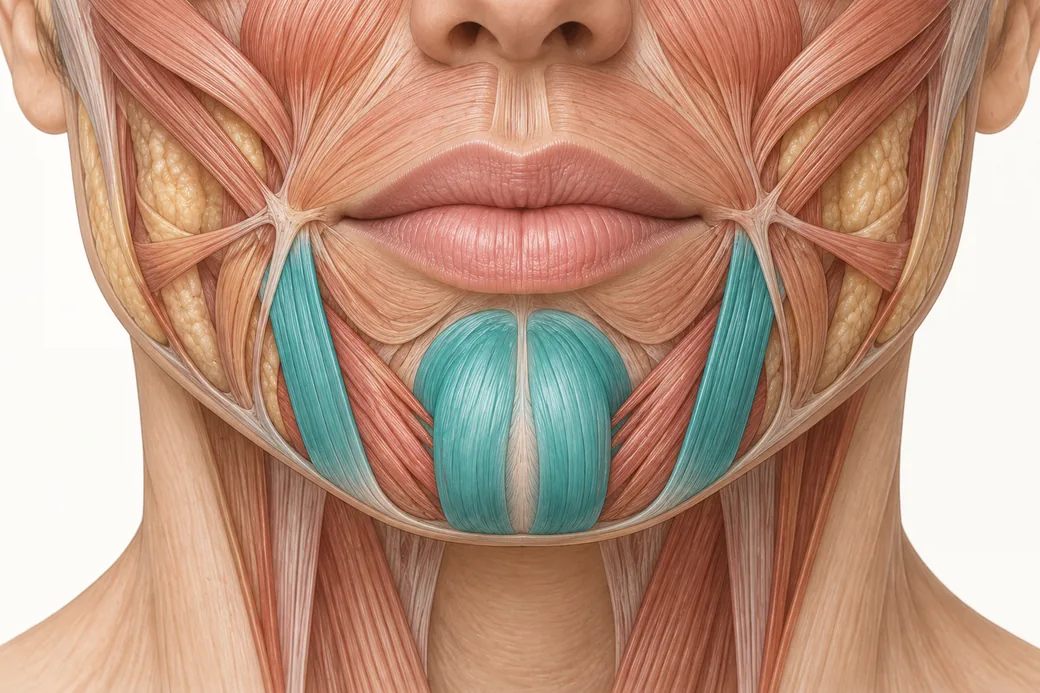 Clinical GuideMatching Treatments to Tissue Level: Injectables, Microneedling and PeelsMatching treatments to tissue level — which findings live in the epidermis, dermis, fat compartments or muscle, and which modality can
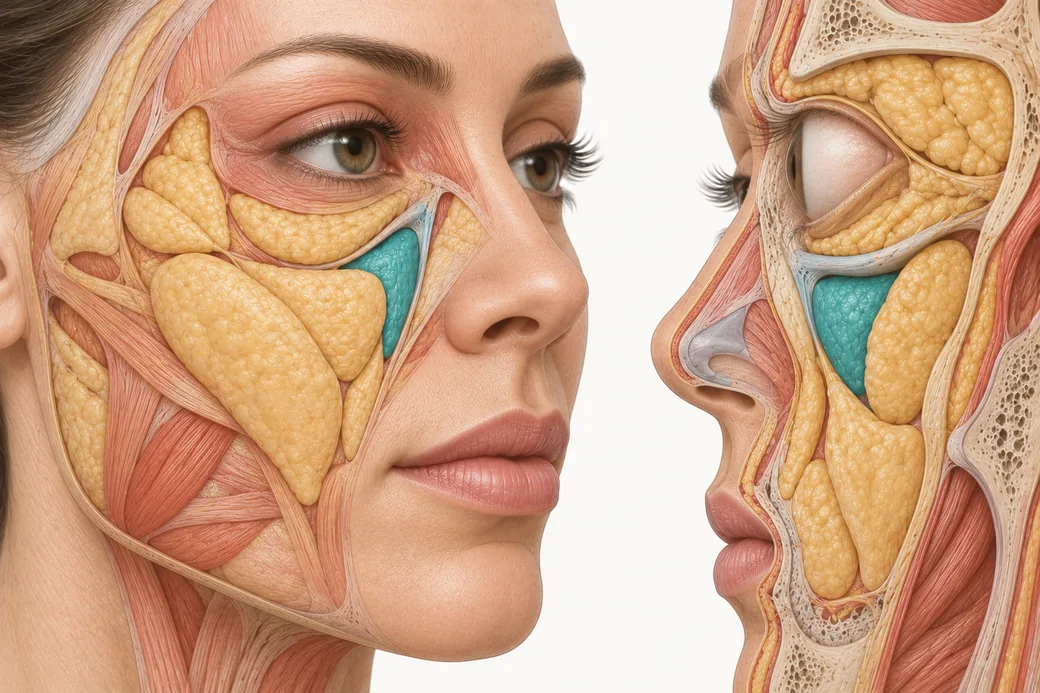 Clinical GuideG Prime Filler Selection and the Fat Compartments: Firm or Soft, and Where It GoesWhat G prime filler ratings really measure, why cross-brand comparisons mislead, how to match firm and soft product to compartments, an
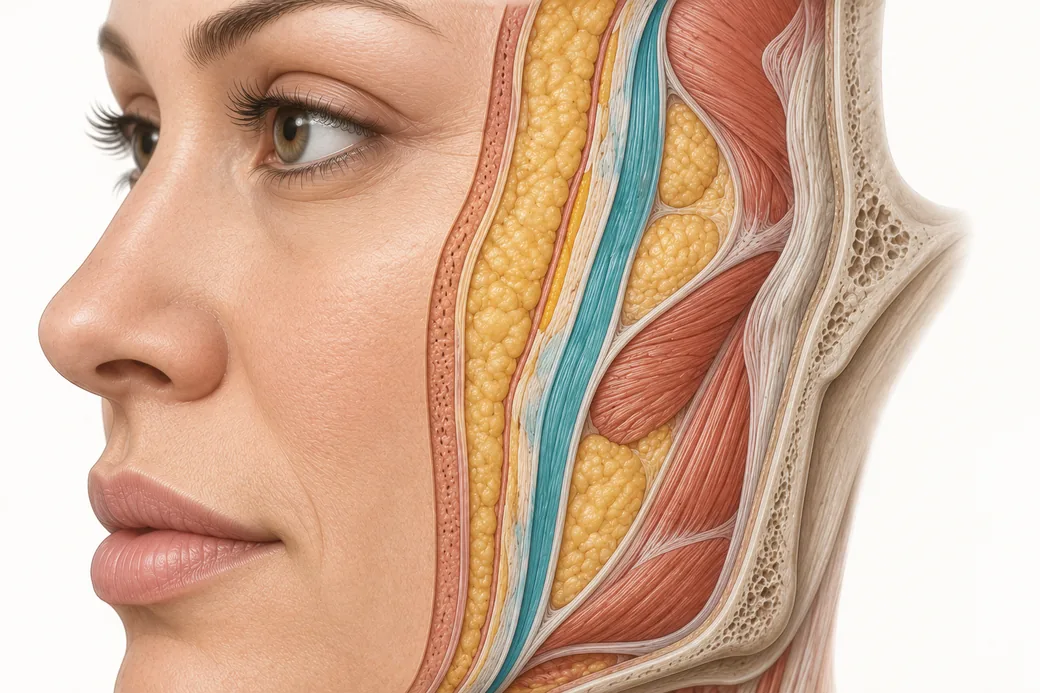 Clinical GuideThe Layered Treatment Recovery Timeline: When Each Outcome Becomes AssessableA layered treatment recovery timeline from day 0 to month 6 — what is assessable in each window, what is still inflammation, and when t
 Clinical GuideTreatment Session Planning: Start Conservative, Cover Broadly, Respect the BarrierTreatment session planning for injectors — conservative dosing, why broad even coverage beats hero spots, and the barrier gate that dec
 Clinical GuideStandardized Clinical Photography and Documentation for Multi-Modality PlansStandardized clinical photography for layered aesthetic plans — the variables to fix, the view set, skin-status fields, consent and the
Train with Empire
This guide is clinical education. The technique behind it is taught hands-on, on live patients, with faculty beside you.
Explore Anatomical-Based Aesthetics Training →Disclaimer
This article reflects the clinical opinions and experience of Maritza Mejia, FNP, an independent faculty member contributing to Empire Medical Training's curriculum. The views expressed are the author's own and do not necessarily represent those of Empire Medical Training.
It is professional education, not medical advice, and is no substitute for hands-on training or independent clinical judgment. Licensed clinicians remain responsible for their own patient selection, technique and outcomes, for verifying current product labelling, and for practising within their scope and applicable law. Empire Medical Training accepts no liability for reliance on this content.
 Claim Your Prize!