







Matching treatments to tissue level is the diagnostic step that decides whether a layered plan works. Almost every disappointing aesthetic result traces back to a modality aimed at the wrong depth — a filler used to chase a problem that lives in the epidermis, a peel used to chase a problem that lives in the fat compartments, a neuromodulator used on a line that stopped being a movement problem years ago.
Maritza Mejia teaches the sort in one sentence: "Different tools work at a different tissue level. Injectables add structure and restore volume. Microneedling is controlled micro-injury, which supports collagen remodeling — the results build gradually. Peels exfoliate the skin, and it's great for pigment, tone and surface texture, and even for pores."
That is the whole framework. This resource makes it operational: what each level contains, which findings originate at each, which tool can physically reach it, and what to do when two tools could plausibly claim the same complaint.
The levels, from the surface down
Epidermis and the dermo-epidermal junction. Pigment — both epidermal and, less tractably, dermal. Surface roughness, dullness, scale, the quality of light reflection off the skin. This is where most complaints described as "my skin looks tired" actually live.
Dermis. Collagen and elastin architecture. Textural change, pore appearance, atrophic scarring, fine crepey lines, dermal thinning. This is the level where quality is structurally determined rather than superficially displayed.
Subcutaneous fat compartments. Facial fat is not a continuous blanket — Rohrich and Pessa established through cadaver dissection that it is organized into discrete compartments separated by septae ("The fat compartments of the face," Plastic and Reconstructive Surgery, 2007;119(7):2219–27). These divide broadly into superficial, mobile compartments and deeper, bone-adjacent ones. Gierloff and colleagues subsequently showed by computed tomography that these compartments do not deflate uniformly with age (Plastic and Reconstructive Surgery, 2012;129(1):263–73), which is why a face can need deep structural restoration and superficial quality work at the same time.
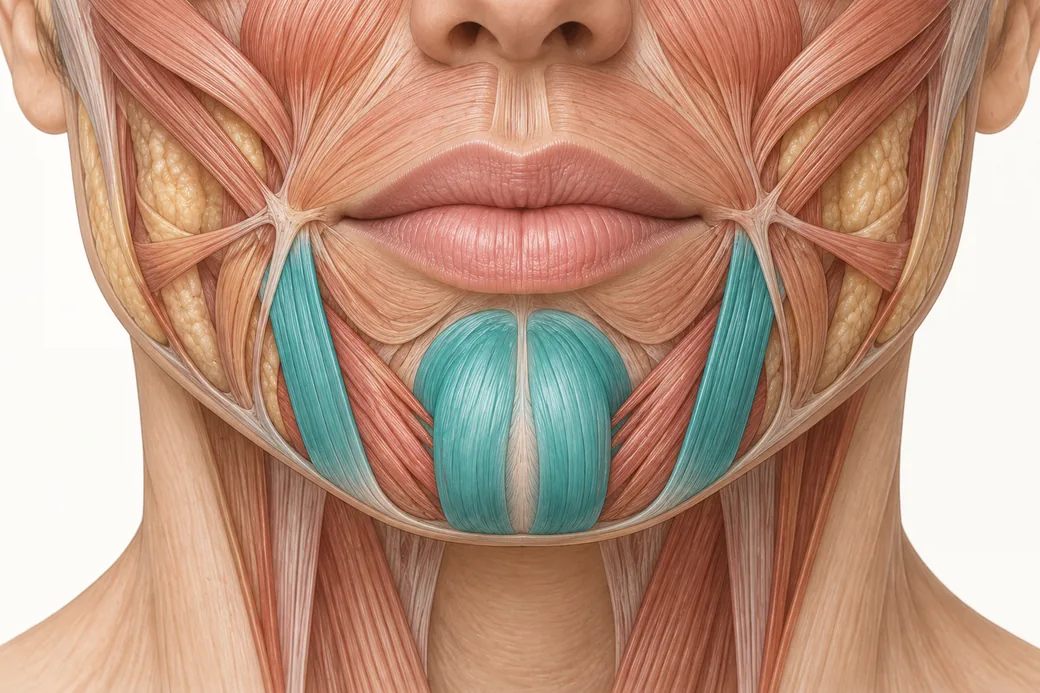
Muscle. Movement. The mimetic muscles that fold the skin above them thousands of times a day.
Retaining ligaments, SMAS and bone. Support and the underlying scaffold. Largely outside what injectables and resurfacing can address directly, and the honest boundary of the non-surgical conversation.
What each tool can actually reach
Peels — epidermis, and as deep as you take them
Peels work by controlled chemical exfoliation, and the depth of injury scales with the agent and its concentration. The conventional classification runs superficial, medium and deep: superficial agents such as glycolic, salicylic, lactic and mandelic acids and Jessner's solution injure through the epidermis to the papillary dermis at the deeper end; medium-depth peels, classically trichloroacetic acid around 30–35% or the standard combination formulations, reach the papillary into the upper reticular dermis; deep peels using phenol-croton oil formulations reach the mid-reticular dermis and carry systemic considerations that put them in a different category of practice entirely.
Recovery scales with the same axis, and this is what determines where a peel fits in a layered plan. Superficial peels are a few days of erythema and light flaking. Medium-depth peels involve a genuine re-epithelialization period and visible downtime measured in days to a couple of weeks. This is why Maritza's expectation-setting is specific and delivered before the appointment rather than after: "I always tell my patients, you're going to need a little downtime day three or four, especially if you work in the office."
Best for: pigment, tone, dullness, surface texture, pore appearance. Cannot reach: volume, structural support, muscle-driven lines.
The risk that governs patient selection: post-inflammatory hyperpigmentation, disproportionately in higher Fitzpatrick phototypes and in anyone with a PIH history, and rising with depth. For those patients the answer is rarely "no peel" — it is a shallower peel, spaced further apart, with more conservative expectations.
Microneedling — dermis
Microneedling creates controlled micro-injury that initiates a wound-healing response, and the useful part of that response is dermal remodeling. The result is not immediate and is not supposed to be; as Maritza puts it, "the results build gradually."
The evidence base is real but should be characterized accurately. The histologic case for percutaneous collagen induction rests largely on small studies with objective endpoints — the foundational clinical description by Fernandes (Aesthetic Surgery Journal, 2002) and the subsequent work by Aust and colleagues (Plastic and Reconstructive Surgery, 2008;121(4):1421–29), with later small series such as El-Domyati and colleagues in the Journal of Clinical and Aesthetic Dermatology (2015) reporting increases in epidermal thickness and dermal collagen and elastin deposition. The strongest indication is atrophic acne scarring, where systematic reviews of randomized controlled trials exist — Sitohang and colleagues in the International Wound Journal (2021) among them.
Where the evidence does not reach is protocol. Needle depth bands and pass counts are clinical convention extrapolated from small studies and experience, not the product of dose-ranging trials that isolated depth as a single variable. Anyone presenting a depth chart as though it were established dosing is overstating what has been shown.
Best for: texture, pores, atrophic scarring, general skin quality, dermal thickening over a series. Cannot reach: volume, pigment directly, muscle-driven lines.
Injectables — fat compartments, and the plane you choose
Injectables split into several genuinely different jobs, and lumping them together is itself a common planning error.
Hyaluronic acid fillers restore volume and add structure by occupying space within the fat compartments or supraperiosteally. Firmer products go deep into relatively immobile, bone-adjacent compartments where the goal is projection and support; softer products go into mobile superficial compartments where the goal is integration and hydration. Maritza teaches the rule directly — thick product into "the deep fat pad, the one that is attached on bone," soft product for "the areas that you move." That product-selection question, and what the rheology literature does and does not support, is covered in its own resource in this cluster.
Collagen stimulators occupy a different role: remodeling tissue and improving quality on a slow clock rather than adding frank volume. They are a quality tool that happens to be delivered by needle, which is why they belong in a different column from filler when you are planning. Our comparison of biostimulators and fillers covers that distinction, and facial collagen stimulation covers the underlying principle.
Best for: volume loss, structural support, projection and contour. Cannot reach: pigment, surface texture, or — critically — laxity.
And a fourth level: muscle
Maritza's framework names three tools, but a layered plan almost always contains a fourth intervention operating at a level none of the three touch. Neuromodulators act on muscle. That is why toxin combines freely with all three modalities rather than competing with any of them, and why it so often leads the sequence: changing what the muscle does to the skin makes everything you subsequently do to that skin more durable.
It is also why toxin fails when it is asked to do a dermal job. A line produced by movement responds. A line etched into the dermis and visible at rest is a dermal finding wearing a muscular disguise, and it needs a dermal tool — the subject of our dynamic versus static wrinkles explainer and of a companion piece in this cluster on building the second-modality plan.
The matching table
| Finding | Level it lives at | Tool that reaches it |
|---|---|---|
| Pigment, dullness, uneven tone | Epidermis | Peel |
| Surface roughness, pore appearance | Epidermis into dermis | Peel or microneedling |
| Atrophic scarring | Dermis | Microneedling |
| Fine crepey lines, dermal thinning | Dermis | Microneedling, collagen stimulators |
| Loss of projection, hollowing | Deep fat compartments, supraperiosteal | Firm filler |
| Mobile superficial deficit, fine lines | Superficial fat compartments, dermis | Soft filler, skin boosters |
| Generalized quality and firmness | Dermis and subdermis | Collagen stimulators, microneedling series |
| Lines that appear only on movement | Muscle | Neuromodulator |
| Lines visible at rest | Dermis, caused at muscle | Neuromodulator plus a dermal modality |
| Significant laxity, descent | Ligaments, SMAS, bone | Beyond these three tools |
Where clinicians misassign
Treating laxity with volume. The most consequential error, and the one that produces altered-looking faces. Maritza's test is arithmetic and uncomfortable: if the skin is genuinely lax, ask how many syringes it would actually take to fill it. "If we have extra saggy skin, how many fillers do we need in order to fill? And that's when we start changing people's faces." Lax skin has lost recoil, not volume. Filling it stretches a bigger scaffold under a still-slack envelope.
Treating pigment with needling alone. Microneedling improves texture and dermal quality. It is not a pigment tool, and in a patient predisposed to PIH, inflammation without a pigment-directed strategy can leave you further behind.
Treating a static line with toxin. Repeating a treatment that addresses the cause while ignoring the established dermal change, and then wondering why the line is still there at the two-week review.
Treating crepiness with filler. Crepey skin is a dermal quality problem. Soft filler and skin boosters can hydrate, but the finding is dermal architecture, and the tools that address dermal architecture work on a collagen timescale.
Treating volume loss with resurfacing. Smoothing the surface of a deflated face produces a smoother deflated face. Our facial volume loss overview covers what is actually changing at the compartment level.
Overlap zones: when two tools could both claim the finding
Texture and pore appearance are the genuine overlap, and either a peel or microneedling can reasonably address them. Three questions resolve it:
Which co-finding dominates? If pigment is present alongside the texture, lead with the peel — it addresses both. If atrophic scarring is present alongside the texture, lead with microneedling, because that is where the stronger indication lies.
What downtime can this patient absorb, and when? A medium-depth peel and a needling session are not interchangeable in a patient's calendar. Rank by tolerance as well as pathology.
What is the phototype and the PIH history? Both modalities are inflammatory. Both can be delivered conservatively. The decision is less about which tool and more about how hard you run it.
What you do not do is run both at once. Stacking two inflammatory modalities on the same skin removes your ability to attribute the result and compromises the barrier — which is why they are sequenced two to four weeks apart rather than combined.
The honest boundary
The three tools reach the epidermis, the dermis and the fat compartments. They do not reach ligaments, SMAS or bone. Significant descent and true laxity sit outside them, and saying so at the consultation is not a lost sale — it is the thing that prevents an over-treated face and a disappointed patient six months and several thousand dollars later.
Maritza's framing of the limit is the right one to carry into the consultation: biostimulators and fillers do not replace surgery, and the failure mode of pretending otherwise is over-treatment. "Don't over-promise what you cannot deliver."
Learning to read which level a finding lives at is done with patients in front of you. Empire Medical Training's Anatomical Based Aesthetics Training covers the underlying facial anatomy, and Complete Facial Aesthetic Training covers combination facial aesthetics hands-on.
Clinical specifics attributed to Maritza Mejia reflect her practice as taught in Empire Medical Training's hands-on curriculum. Technique is learned under supervision; this article is educational and is not a substitute for training.
About the author. Maritza Mejia, FNP, is a family nurse practitioner, a faculty member at Empire Medical Training, and the founder of Long Island Beauty Bar, New York.
Related guides in this cluster
Part of Treatment Planning and Layering.
 Clinical GuideThe Collagen Stimulator Landscape: Skin Boosters vs Biostimulators vs Fillers, ComparedSkin boosters vs biostimulators vs fillers, compared by goal, plane, onset and failure mode — a four-category clinical matrix for injec
 Clinical GuideChoose by Tissue Diagnosis, Not by Trend: A Collagen Biostimulator Decision TreeA collagen biostimulator decision tree for injectors — four tissue findings, four products, and the five-point compass behind every sel
 Clinical GuideThe Biostimulator Results Timeline: Why Three Months, and How to Set It at ConsultationThe biostimulator results timeline injectors should set at consultation: why day-zero fullness is water, when collagen shows, and the s
Train with Empire
This guide is clinical education. The technique behind it is taught hands-on, on live patients, with faculty beside you.
Explore Anatomical-Based Aesthetics Training →Disclaimer
This article reflects the clinical opinions and experience of Maritza Mejia, FNP, an independent faculty member contributing to Empire Medical Training's curriculum. The views expressed are the author's own and do not necessarily represent those of Empire Medical Training.
It is professional education, not medical advice, and is no substitute for hands-on training or independent clinical judgment. Licensed clinicians remain responsible for their own patient selection, technique and outcomes, for verifying current product labelling, and for practising within their scope and applicable law. Empire Medical Training accepts no liability for reliance on this content.
 Claim Your Prize!