






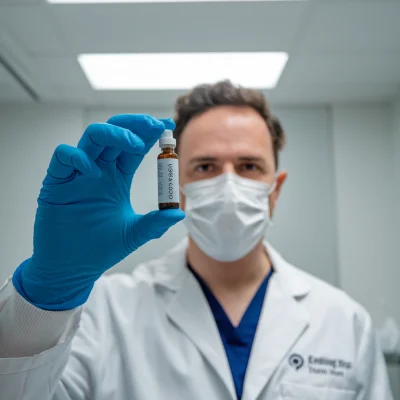
Using exosomes for hair loss has emerged in recent years as a highly sought-after nonsurgical hair restoration solution. Exosomes deliver potent regenerative signals that awaken dormant follicles, reduce inflammation, and improve scalp health at a cellular level.
This breakthrough has quickly become a preferred alternative to PRP for patients experiencing androgenetic alopecia, thinning hair, and inflammatory scalp disorders.
If you’re a provider wanting to implement exosomal hair protocols at your practice, Empire Medical Training offers numerous resources and training options to help you gain the necessary expertise in this growing field of regenerative medicine.
We’ll explain how exosome therapies work for hair growth, clinical protocols, expected results, and the safety considerations every aesthetic provider should understand.
What Are Exosomes in Hair Restoration?
Exosomes are nano-sized extracellular vesicles originating within stem cells. They deliver regenerative growth factors, peptides, mRNA, and anti-inflammatory cytokines to activate dormant hair follicles and stimulate new growth. When injected into the scalp, exosomes can:
-
Stimulate follicle regeneration
-
Extend the anagen (growth) phase
-
Improve hair density, thickness, and scalp health
Healthcare providers can learn how to use facial contouring injectables in medical practice along with advanced exosome for hair loss protocols through Empire’s hands-on training programs held virtually and in-person nationwide.
How Do Exosomes for Hair Growth Work?
Exosomes influence multiple pathways critical for hair cycle regulation and follicle regeneration, through:
1. Reactivation of Dormant Follicles
Exosomes provide high concentrations of microRNA growth factors and signaling molecules that support follicle regeneration to “re-awaken” miniaturized follicles and promote regrowth. According to the National Institutes of Health (NIH), exosomal signaling is responsible for repairing tissue, immune modulation, and activating dormant follicles to support hair restoration.
2. Anti-Inflammatory Effects
Chronic inflammation contributes significantly to male and female pattern thinning. By introducing exosomes into the scalp, healthcare practitioners can reduce inflammatory cytokines and improve their patients’ scalp environments.
3. Angiogenesis
Angiogenesis is the process of forming new blood vessels, in which exosomes play a key stimulative role. Better blood flow throughout the skin means improved nutrient delivery, oxygenation, and follicle survival.
4. Extending the Anagen Phase
Utilizing exosome therapy for hair loss helps prolong active growth cycles, such as the anagen phase, allowing hair to grow longer and thicker than ever.
5. Increasing Dermal Papilla Cell Activity
Dermal papilla cells (DPCs) are specialized mesenchymal cells located at the hair follicle base that regulate size, strength, density, and regeneration on hairless skin.
By enrolling in antiaging regenerative workshops and more held by Empire, healthcare practitioners can learn all about aesthetics, functional medicine, and pain management from leading industry experts to help patients achieve their hair restoration outcomes.
Benefits of Exosomes for Hair Loss Therapy
There are numerous benefits of using exosomes for hair growth and regeneration:
1. Stronger, Thicker Hair Strands
Patients typically see increased shaft diameter and improved density over time.
2. Faster Results Than PRP
Many notice improvements within a range of 4 to 12 weeks, exponentially faster than the typical 3 to 6 months associated with platelet-rich plasma (PRP) treatment.
3. Reduced Inflammation and Scalp Irritation
Utilizing exosomes for hair restoration purposes decreases inflammation and scalp irritation significantly, making it ideal for patients with inflammatory alopecia or sensitivity.
4. Enhanced Follicular Regeneration
Exosomes contain high amounts of regenerative signals and growth factor serums.
5. Effective for Early and Moderate Thinning
Exosomal therapy is optimal for patients experiencing early or moderate hair thinning, particularly those suffering from:
-
Androgenetic alopecia
-
Telogen effluvium
-
Early hair miniaturization
-
Post-pregnancy thinning
-
Stress-related hair shedding
Any of your patients experiencing advanced follicle loss may still benefit from this treatment, but you’ll need to evaluate it on a case-by-case basis.
Exosome Hair Restoration vs. PRP: Which Is Better?
If your patients are considering either exosomes for hair growth or PRP treatments, here’s a comparative analysis they can use to help them make an informed decision:
|
Feature |
Exosome Hair Therapy |
PRP Hair Therapy |
|
Growth factors |
|
|
|
Variability |
|
|
|
Inflammation reduction |
|
|
|
Hair density improvement |
|
|
|
Visible results |
|
|
|
Downtime |
|
|
|
Ideal for |
|
|
As illustrated above, exosomes offer stronger regenerative effects, faster outcomes, and no variability in growth factor levels in comparison with PRP.
While PDO threads and PRP for hair restoration are still effective treatments, exosomes provide greater potency, more reliable results, and quicker improvements.
What Is an Exosome Regenerative Complex?
An exosome regenerative complex typically refers to a concentrated, lab-formulated mixture of exosomes combined with peptides, amino acids, and growth factors. These complexes are designed specifically for hair restoration to:
-
Enhance follicle signaling
-
Reduce the inflammatory microenvironment
-
Promote dermal papilla cell proliferation
-
Improve scalp hydration and barrier function
The result? A far more robust and comprehensive approach to nonsurgical hair growth.
Exosomes Treatment for Hair Loss
Here’s what usually happens when health practitioners administer stem cell exosomes for hair loss, along with typical patient expectations:
1. Consultation and Scalp Assessment
Providers often start a patient’s treatment plan with an initial consultation, discussing family history and evaluating their scalp for:
-
Hair loss patterns
-
Density changes
-
Miniaturization
-
Inflammatory symptoms
-
Any relevant hormonal factors
2. Treatment Preparation
Providers should clean the patient’s scalp thoroughly in preparation. Mild discomfort may occur during treatment, so use a topical anesthetic if necessary and mark any thinning zones as you go.
3. Injection Technique
Healthcare professionals inject exosomes directly into the dermis uniformly across thinning scalp zone regions, utilizing 0.1–0.2 mL per injection site with 1–1.5 cm of spacing in between.
4. Sessions
Most protocols involve one main treatment with an optional booster session every 3 to 6 months. Health practitioners should advise patients to do annual maintenance as required. Hair regeneration often continues for 6 to 12 months after the initial session.
Aftercare for Patients
Medical professionals will perform a gentle massage post-injection. From there, patients should avoid excessive touching, scratching, or rubbing of the treated area for the first 24 to 48 hours after treatment. This includes engaging in activities like washing your hair, exposing yourself to direct sunlight, or doing any strenuous exercise.
As a provider, advise your patient to keep their scalp clean and moisturized to prevent the affected area from becoming irritated or inflamed. Gentle care post-therapy can aid in regenerating and activating hair follicles to achieve the best possible outcome.
5. Combination Therapies
For optimal results, exosomes can also be paired with:
-
PRP
-
Peptides (GHK-Cu, BPC-157)
-
Low-level laser therapy (LLLT)
-
Microneedling
-
Nutraceuticals (biotin, collagen, saw palmetto)
-
Hormone or thyroid optimization when indicated
For integrated regenerative training in hair restoration, we invite providers like you to enroll in Empire's advanced workshops for hair loss and treatment.
Patient Expectations and Results
Overall, most patients see reduced shedding by 4 weeks and visible improvement within a period of 2 to 3 months. Here are some other common results patients can expect over time using stem cell exosome therapy for hair restoration:
|
Timelines |
Initial Results |
|
Weeks 2–4 |
|
|
Weeks 8–12 |
|
|
Weeks 16–24 |
|
|
Timelines |
Long-Term Outcomes |
|
6–12 months |
|
Always inform your patients that results often vary based on hair loss severity, their age, and other critical hormonal factors.
Safety, Side Effects and Contraindications
Exosome hair therapy is generally well-tolerated with minimal adverse effects.
|
Common Temporary Reactions |
Contraindications |
|
|
Proper sourcing and administration by trained medical professionals is critical. We suggest utilizing certified labs and exosomal sources from certified, sterile, ethical suppliers.
Who Does Exosome Hair Restoration Help?
Using exosomes for hair rejuvenation can help patients with:
-
Early to moderate androgenetic alopecia
-
Stress-induced shedding
-
Postpartum or hormonal thinning
-
Poor PRP responses
Providers should remind their patients that exosomal therapy may improve hair thinning in this context. However, this treatment tends to have less efficacy where follicles are completely absent or scarring alopecia is involved.
Become Certified in Exosome Hair Restoration With Empire Medical Training
Using exosomes for hair loss is the future of nonsurgical hair restoration. It offers powerful regenerative benefits that outperform many traditional skin rejuvenation treatments, including PRP. Providers who master exosomal scalp injection techniques at their practices can deliver superior results, attract high-demand patients, and expand revenue opportunities.
To gain competency in dosing, protocols, and advanced regenerative strategies, we encourage you to get certification in exosome therapy with Empire Medical Training. Contact us now to elevate your clinical skill set with our world-renowned expert instructors and become a leader in cutting-edge hair regeneration.


 Claim Your Prize!