Empire Rewards Wheel
Saint Patrick’s Day Sale! Up to 50% OFF! Hurry—Sale Ends Fri, Mar 20 Save Now >>
Academy of Aesthetics
Academy of Business & Marketing
Academy of Functional Medicine
New 2025 Courses
Academy of Pain Management
Other Academies
Learn More and Save!
All-Inclusive CME Plans
Botox, Dermal Fillers, and More
IV Nutrition, Hormone Pellet, and More
Pain Show, NCV/EMG, and More
Blueprint, Business Bootcamp, and More
Facial Aesthetics, Cosmetic Laser, and More
Learn From the Comfort of Your Home or Office
A Global Community of Aesthetic Professionals
Discover Our 28+ Year Legacy
We're Here to Help With What You Need!
Explore World-Renonwed Educators
Grow With Us
Your Production Solution
Get FREE Playbooks and Guides
Explore Valuable Information
A Customizable Training Experience
Get Up to 50% OFF Sitewide—Saint Patrick’s Day Sale
OFFER ENDS Fri, Mar 2000
Days00
Hrs00
Mins00
SecsSave More with Aesthetic Training Bundles & Memberships
Empire's Perineural Injection Therapy Training for PAs provides a specialized skill for treating the chronic neuropathic pain patients that represent some of the most challenging cases in pain management. PIT's excellent safety profile and minimal equipment requirements make it an ideal addition to your procedural toolkit, and the growing demand for practitioners trained in this technique creates career differentiation in the competitive PA market.
Master perineural injection therapy for treating chronic neuropathic pain, treatment-resistant conditions, and post-surgical pain syndromes. A specialized skill that differentiates you from other PAs.
Subcutaneous dextrose injections carry minimal risk — no deep injections, no corticosteroid side effects. PIT's safety profile makes it one of the most accessible interventional techniques for PAs to integrate.
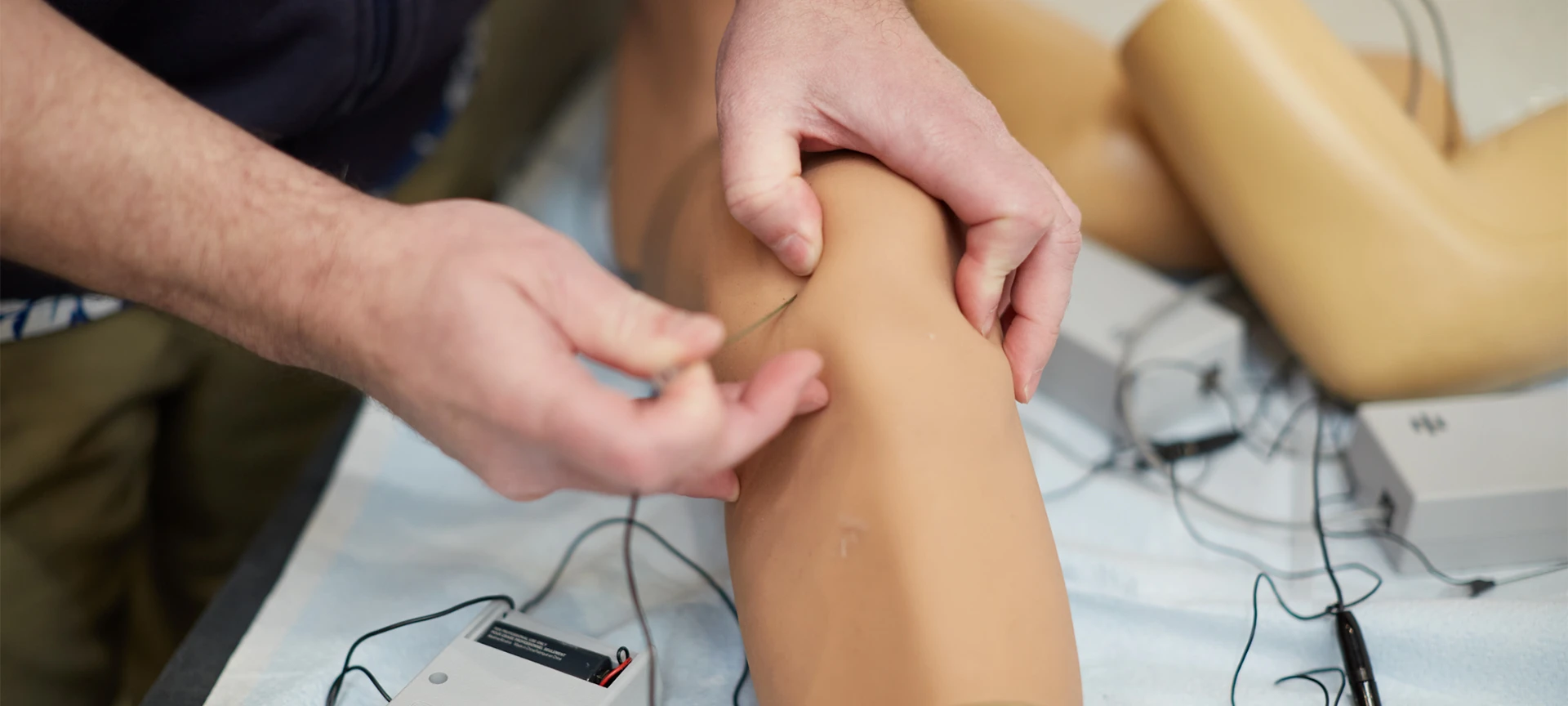
Practice nerve palpation and subcutaneous injection techniques under expert faculty supervision. Build proficiency with the precise nerve-targeting skills that make PIT effective.
PIT certification distinguishes you from PAs with only standard injection skills. Specialized techniques for refractory pain patients make you invaluable to pain management practices seeking comprehensive treatment capability.
Course Highlights
As a PA, PIT adds a safe and specialized technique for treating chronic pain patients who have exhausted conventional options. These highlights show how this certification enhances your value in pain management settings.
Curriculum Highlights
Master essential techniques and protocols through our comprehensive, CME-accredited curriculum designed for physician assistants (pas).
Designed for Physician Assistants
PAs bring comprehensive medical training and clinical versatility that translates exceptionally well to procedural medicine. Adding aesthetic, pain management, or functional medicine skills allows PAs to increase their earning potential, expand their professional autonomy, and offer greater value to their supervising physicians and practice teams. The demand for PAs with procedural certification continues to outpace supply in the aesthetics and pain management markets.
Physician Assistants practice medicine under physician supervision or, in many states, through collaborative agreements that grant significant clinical autonomy. PAs are eligible to perform injectable aesthetic procedures, pain management interventions, and functional medicine treatments in most jurisdictions. The PA profession's team-based model and broad medical training make PAs exceptionally well-suited to expand into procedural medicine with the proper hands-on certification.
PAs receive CME/CE accredited certification upon completion. Credits are accepted by NCCPA for certification maintenance and by state PA boards for license renewal.
View upcoming dates, locations, and register for the next available session.
Witness inspiring firsthand accounts from Empire graduates, demonstrating that with the right training, success is inevitable.
Perineural injection therapy (PIT) involves the subcutaneous injection of a low-concentration buffered dextrose solution (typically 5% dextrose) along the course of superficial peripheral nerves that have become chronically irritated and inflamed. The dextrose interacts with TRPV1 receptors on sensory nerve fibers, reducing neurogenic inflammation and restoring normal nerve function. This mechanism addresses the underlying neural dysfunction rather than simply masking pain.
PIT has demonstrated clinical efficacy for chronic neuropathic pain conditions including headaches and migraines, chronic neck and back pain, lateral epicondylitis, Achilles tendinopathy, knee pain, post-surgical pain syndromes, and various other chronic musculoskeletal pain conditions that have a significant neuropathic component. It is particularly valuable for patients who have not responded adequately to conventional pain treatments.
Most patients require a series of four to eight treatment sessions spaced one to two weeks apart, though significant pain reduction is often noticed after the first two to three treatments. Some chronic conditions may require additional maintenance sessions. The course teaches you how to structure multi-session treatment protocols and track clinical outcomes to guide treatment duration.
PIT has an excellent safety profile because the injections are performed subcutaneously (not deep) using a very low-concentration dextrose solution rather than corticosteroids or other medications with systemic side effects. The most common side effect is mild, temporary discomfort at injection sites. The superficial injection depth and benign injectate make PIT one of the safest interventional pain procedures available.
Traditional prolotherapy (regenerative injection therapy) uses higher-concentration dextrose solutions (typically 15-25%) injected into ligament and tendon attachments to stimulate a healing inflammatory response. Perineural injection therapy uses much lower concentrations (5%) injected subcutaneously along superficial nerve pathways to reduce neurogenic inflammation. The targets, mechanisms, and concentrations are distinctly different despite both using dextrose.
Yes, PIT integrates well with other pain management modalities including joint injections, trigger point injections, physical therapy, regenerative medicine treatments, and chiropractic care. Many practitioners use PIT as part of a comprehensive, multi-modal pain management approach that addresses both neuropathic and nociceptive pain components simultaneously.
PIT requires minimal equipment — small gauge needles (typically 27-30 gauge), sterile buffered dextrose solution, syringes, and standard injection supplies. The low equipment cost and absence of expensive imaging or specialized devices make PIT one of the most accessible interventional pain procedures to add to a practice, with virtually no barrier to entry beyond proper training.
Yes, Empire Medical Training's Perineural Injection Therapy Training is fully CME/CE accredited. You receive certification documenting your training in PIT techniques along with earned CME/CE credits applicable to license renewal and professional development requirements for your specific healthcare profession.
PAs can perform PIT under their collaborative agreement with the supervising physician. The subcutaneous injection technique and benign injectate (buffered dextrose) place PIT among the lowest-risk interventional procedures, making it well-suited for PA practice. Many pain management physicians welcome PAs who can offer PIT as an additional treatment modality for their chronic pain patients.
PIT certification demonstrates specialized knowledge in treating chronic neuropathic pain — a challenging patient population that many practitioners struggle to help. Pain management practices value PAs who can offer this additional treatment modality, and the specialized nature of PIT training distinguishes your application from PAs with only standard injection skills.
PIT is a growing modality in pain management, with increasing numbers of practices incorporating it into their treatment protocols for chronic neuropathic pain conditions. As the evidence base expands and more practitioners gain certification, PIT is becoming an increasingly standard component of comprehensive pain management programs. Early certification positions you as a skilled practitioner in this emerging technique.
Supervision requirements vary by state. Some states grant PAs full independent practice authority, while others require a supervisory or collaborative agreement with a physician. In most aesthetic and pain management settings, PAs practice with significant clinical autonomy under an established collaborative arrangement. Empire's training equips you with the skills and certification; your specific practice structure depends on your state PA board regulations.
PAs with procedural certification are among the most sought-after hires in aesthetic medicine, pain management, and regenerative medicine. These skills command premium salaries — often 25-40% above generalist PA compensation — and open doors to practice settings and career paths that offer greater autonomy, income potential, and professional satisfaction than traditional PA roles.
Yes, Empire's courses provide CME/CE credits accepted by the National Commission on Certification of Physician Assistants (NCCPA) for certification maintenance. Credits also satisfy continuing education requirements for state PA board license renewal, ensuring your training investment serves double duty for professional development and regulatory compliance.
More Courses
Explore Empire Medical Training's full range of courses designed for physician assistants (pas).
Why pay for a single workshop when you can attend up to 63 FREE!
With 28+ years in business the Empire Membership still remains the top choice for medical and dental professionals.
Members receive additional benefits and discounts!
Saint Patrick’s Day Sale—Ends Fri, Mar 20
16+ Courses
Aesthetics & Functional Medicine
22+ Courses
Aesthetics, Functional Medicine
35+ Courses
All-InclusiveRecommended Preparation
Join our attendees in celebrating “far none, the best course [they’ve] ever been to.” Physicians and healthcare professionals will develop and perfect their Aesthetics skills in this “game-changing course.” This fully comprehensive seminar combines practical and immersive learning to avoid complications while performing injectable procedures. Course taught by board-certified physicians and renowned surgeons.
The program is approved for 8.0 AMA PRA Category 1 Credit™
Explore WorkshopEmpire Rewards Wheel