







Most people know botulinum toxin formulations like Botox® as a cosmetic treatment — something that temporarily softens fine lines and wrinkles on the face and neck. Far fewer know that Botox for migraines is an FDA-approved medical therapy with its own protocol, its own dosing, and its own injection map, and that it has nothing to do with how a patient looks.
Botox is FDA-approved as a preventive treatment for chronic migraine — the condition in which a patient experiences near-daily headaches that last for several hours or longer. Trained providers have dispensed more than 5 million Botox injections for chronic migraine, and counting. If you experience at least 15 headache days per month, you may be a candidate.
This guide covers how Botox works on migraine pain, the exact FDA-approved injection protocol and its 31 sites, what side effects to expect, how candidacy is determined, and what insurance typically requires. For clinicians, it also covers why this is a genuinely different discipline from cosmetic injecting — and one of the few aesthetic-adjacent skills that bills through medical insurance rather than out of pocket.
Does Botox for Migraines Actually Work?
Yes — within a specific, well-defined population. Botox earned full FDA approval for chronic migraine in 2010, and the approval is narrow on purpose.
In clinical studies, Botox reduced the number of headache days per month by 8 or 9, compared with 6 or 7 with a placebo. That is the honest framing: it is a meaningful reduction, but it is measured against a placebo arm that also improved, and it reduces headache frequency rather than eliminating it. Patients who arrive expecting migraines to stop entirely are set up for disappointment. Patients who understand they are trying to convert 20 headache days a month into 11 or 12 tend to be satisfied.
The treatment is preventive, not abortive. It does not stop a migraine that has already started. It reduces how often they arrive. For patients who have cycled through oral preventives without adequate response — or who cannot tolerate their side effects — Botox offers an alternative to medications that may not be working effectively.
How Botox Works for Migraine
The cosmetic mechanism and the migraine mechanism are related but not identical, and the distinction matters clinically.
Botulinum toxin blocks nerve signals between the head and neck muscles and the brain, reducing pain and other symptoms associated with migraine. In cosmetic use, that blockade is the entire point: the muscle stops contracting, and the dynamic wrinkle above it softens. Our overview of what Botox is and how it works covers that pathway in detail.
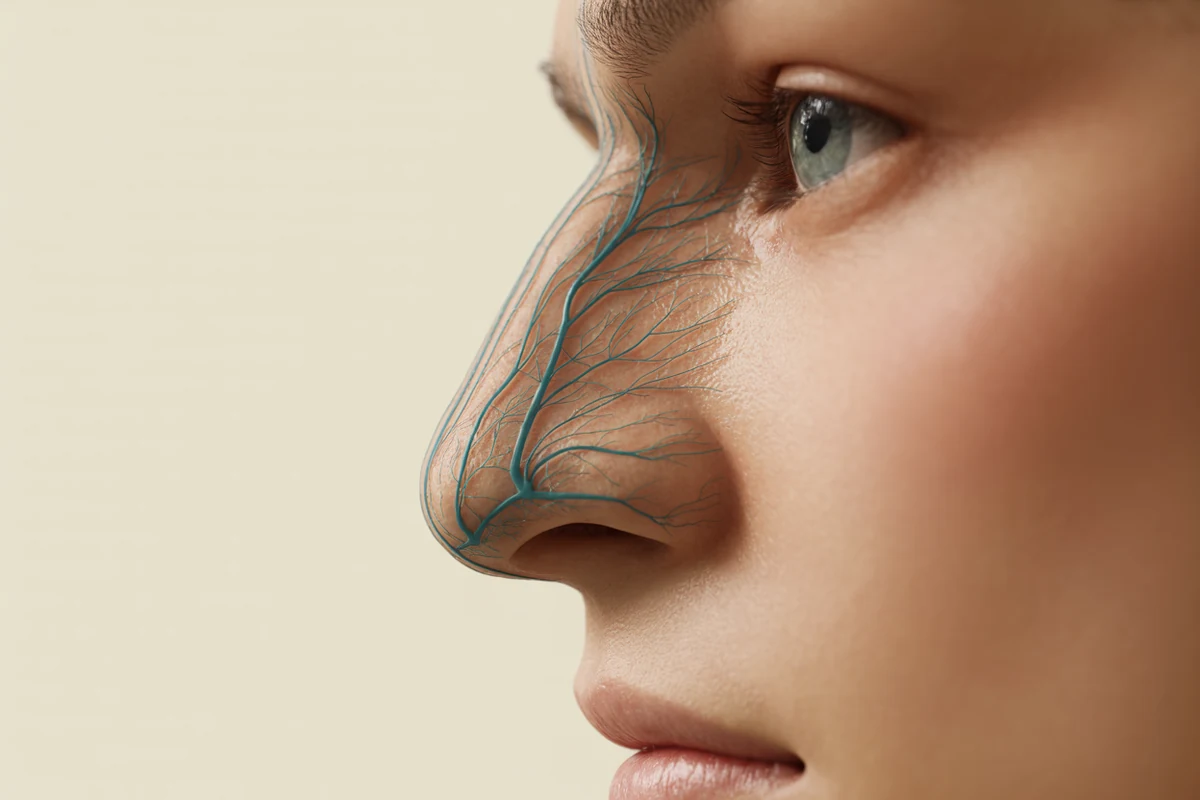
In migraine, muscle relaxation is only part of the story. Botox also inhibits the release of pain-signaling neurotransmitters from sensory nerve endings around the head and neck, dampening the peripheral input that feeds central sensitization. That is why the protocol targets a fixed anatomical map rather than whichever muscles happen to be overactive in a given face — the goal is coverage of the trigeminal and cervical sensory distribution, not aesthetic balance.
It also explains why the migraine dose is substantially higher than a cosmetic one, and why the injection sites include muscles no cosmetic injector would ever touch, like the trapezius.
Botox Migraine Injection Sites: The PREEMPT Protocol
The FDA-approved regimen for chronic migraine is known as the PREEMPT protocol, and it is fixed. Unlike cosmetic treatment, where the injector customizes placement to the individual’s anatomy and goals, the migraine protocol specifies the sites in advance.
The protocol calls for 155 units of Botox across 31 fixed injection sites, spanning seven head and neck muscle groups:
- Corrugator — the muscles that draw the brows together
- Procerus — between the brows, at the bridge of the nose
- Frontalis — the forehead
- Temporalis — the temples
- Occipitalis — the back of the skull
- Cervical paraspinal — the muscles running alongside the cervical spine
- Trapezius — the upper shoulders and base of the neck
Small amounts of Botox are injected with a tiny syringe into each mapped point across those muscle areas. In practical terms, the patient should expect to receive roughly 20 to 40 shots per treatment session. The whole appointment is short — the injections themselves take only a few minutes — but the sheer number of sites surprises patients who have only ever had cosmetic treatment.
The protocol is repeated every 12 weeks. That interval is part of the approval, not a suggestion.
For how injection mapping works across other treatment areas and indications, see our complete Botox injection sites guide.
Why the Fixed Map Matters
Providers sometimes add a small number of units to specific sites based on where a patient localizes their pain — the “follow the pain” approach layered on top of the fixed protocol. But the 155-unit, 31-site baseline is what the approval and the evidence rest on. Deviating from it substantially means practicing outside the studied regimen, and patients should understand when that is happening.
Are You a Good Candidate for Botox Migraine Treatment?
Not everyone who experiences migraine attacks is a good candidate. Only a medical provider can determine that. But before scheduling an appointment, it is worth checking the basic criteria:
- You have 15 or more headache days a month. Botox is FDA-approved for chronic migraine, defined as 15+ headache days per month. If your headaches are less frequent, they fall under episodic migraine, and you will need to consider other treatment options.
- You experience migraines, not other types of headaches. Botox is only approved to treat migraine headaches. It is not approved for cluster headaches or other headache types.
- You are not allergic to any of the ingredients in Botox. Botulinum toxin itself is not a known allergen, but the formulation contains other components that may trigger allergic reactions. Though rare, these reactions can be serious.
- You are over 18. Botox is not approved for use in children and adolescents under 18.
- You do not have other contraindications. Botox is safe and effective in most adults, but certain health conditions — particularly neuromuscular disorders — may rule it out. Ask your provider.
A headache diary is the single most useful thing a prospective patient can bring to a first consultation. Insurers and providers both want to see documented frequency, and reconstructing months of headache history from memory rarely holds up.
How to Get Botox for Migraines
You cannot buy Botox at a pharmacy and inject it yourself. You need to work with a licensed, board-certified medical provider who has completed comprehensive Botox training. Scope of practice varies by state — our guide on who can administer Botox covers who is permitted to inject where.
To find a provider who treats chronic migraine in your area, AbbVie — Botox’s manufacturer — maintains a specialist finder. If you have more than one option, interview a few and choose the one you are most comfortable with. There is a good chance you will work with them for many months, if not years, so it should be a good fit.
Once you find a provider, schedule an initial consultation. They will evaluate you to confirm you are a candidate for Botox migraine treatment and build a treatment plan if you are. Expect that plan to run at least two treatment cycles before anyone judges whether it is working.
Ready to put this into practice?
Explore Empire's hands-on, CME-accredited Aesthetic & Injectable Training courses — live patients, expert faculty, and ongoing mentorship.
Side Effects of Botox for Migraines
Common side effects of Botox for migraine include:
- Headache
- Neck pain
- Bruising at injection sites
- Swelling
- Flu-like symptoms
Most are mild and resolve within a few days. Neck pain and neck weakness deserve specific mention because they are more relevant here than in cosmetic treatment — the migraine protocol injects the cervical paraspinal and trapezius muscles, which cosmetic protocols do not. Some patients notice a temporary heaviness or difficulty holding the head upright, which typically settles as the dose distributes.
Because the protocol includes the frontalis and corrugator, patients may also see cosmetic effects — softened forehead lines, and occasionally brow asymmetry or eyelid droop if the toxin diffuses where it was not intended. These are technique-dependent and temporary.
As with any botulinum toxin treatment, rare but serious reactions are possible, including allergic reaction and distant spread of toxin effect. Any patient who develops difficulty swallowing, speaking, or breathing after treatment needs immediate medical evaluation.
The Practitioner’s View: A Different Skill, and a Different Business
Botox is generally associated with the aesthetics field, and that association obscures how much of the drug’s clinical footprint lies elsewhere. Botulinum toxin has nearly 100 different applications — yet only a handful are taught in seminars and classes around the United States. Chronic migraine is one of the most commercially and clinically significant of the ones that get skipped.
For clinicians, three things distinguish this from cosmetic injecting:
It Is a Different Anatomical Discipline
Cosmetic injecting is a face-and-expression discipline. The migraine protocol runs down the back of the skull, along the cervical paraspinals, and into the trapezius. Depth, needle angle, and the anatomy at risk are different. An injector who is excellent at glabellar lines has not, by that fact, learned the posterior neck.
It Is a Fixed Protocol, Not an Aesthetic Judgment
Much of cosmetic skill is assessment — reading a face in animation and deciding what to treat. PREEMPT inverts that. The value is in reproducible execution of a defined map at a defined dose on a defined interval, plus the clinical judgment to select patients correctly and document properly.
It Bills Through Insurance
This is the part practices routinely miss. Cosmetic Botox is cash-pay, elective, and discretionary — it competes with every other thing a patient might do with disposable income. Chronic migraine treatment is a medical indication that is frequently covered when documented medical-necessity criteria are met, and it recurs on a 12-week clock by protocol. That is a fundamentally different revenue profile: reimbursed rather than discretionary, and scheduled rather than hoped for. Practices already building an injectable service line should look at how this fits alongside their cosmetic work — our guide on how to increase revenue with Botox injections covers the broader picture.
Therapeutic botulinum toxin extends well past migraine. Botox for jaw clenching and TMJ is another indication that sits at the same intersection of pain management and injectable skill.
Frequently Asked Questions
How many units of Botox for migraines?
The FDA-approved PREEMPT protocol uses 155 units, distributed across 31 fixed injection sites spanning seven head and neck muscle groups. That is considerably more than a cosmetic treatment, which is why migraine patients receive roughly 20 to 40 individual shots per session.
Does insurance cover Botox for migraines?
Often, yes — unlike cosmetic Botox, which is never covered. Because chronic migraine is an FDA-approved medical indication, most insurers cover treatment when medical-necessity criteria are documented. Those criteria typically require a confirmed chronic migraine diagnosis at 15+ headache days per month and documentation that other preventive treatments were tried first. Requirements vary by plan, and prior authorization is standard. Verify with your insurer and your provider’s office before your first session.
How long until Botox works for migraines?
Not immediately, and this is the most common reason patients quit too early. Botox is a preventive treatment that reduces headache frequency over weeks — it does nothing for a migraine already in progress. Many patients notice improvement during the first 12-week cycle, but the treatment is generally evaluated over at least two cycles before deciding whether it is effective. For comparison, cosmetic results appear on a much faster clock; see our guide on how long before Botox works.
How often do you get Botox for migraines?
Every 12 weeks. The protocol is repeated on that interval for continued efficacy, and Botox reduces migraine for at least 12 weeks after each treatment. Stretching the interval tends to let headache frequency creep back before the next round.
What are the side effects of Botox for migraines?
Common side effects include headache, neck pain, bruising, swelling, and flu-like symptoms. Most are mild and go away within a few days. Neck pain and temporary neck weakness are more common than with cosmetic treatment because the protocol injects the cervical paraspinal and trapezius muscles.
Does Botox for migraines work?
For appropriately selected patients, yes. In clinical studies, Botox reduced headache days per month by 8 or 9, versus 6 or 7 with placebo. It reduces frequency rather than eliminating migraine, and it only carries FDA approval for chronic migraine at 15+ headache days per month — not for episodic migraine, cluster headache, or other headache types.
Is Botox for migraines the same as cosmetic Botox?
Same active ingredient, different product designation, different protocol, and different purpose. Migraine treatment uses a fixed 155-unit, 31-site map across head and neck muscles including the neck and shoulders — areas cosmetic treatment never touches. The goal is pain prevention, not appearance, though patients often see incidental softening of forehead and frown lines.
Can any Botox injector treat migraines?
No. Cosmetic training does not cover the PREEMPT protocol, the posterior neck anatomy it requires, or the diagnostic and documentation standards insurers expect. It is a distinct therapeutic competency requiring specific training, and patients should ask directly whether a provider treats chronic migraine specifically.
Learn to Treat Chronic Migraine with Botox
Chronic migraine is one of the highest-value indications in botulinum toxin — a defined protocol, a recurring 12-week schedule, an insurance-reimbursable service line, and a patient population that has usually exhausted everything else. It is also one that most injectors never learn, because most Botox courses stop at the face.
Empire Medical Training has taught healthcare professionals the full range of botulinum toxin applications since 1998 — therapeutic as well as cosmetic. Our Botox Training & Certification course is CME-accredited and hands-on, with live-patient injection under expert supervision, because competence with a needle comes from using one.



 Claim Your Prize!