







Search “nose slimming Botox” and you’ll find before-and-after photos promising a narrower, straighter, more refined nose in fifteen minutes with no scalpel. Some of that is real. Much of it is a different procedure being sold under the wrong name. Botox® for the nose is a legitimate, useful treatment — but only for a narrow set of muscle-driven concerns, and it does not do what most consumer content implies.
Here is the honest version. Botox cannot change nasal bone or cartilage. It cannot narrow a wide bony bridge, straighten a deviation, or reduce a bulbous tip made of cartilage rather than muscle. What it can do is relax specific muscles around the nose — which, in the right patient, softens alar flare, lifts a drooping tip slightly, and clears bunny lines. That’s a modest, animation-level effect. This guide covers exactly which muscles are involved, what results are realistic, where fillers come in (and why the nose is one of the most dangerous places on the face to inject them), and what patients and clinicians should each take away.
What “Botox for Nose Slimming” Actually Means
Botox is onabotulinumtoxinA, a purified protein that temporarily blocks the nerve signal telling a muscle to contract. Injected in tiny, precise doses, it relaxes the target muscle and the skin over it settles. If you want the full mechanism, see our guide on what Botox is and how it works.
That mechanism defines the ceiling. Botox only affects muscle. The nose is mostly skin, cartilage, and bone, with a thin layer of muscle draped over and around it. So any “slimming” effect from Botox is muscle-mediated: it reduces how much the nose flares, scrunches, or drops when you animate, and it can subtly change the resting position of the tip. It does not narrow the structure underneath.
This is where most consumer articles go wrong. A “non-surgical nose job” or “liquid nose job” that visibly changes the shape or contour of a nose — camouflaging a dorsal hump, straightening a profile, adding projection — is a dermal filler procedure, not a Botox one. The two get conflated constantly. They are not interchangeable, they target different problems, and they carry very different risk profiles.
The Three Muscles That Matter
Nearly all legitimate Botox use around the nose targets one of three muscles. Knowing which one is driving a patient’s complaint is the whole assessment.
Dilator Naris — Alar Flare
The dilator naris flares the nostrils. In patients whose nostrils widen noticeably on smiling, speaking, or at rest from baseline muscular tone, relaxing this muscle can reduce that flare and make the base of the nose read as narrower. This is the closest thing to genuine “nose slimming” with Botox — and it works only when the flare is muscular. If the alar base is simply wide anatomically, Botox will do nothing, and the honest answer at consultation is to say so.
Depressor Septi Nasi — Tip Droop
The depressor septi nasi pulls the nasal tip downward, most visibly when a patient smiles or talks. Relaxing it allows the tip to sit slightly higher and stops the dynamic droop on animation. Patients often describe this as their nose “dropping” in photos when they smile. The lift is subtle — millimeters, not a rhinoplasty result — but on a profile view it can meaningfully lengthen the appearance of the nose’s underside and reduce the sense of heaviness at the tip.
Nasalis — Bunny Lines
Bunny lines are the diagonal wrinkles that fan across the upper sides of the nose when you scrunch it — some patients call it chronic nose scrunching. They come from the nasalis muscle. This is the most predictable of the three indications, because bunny lines are by definition dynamic: they exist because a muscle contracts. Relax the muscle, the lines soften. Bunny lines also frequently appear or worsen after glabellar treatment, when patients unconsciously recruit the nasalis to compensate for a frozen corrugator — which is why experienced injectors assess the nose as part of any upper-face plan rather than as a standalone.
Realistic Results, Dosing, and Duration
Nose treatment is one of the lowest-dose areas on the face. Doses are small — commonly on the order of a few units per injection point, with a full nasal treatment often totaling under ten units — and the exact number varies with nasal structure, muscle bulk, sex, prior treatment, and the specific complaint. Any source quoting you a fixed universal number for “nose Botox” is selling certainty that doesn’t exist. Dosing is an assessment decision, not a recipe.
The whole appointment typically runs about 30 minutes including preparation and assessment. There’s no downtime. Onset follows the usual neuromodulator timeline — softening within a few days, full effect around two weeks — and results generally last three to six months before muscle function returns and re-treatment is needed.
The most important caveat: these procedures are not effective in all patients. The underlying cause of the bunny lines, the flare, or the drooping tip must be local muscle activity. When it isn’t — when the issue is cartilage, bone, skin quality, or fixed anatomy — Botox will not help, and no dose adjustment will change that. Selecting the wrong patient is the single most common reason nose Botox “doesn’t work.”
Side effects are typically mild and local: tenderness, itching, swelling, and bruising around the injection site. Technique-dependent complications in this region are largely about diffusion into neighboring muscles — the levator labii superioris alaeque nasi and the upper lip elevators sit close by, and unintended spread can produce a flattened or asymmetric smile. Our Botox injection sites guide covers the surrounding anatomy in detail, and the do’s and don’ts after Botox reduce most avoidable post-treatment problems.
Botox vs. Filler for the Nose
These are complementary tools, not competitors, and the distinction is clinical rather than marketing.
Botox relaxes muscle. It addresses flare, tip droop on animation, and bunny lines. It subtracts movement.
Hyaluronic acid filler adds volume. It’s more versatile for shape-related complaints and is what people are actually describing when they say “non-surgical nose job.” Filler results also tend to be more durable — roughly six to 12 months, sometimes longer. Common targets include:
Ready to put this into practice?
Explore Empire's hands-on, CME-accredited Aesthetic & Injectable Training courses — live patients, expert faculty, and ongoing mentorship.
- The tip of the nose. The objective overlaps with Botox — raising the tip — but filler achieves it by adding structural support rather than releasing a depressor. It can also add volume for a more youthful appearance.
- The bridge. Adds volume to slimmer or concave noses and can camouflage contour irregularities.
- The sides. Volume placement can address “hollow” lateral nasal walls. Dosing and injection sites should be symmetrical.
- The nasolabial area. Not the nose itself, but close enough that it’s often included in a comprehensive plan. Deep nasolabial folds call for a different material — calcium hydroxylapatite (Radiesse) — which lasts longer and delivers more substantial volume.
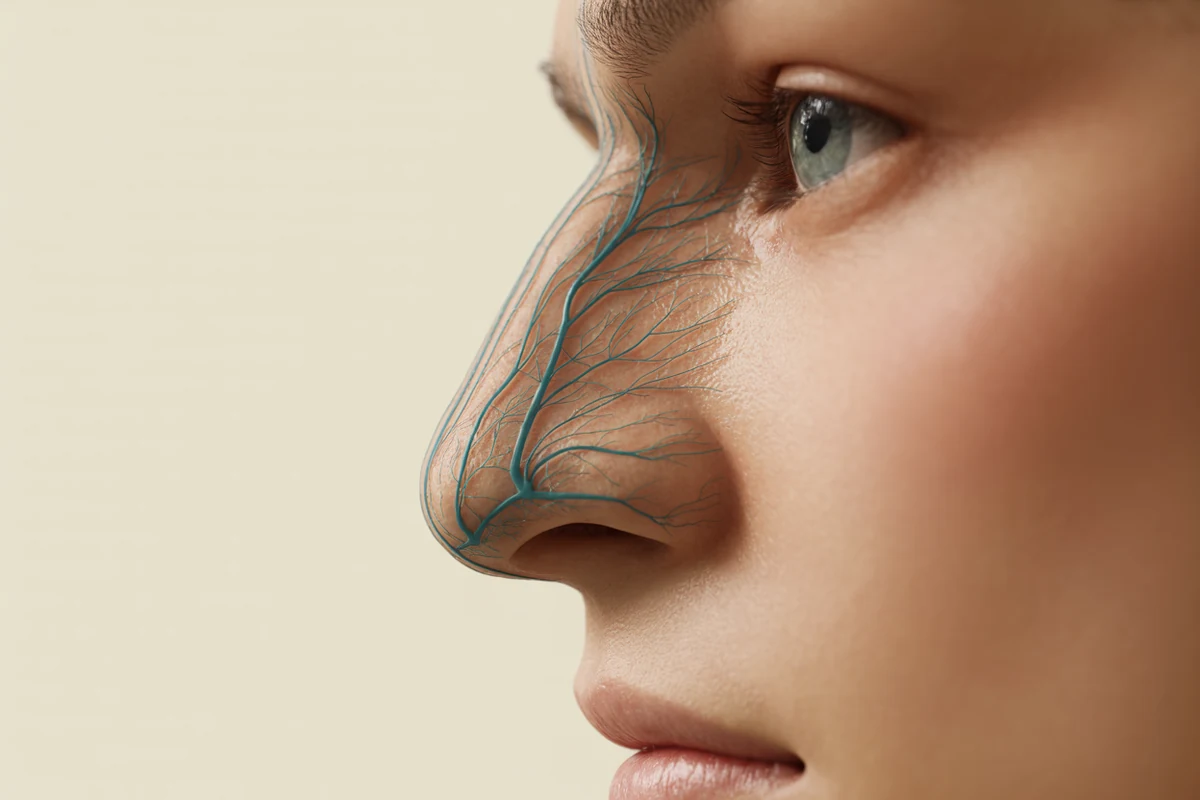
Now the part that consumer content routinely omits. The nose is one of the highest-risk areas on the face for filler injection. It is supplied by a dense arterial network with direct connections to the ophthalmic circulation. Intravascular injection or compression here can cause vascular occlusion, skin necrosis, and — in rare but documented cases — permanent blindness. It is also a compromised field: patients with prior rhinoplasty have altered, scarred vasculature that makes the anatomy less predictable.
This is not a reason for patients to avoid nasal filler outright. It is a reason to insist on an injector with formal training in nasal vascular anatomy, aspiration and cannula technique, occlusion recognition, and hyaluronidase reversal protocol — and to be skeptical of anyone offering a “liquid nose job” as a quick add-on. For clinicians, this region belongs firmly in advanced practice, which is why our Complete Dermal Filler Training teaches danger-zone anatomy and complication management alongside injection technique.
Other Nose-Slimming Options
PDO Thread Lift (Hiko Nose Thread Lift)
A nose thread lift uses polydioxanone (PDO) threads — medical-grade sutures that dissolve over time — placed to lift and tighten skin at the tip, bridge, and sides, flatten flared nostrils, and make the nose read as more compact. Like Botox and filler, it’s temporary, but it typically lasts longer: roughly six to 12 months. It shares the nose’s vascular risk profile and demands the same anatomical rigor, which is the focus of our PDO Thread Lift Training.
Makeup Contouring
Genuinely effective, entirely reversible, and free of medical risk. Shades lighter than your skin tone applied to areas you want to bring forward and darker shades on areas you want to recede can visibly narrow the nose in most lighting. Combined with shadow and highlight around the cheekbones and eyes, the effect on perceived nasal width is real — it just isn’t permanent, and it doesn’t survive a swim.
Nose Exercises
Widely promoted online as a way to tone nasal muscles and slim the bridge and nostrils. Be clear-eyed here: the nose’s shape is determined mainly by bone and cartilage, neither of which responds to exercise. There is no credible evidence that nasal exercises change nasal shape. They cost nothing and harm nothing, but they should not be part of a treatment plan presented as clinical.
Surgical Rhinoplasty
The only option that actually changes nasal structure — and priced accordingly. The American Society of Plastic Surgeons puts rhinoplasty at $6,000 or more, and once facility, anesthesia, and related fees are added, totals of $15,000 or more are common. It carries real surgical risk and recovery. For patients whose concern is genuinely structural, it’s also the only thing that will work, and saying so is better practice than selling them a neuromodulator that can’t deliver.
Frequently Asked Questions
Does Botox actually slim your nose?
Only in a limited, muscle-mediated sense. Relaxing the dilator naris can reduce alar flare in patients whose flare is muscular, which makes the nasal base look narrower. Botox does not change nasal bone or cartilage, so it cannot narrow the underlying structure. If your nose is wide anatomically rather than dynamically, Botox will not slim it.
How many units of Botox for the nose?
Doses are small — typically a few units per injection point, with a full nasal treatment often totaling under ten units. The exact figure depends on which muscle is targeted, nasal structure and size, muscle bulk, and treatment history. It’s an individualized assessment, not a fixed protocol, and any provider quoting a universal number before examining you is guessing.
How long does nose Botox last?
Generally three to six months. Duration varies with dose, muscle mass, metabolism, and how long you’ve been treated — patients treated consistently sometimes find intervals lengthen as the muscle weakens over time.
Can Botox lift the nasal tip?
Yes, subtly. Relaxing the depressor septi nasi releases the downward pull on the tip, allowing it to sit slightly higher and reducing droop on smiling. The change is measured in millimeters and is most noticeable in animation. It is not a substitute for a rhinoplasty tip refinement, and it only works when a hyperactive depressor septi is the cause.
Does Botox help bunny lines?
This is Botox’s most reliable nasal indication. Bunny lines come from nasalis contraction — they’re dynamic by definition, so relaxing the muscle softens them predictably. They often appear or intensify after glabellar treatment as patients recruit the nasalis to compensate, which is why the nose is worth assessing whenever the upper face is treated.
Is nose Botox safe?
In trained hands at clinical doses, yes. Side effects are usually mild and local — tenderness, itching, swelling, bruising. The main technique-dependent risk is diffusion into the nearby upper-lip elevators, which can flatten or skew a smile until the effect wears off. It is a medical procedure, never a do-it-yourself one, and it should be performed only by a licensed provider with proper training. Injection mistakes cannot always be corrected, which means living with the result until the product wears off.
Botox vs. filler for the nose — which is right?
It depends entirely on the complaint. Botox for movement problems: flare, tip droop on smiling, bunny lines. Filler for shape problems: contour irregularities, a low bridge, hollow sidewalls, tip projection. If someone is promising to reshape your nose without surgery, they are describing filler — and you should confirm they are formally trained in nasal vascular anatomy before proceeding, because this region carries a real risk of vascular occlusion and, rarely, blindness.
Train to Treat the Nose Safely
The nose punishes guesswork. Three small muscles, a dense arterial network with a route to the eye, low dose tolerances, and a patient population that arrives having read that a fifteen-minute injection will do what only surgery can. Getting it right means knowing the anatomy cold, selecting patients honestly, and being willing to tell someone their concern is structural — and that no needle will fix it.
Empire Medical Training has trained healthcare professionals in aesthetic medicine since 1998. Our Botox Training & Certification course is CME-accredited and hands-on, with live-patient injection under expert supervision — covering facial anatomy, dosing by muscle, diffusion control, patient selection, and complication management. If you’re still working out your scope, start with our guide on who can administer Botox.


 Claim Your Prize!