





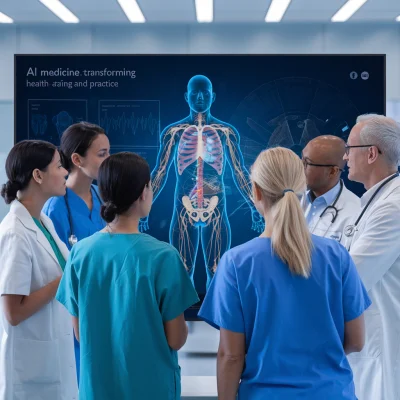
Artificial Intelligence (AI) is rapidly transforming the landscape of modern medicine, creating unprecedented opportunities for healthcare providers, medical professionals, and patients alike. From enhancing diagnostic accuracy to personalizing treatment plans, AI technology is revolutionizing how we approach healthcare delivery and medical education.
As medical professionals continue to adapt to these technological advances, understanding the current applications and future potential of AI in medicine becomes crucial for staying competitive in today's healthcare environment. This comprehensive guide explores the various ways AI is reshaping medical practice and what it means for healthcare training and professional development.
Current Applications of AI in Medical Practice
The integration of AI in healthcare has already begun showing remarkable results across multiple medical specialties. Medical imaging represents one of the most successful implementations, with AI algorithms now capable of detecting diseases with accuracy rates that often match or exceed human specialists.
In radiology, AI systems can identify early-stage cancers in mammograms, CT scans, and MRIs with impressive precision. Studies have shown that AI-powered diagnostic tools can reduce false positives by up to 5.7% and false negatives by 9.4% in breast cancer screening.
Diagnostic Enhancement
AI-powered diagnostic tools are transforming how medical professionals approach patient assessment. Machine learning algorithms can analyze vast amounts of patient data, including medical history, symptoms, and test results, to suggest potential diagnoses and treatment options.
These systems excel at pattern recognition, identifying subtle correlations in data that might escape human observation. For dermatology, AI applications can analyze skin lesions and provide risk assessments for melanoma and other skin conditions with remarkable accuracy.
Personalized Treatment Planning
One of the most promising applications of AI in medicine is its ability to create personalized treatment plans. By analyzing patient genetics, lifestyle factors, and medical history, AI systems can recommend tailored therapeutic approaches that optimize outcomes while minimizing adverse effects.
In oncology, AI algorithms help oncologists select the most effective chemotherapy regimens based on tumor characteristics and patient-specific factors. This precision medicine approach has led to improved survival rates and reduced treatment-related complications.
AI's Impact on Medical Training and Education
The integration of AI technology is also revolutionizing medical education and professional training. Virtual reality simulators powered by AI provide realistic training scenarios that allow medical professionals to practice procedures without risk to actual patients.
These advanced training systems can adapt to individual learning styles and provide personalized feedback, accelerating the learning process and improving skill acquisition. For aesthetic medicine practitioners, AI-enhanced training platforms offer sophisticated simulation capabilities for procedures like Botox injections and dermal filler applications.
Enhanced Simulation Technologies
AI-powered medical simulators create increasingly realistic training environments that respond dynamically to trainee actions. These systems can simulate complex patient scenarios, including rare conditions that trainees might not encounter during traditional clinical rotations.
The technology enables repetitive practice of high-risk procedures in a safe environment, allowing medical professionals to build confidence and expertise before treating actual patients. This approach significantly reduces the learning curve and improves patient safety outcomes.
Adaptive Learning Platforms
Modern medical education platforms utilize AI to create personalized learning experiences that adapt to individual progress and learning preferences. These systems track performance metrics and adjust content delivery to optimize knowledge retention and skill development.
For medical aesthetic training, AI-enhanced platforms can provide real-time feedback on injection techniques, helping practitioners perfect their skills more efficiently than traditional training methods.
Emerging AI Technologies in Healthcare
Several cutting-edge AI technologies are poised to further transform medical practice in the coming years. Natural language processing (NLP) is improving clinical documentation by automatically generating patient notes and extracting relevant information from medical records.
Predictive analytics powered by machine learning algorithms can identify patients at risk for complications, readmissions, or adverse drug reactions, enabling proactive interventions that improve outcomes and reduce costs.
Robotic Surgery and AI Integration
The combination of robotic surgery systems with AI technology is creating new possibilities for minimally invasive procedures. AI algorithms can enhance surgical precision by providing real-time guidance and detecting potential complications before they become serious issues.
These systems offer improved visualization, enhanced dexterity, and reduced tremor effects, leading to better surgical outcomes and faster patient recovery times.
Drug Discovery and Development
AI is accelerating pharmaceutical research by identifying promising drug compounds and predicting their effectiveness and safety profiles. Machine learning algorithms can analyze molecular structures and biological pathways to identify potential therapeutic targets more efficiently than traditional methods.
This technology has the potential to significantly reduce the time and cost associated with bringing new medications to market, ultimately benefiting patients through faster access to innovative treatments.
Benefits and Advantages of AI in Medicine
The implementation of AI in healthcare offers numerous benefits that extend beyond improved diagnostic accuracy. These technologies can enhance efficiency by automating routine tasks, allowing medical professionals to focus on complex patient care activities.
AI systems provide 24/7 availability, ensuring consistent performance without fatigue or emotional stress that can affect human decision-making. This reliability is particularly valuable in emergency situations where quick, accurate assessments are critical.
Improved Patient Outcomes
Studies consistently demonstrate that AI-assisted medical care leads to better patient outcomes across various conditions. Early detection capabilities enabled by AI screening tools result in more timely interventions and improved survival rates.
The technology also supports better medication management by identifying potential drug interactions and optimizing dosing schedules based on individual patient characteristics and response patterns.
Cost Reduction and Efficiency
Healthcare organizations implementing AI solutions report significant cost savings through improved efficiency and reduced medical errors. Automated diagnostic tools can process imaging studies faster than human radiologists, reducing wait times and improving patient throughput.
AI-powered administrative tools streamline appointment scheduling, insurance verification, and billing processes, reducing overhead costs and improving practice profitability.
Challenges and Considerations
Despite its tremendous potential, the implementation of AI in medicine faces several challenges that must be addressed. Data privacy and security concerns are paramount, as AI systems require access to sensitive patient information to function effectively.
Regulatory approval processes for AI-powered medical devices can be complex and time-consuming, potentially slowing the adoption of beneficial technologies. Healthcare professionals must also adapt to new workflows and learn to interpret AI-generated recommendations effectively.
Ethical Considerations
The use of AI in medical decision-making raises important ethical questions about accountability and transparency. Healthcare providers must understand how AI systems reach their conclusions to maintain appropriate oversight and ensure patient safety.
Bias in AI algorithms can perpetuate healthcare disparities if not properly addressed during system development and implementation. Ongoing monitoring and adjustment of AI systems are essential to maintain fairness and accuracy across diverse patient populations.
Training and Adoption Challenges
Healthcare professionals require comprehensive training to effectively utilize AI tools in their practice. This education must cover not only how to use the technology but also how to interpret results and integrate AI recommendations into clinical decision-making processes.
Resistance to change and concerns about job displacement can impede AI adoption in healthcare settings. Organizations must address these concerns through transparent communication and comprehensive training programs.
Future Outlook for AI in Medicine
The future of AI in medicine holds tremendous promise for continued advancement and innovation. Emerging technologies like quantum computing may further enhance AI capabilities, enabling more complex analysis and prediction tasks.
Integration with Internet of Things (IoT) devices and wearable technology will create continuous monitoring capabilities that provide real-time health insights and early warning systems for potential medical issues.
Expanding Applications
AI applications in medicine will continue expanding into new specialties and use cases. Mental health assessment and treatment planning represent emerging areas where AI technology shows significant potential.
Gene therapy and regenerative medicine may benefit from AI-powered analysis of genetic data and treatment outcome prediction, opening new therapeutic possibilities for previously untreatable conditions.
Preparing for the AI-Enhanced Healthcare Future
Medical professionals who want to thrive in the AI-enhanced healthcare environment must embrace continuous learning and professional development. Understanding the capabilities and limitations of AI technology will become essential for effective patient care.
Aesthetic medicine practitioners, in particular, can benefit from advanced training programs that incorporate AI-enhanced learning tools and simulation technologies. These programs provide the technical skills and knowledge needed to leverage AI effectively in practice.
At Empire Medical Training, we recognize the importance of preparing healthcare professionals for the future of medicine. Our comprehensive training programs integrate the latest technology and evidence-based practices to ensure our graduates are ready for the evolving healthcare landscape.
Are you ready to advance your medical career with cutting-edge training that prepares you for the AI-enhanced future of healthcare? Contact Empire Medical Training today to learn about our innovative programs in aesthetic medicine and discover how we can help you stay ahead in this rapidly evolving field.

 Claim Your Prize!