








"Will Botox work for migraines?" is the single most common question I get in our neurotoxin courses. The short answer is that Botox for migraines is an FDA-approved, on-label indication with two positive pivotal trials behind it. The longer answer — the one that actually matters to an injector deciding whether to offer this — is that the drug is doing something in a migraine patient that has very little to do with what it does in a glabella. If you carry your aesthetic mental model into a headache patient, you will mis-select the patient, under-dose the protocol, measure the wrong endpoint, and conclude the treatment failed when it never got a fair trial.
This is the hub of Empire's chronic migraine cluster. It frames the whole territory — mechanism, eligibility, credentialing, protocol and outcomes — and then goes deep on the part that reorganises everything else: what the toxin is actually doing.
This piece is written for the person holding the syringe.
The five decisions, in the order you will actually face them
Offering therapeutic neurotoxin is not one decision. It is five, and injectors tend to make them out of order.
- Mechanism. Do you understand what you are blocking, and therefore what you should expect and when? This article.
- Eligibility. Does this patient meet the on-label definition of chronic migraine, and has the diagnosis been made by someone qualified to make it? See the companion pieces on on-label criteria and on secondary-headache red flags — the second of those is the one that keeps you out of trouble.
- Coverage. Are you a credentialed, participating provider on this patient's plan, or are you running this cash-pay and off-label? These are two different businesses with two different documentation obligations.
- Protocol. Do you inject the fixed 155-unit, 31-site paradigm, or do you tailor? The answer depends entirely on decision 3.
- Outcomes. What are you measuring, and did you set that measure before the first injection? Setting a measurable goal is, to me, one of the most important parts of this whole process, and it is the step aesthetic injectors skip most often.
Everything below feeds those five.
What the toxin is actually doing in a migraine patient
Aesthetics is a motor story. Migraine is a sensory one.
In an aesthetic practice we think about neurotoxin in exactly one way: we are going to stop the frontalis from moving so the horizontal lines soften. That is a motor endplate story, and it is a clean one. Acetylcholine release is blocked at the neuromuscular junction, the muscle stops contracting, the dynamic rhytid relaxes. It is predictable enough that we can promise a patient a result in a fortnight.
Migraine does not work that way. Yes, the toxin still stops muscle movement — that part does not change. But the reduction in muscle contraction is not what is preventing the headaches. The authors of the most complete published review of the mechanism put it about as bluntly as a peer-reviewed journal allows: the traditional mechanism of reducing muscle contractions "is insufficient to explain its efficacy in migraine, which is primarily a sensory neurological disease" (Burstein R, Blumenfeld AM, Silberstein SD, Manack Adams A, Brin MF. Mechanism of Action of OnabotulinumtoxinA in Chronic Migraine: A Narrative Review. Headache. 2020;60(7):1259–1272).
That single sentence is the reason this article exists. If migraine prophylaxis were a muscle-relaxation effect, then everything you already know about aesthetic dosing would transfer directly, the response would be as predictable as a forehead, and it would arrive on the same two-week timeline. None of those three things is true.
The molecular step is identical. The nerve terminal is not.
Botulinum toxin type A cleaves SNAP-25, one of the essential proteins in the SNARE complex that lets a vesicle fuse with the terminal membrane and dump its contents. No functional SNARE complex, no regulated exocytosis. That step is the same everywhere the toxin lands.
What changes is which nerve you land on. SNAP-25 cleavage "occurs in both motor and sensory nerves," and because both vesicular release and the insertion of membrane receptors are SNARE-dependent processes, the toxin inhibits both in sensory terminals as well (Burstein et al., 2020). Injected into the frontalis of a cosmetic patient, you are mostly exploiting the motor consequence. Injected into the occipitalis and cervical paraspinals of a chronic migraine patient, you are mostly exploiting the sensory one — sensory nerve endings belonging to neurons whose cell bodies sit in the trigeminal and cervical ganglia are distributed throughout every muscle in the protocol, and in people with migraine those endings are overactive.
The mediators — and an honest hedge
The neurotransmitters and neuropeptides involved are inflammatory and excitatory, and there is a host of them. The three named consistently in the literature are glutamate, substance P, and calcitonin gene-related peptide (CGRP). OnabotulinumtoxinA "inhibits the release of nociceptive mediators, such as glutamate, substance P, and calcitonin gene-related peptide" (Blumenfeld A, Silberstein SD, Dodick DW, Aurora SK, Turkel CC, Binder WJ. Method of injection of onabotulinumtoxinA for chronic migraine. Headache. 2010;50(9):1406–1418), and the 2020 review describes decreased exocytosis of "substance P, calcitonin gene-related peptide, and glutamate from primary afferent fibers that transmit nociceptive pain and participate in the development of peripheral and central sensitization."
I want to be careful with the word mechanism here. When I teach this, I say: by blocking those mediators we quiet the pain loop, we soften that cycle — and that is the proposed mechanism. It is well supported and it is the best explanation we have, but chronic migraine prophylaxis is not a closed case in the way that chemodenervation of the corrugator is a closed case. Hold it as a strong working model, not as settled physics. Evidence honesty is part of practising this well, and you will need it again below when we get to effect size.
It is not only about what leaves the vesicle
There is a second arm that gets less attention and explains a lot of the clinical behaviour. Because membrane receptor insertion is also SNARE-dependent, onabotulinumtoxinA reduces the trafficking of pain-transducing ion channels into the nociceptor membrane — TRPV1 in particular, and P2X3. The 2020 review notes that this downregulation "is likely enhanced in the sensitized neuron."
Read that again with a chairside eye. The effect is greater in the already-sensitised neuron — which means the full benefit should accumulate as you progressively strip receptors off terminals over successive cycles, rather than appearing all at once.
How an extracranial injection reaches an intracranial problem
The obvious objection from an anatomically-minded injector is that migraine pain is generated at the meninges, and you are injecting a muscle. The answer is that the two compartments are not sealed off from one another. Nerves from the trigeminal ganglion innervate intracranial structures and extend extracranially through cranial sutures; spinal nerves from the C2 and C3 dorsal root ganglia innervate pericranial muscles and pass intracranially through sutures, emissary canals and fissures. The PREEMPT injection sites correspond closely to those regions.
The functional evidence is more striking than the anatomical evidence. Extracranial administration of onabotulinumtoxinA inhibits the responses of unmyelinated C-fibres, but not thinly myelinated Aδ-fibres, to stimulation of their intracranial meningeal receptive fields (Burstein et al., 2020). That selectivity is not trivial: a humanised anti-CGRP monoclonal antibody was found in a preclinical study to do the opposite, inhibiting Aδ but not C-type trigeminal neurons (Melo-Carrillo A, Strassman AM, Nir RR, et al. J Neurosci. 2017;37:10587–10596) — which is the basis of the hypothesis that the two classes of preventive may be complementary rather than interchangeable.
And the authors are explicit that the puzzle is not solved: "the enigma of how onabotulinumtoxinA exerts its selective effects on different classes of sensory neurons remains unanswered." Say that in a consultation.
Who is actually a candidate
The label is narrow and the wording matters. BOTOX is indicated "for the prophylaxis of headaches in adult patients with chronic migraine (≥15 days per month with headache lasting 4 hours a day or longer)." The label also carries an explicit Limitations of Use statement: safety and effectiveness "have not been established for the prophylaxis of episodic migraine (14 headache days or fewer per month) in seven placebo-controlled studies."
Seven negative trials is not an absence of evidence. It is evidence of absence at that headache frequency, and it is the single most useful fact to have in your head when a patient with six bad headaches a month asks you for this. The full eligibility logic — the ICHD-3 criteria, the four-hour threshold, the prior-preventive-failure expectation, and the medication-overuse trap — is worked through in the companion resource on chronic migraine on-label criteria. Before any of that, though, somebody has to have confirmed that these are migraines at all.
The workup is not yours to skip
If a patient comes to you carrying a diagnosis of chronic migraine from a neurologist or a primary care physician, and they have had the appropriate workup, then fine — we can proceed to treatment. What we do not do is treat a headache we have not confirmed.
Other things cause headaches. Vascular anomalies, including aneurysms. Structural lesions, benign or malignant, inside the brain. Inflammatory conditions that are not migraine at all. Injecting neurotoxin is not a substitute for a workup, and an aesthetic practice is a genuinely dangerous place for an undiagnosed secondary headache to land, because we are set up to say yes.
The companion piece on secondary-headache red flags works through a published screening framework rather than a list I made up, and it covers the scenario that catches people out most often: the patient who was controlled and is no longer controlled. That is not a dosing problem until you have proven it is not a new diagnosis.
The credentialing wall, and the cash-pay door
Patients will ask whether insurance covers this. Two things determine the answer, and only one of them is about the patient.
The first is whether the patient meets the on-label and payer criteria. The second is whether you are an approved provider on that patient's plan. Not everyone injecting neurotoxin for aesthetic purposes can be credentialed and paid to inject it therapeutically — being competent with a syringe and being a participating provider are unrelated facts, and the second takes months and paperwork rather than training.
That leaves two legitimate business models, and you should choose one deliberately: pursue credentialing and run this as a covered therapeutic service, or run it cash-pay, explicitly off-label, with the tailoring that permits and the disclosure it imposes. Both have their own piece in this cluster.
The protocol, and why it is rigid
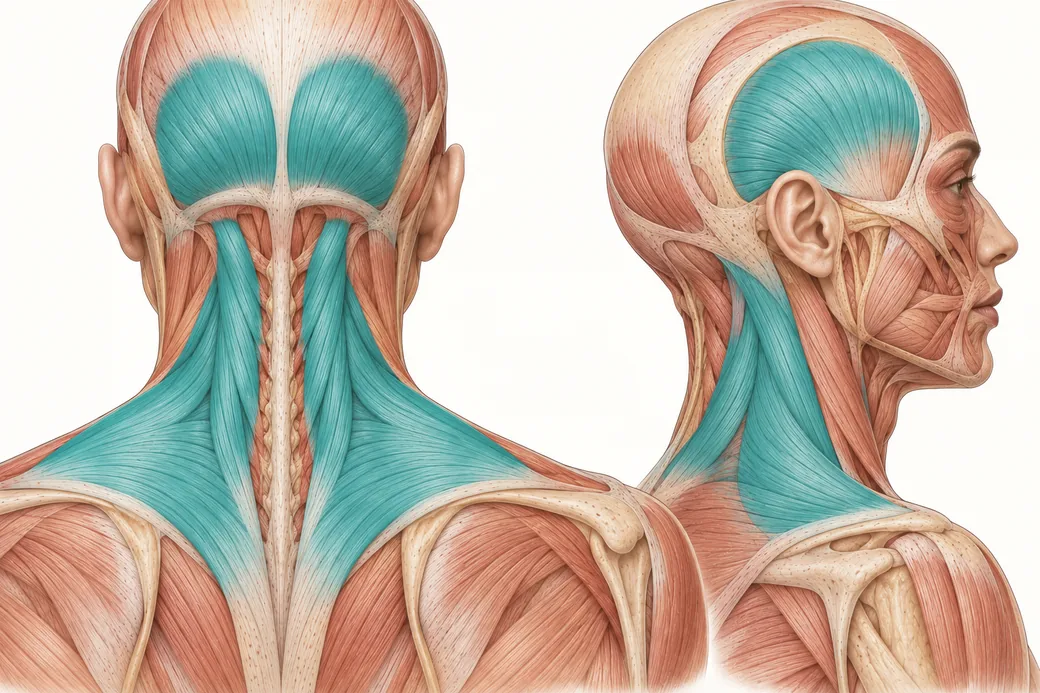
The approved regimen is 155 Units total, delivered as 31 injections of 5 Units (0.1 mL) each, divided across seven head and neck muscle areas, repeated no sooner than every 12 weeks. The seven areas are corrugator, procerus, frontalis, temporalis, occipitalis, cervical paraspinal muscle group and trapezius. The site-by-site allocation is in the FDA-approved prescribing information and should be read there rather than from a blog: see the BOTOX prescribing information, Table 3.
Two things about that number tend to surprise aesthetic injectors. The first is its size. A full upper face, or sometimes even a whole face, might be 60 to 80 units. This is 155, in one sitting, every twelve weeks. The second is its rigidity: this is a fixed-site, fixed-dose paradigm, administered regardless of where the individual patient's movement or pain happens to be. That is a deliberate trial-design choice with real consequences for how you should think about "personalising" it, and it gets its own resource piece in this cluster.
The distribution is also where the training gap lives. Corrugator, procerus, frontalis and, for many of us, temporalis are familiar ground. Occipitalis, cervical paraspinals and trapezius are not, and that is precisely why aesthetic-pattern injectors systematically under-treat the on-label protocol.
Measure disease burden, not movement
In aesthetics we assess dynamic movement, facial symmetry, and aesthetic concerns, and we tailor. In headache we assess the frequency, duration, severity and location of attacks, and disease burden: how many hours a day can this person function, how many hours are they losing, and can we move that number.
The pattern matters too — what triggers the attacks, when they start, whether they are unilateral. A patient with a reliably unilateral headache is a different tactical problem from one with a diffuse bilateral pattern.
What you must not do is carry the aesthetic assessment framework across. A migraine patient whose corrugators look beautifully relaxed and who is still losing eleven days a month is a treatment failure. A migraine patient with visible residual movement who has gone from eighteen headache days to seven is a success. The piece on aesthetic versus therapeutic endpoints in this cluster sets both frameworks out side by side.
What the evidence supports, and what it does not
This is where I want you to be able to hold two facts at once, because your patients deserve a number and not a slogan.
The pivotal data. In the pooled double-blind phases of the PREEMPT program, 1,384 adults were randomised. Mean change from baseline in headache days per 28 days at week 24 was −8.4 with onabotulinumtoxinA versus −6.6 with placebo (p < .001) (Dodick DW, Turkel CC, DeGryse RE, et al. Headache. 2010;50(6):921–936). Statistically significant, consistently favouring active treatment at every timepoint. It is also, plainly, a large placebo response.
The systematic review. A Cochrane review of 28 trials and 4,190 participants concluded that in chronic migraine, botulinum toxin type A reduces headache days per month by 1.9 days versus placebo (95% CI −2.7 to −1.0, high-quality evidence), and migraine days by about 2 days (Herd CP, Tomlinson CL, Rick C, et al. Botulinum toxins for the prevention of migraine in adults. Cochrane Database Syst Rev. 2018;6:CD011616). For episodic migraine, the reviewers remained uncertain that it works at all.
Two fewer headache days a month is a real and defensible effect in a population that is disabled fifteen-plus days a month. It is also not a cure, and a patient who was promised one will be disappointed by a result that the literature would call a success. Set the number.
The adverse event profile. The same Cochrane review found non-serious adverse events in about 60 per 100 treated participants versus 47 per 100 on placebo. In the chronic migraine trials behind the US label, reactions reported in ≥2% of treated patients and more often than placebo included neck pain (9% vs 3%), muscular weakness (4% vs <1%), eyelid ptosis (4% vs <1%) and facial paresis (2% vs 0%). Severe worsening of migraine requiring hospitalisation occurred in approximately 1% of treated patients, usually within the first week, versus 0.3% on placebo.
Neck pain and muscular weakness are the signature complications, they come from the posterior fields, and they are largely technique-dependent — an argument for learning the posterior anatomy properly, not for omitting it. And the boxed warning for distant spread of toxin effect still applies, at a dose substantially larger than a cosmetic one. Consent accordingly.
And expect the first cycle to disappoint
This is the fact I most want aesthetic injectors to internalise, because it is the opposite of everything our cosmetic experience teaches us. We can stop muscle movement predictably with one treatment. Quieting a cascade of inflammatory neurotransmitters usually takes repetition.
In the pooled PREEMPT population, 49.3% of onabotulinumtoxinA-treated patients achieved a ≥50% reduction in headache-day frequency during cycle 1 — and a further 11.3% and 10.3% first responded during cycles 2 and 3 respectively (Silberstein SD, Dodick DW, Aurora SK, et al. Per cent of patients with chronic migraine who responded per onabotulinumtoxinA treatment cycle: PREEMPT. J Neurol Neurosurg Psychiatry. 2015;86(9):996–1001). Roughly one responder in five did not declare themselves until the second or third treatment.
So when you treat a migraine patient for the first time, say it out loud before you inject: a large number of people will not respond this first time, and that does not mean you are a non-responder. It means we may need to repeat this. A non-response is not a non-responder — and if you do not set that expectation up front, you will lose the patient at week eight of a three-cycle therapy.
What changes on Monday morning
- Stop thinking of this as a bigger version of a cosmetic treatment. It is a different drug target in the same vial.
- Do not accept a self-reported migraine diagnosis. Require documentation, or refer for workup.
- Decide your business model before you quote anything; it dictates whether you inject the fixed protocol or tailor.
- Set one measurable, written baseline before the first injection.
- Book three cycles, not one, and say why.
- Learn the posterior fields, or do not offer the on-label protocol.
- If a controlled patient stops being controlled, that is a referral, not a dose escalation.
Empire's hands-on neurotoxin curriculum is where injection technique, product handling and facial anatomy are taught under supervision. If you are building toward therapeutic work, Complete Botox Training and Cosmetic Neurotoxins Training are the foundation, and Anatomical Based Aesthetics Training is where the anatomy gets rigorous enough to support it.
These figures reflect Dr. Chris Croley's clinical practice as taught in Empire Medical Training's hands-on curriculum, together with the FDA-approved labelling and published literature cited above. Technique is learned under supervision; this article is educational and is not a substitute for training.
Every guide in this cluster
 Clinical GuideChronic Migraine On-Label Criteria: Deciding Which Patients Actually QualifyChronic migraine criteria decide who you can treat on-label. The label wording, the ICHD-3 definition, the diary, and the documentation
 Clinical GuideConfirm the Diagnosis First: Secondary-Headache Red Flags Before You InjectSecondary headache red flags decide whether a migraine patient gets injected or referred. The SNNOOP10 framework, the numbers behind it
 Clinical GuideThe PREEMPT Protocol: Why Fixed-Site, Fixed-Dose Was the Trial Design, and What It Means in PracticeThe PREEMPT protocol is fixed-site, fixed-dose for a reason. What the trial design was, why the label is rigid, and where tailoring is
 Clinical GuideMigraine Treatment Outcome Measures vs Aesthetic Endpoints: Two Assessment FrameworksMigraine treatment outcome measures are disease burden, not movement. The four domains to record, the responder thresholds to pick, and
 Clinical GuideTrapezius and Occipitalis Botox Injections: The Posterior Fields Aesthetic Injectors Never LearnTrapezius and occipitalis botox injections sit outside every aesthetic injector's training. The anatomy, the landmarks, and why omittin
Train with Empire
This guide is clinical education. The technique behind it is taught hands-on, on live patients, with faculty beside you.
Explore Botox Training & Certification →Disclaimer
This article reflects the clinical opinions and experience of Dr. Chris Croley, Chief Medical Officer, Empire Medical Training, an independent faculty member contributing to Empire Medical Training's curriculum. The views expressed are the author's own and do not necessarily represent those of Empire Medical Training.
It is professional education, not medical advice, and is no substitute for hands-on training or independent clinical judgment. Licensed clinicians remain responsible for their own patient selection, technique and outcomes, for verifying current product labelling, and for practising within their scope and applicable law. Empire Medical Training accepts no liability for reliance on this content.
 Claim Your Prize!