







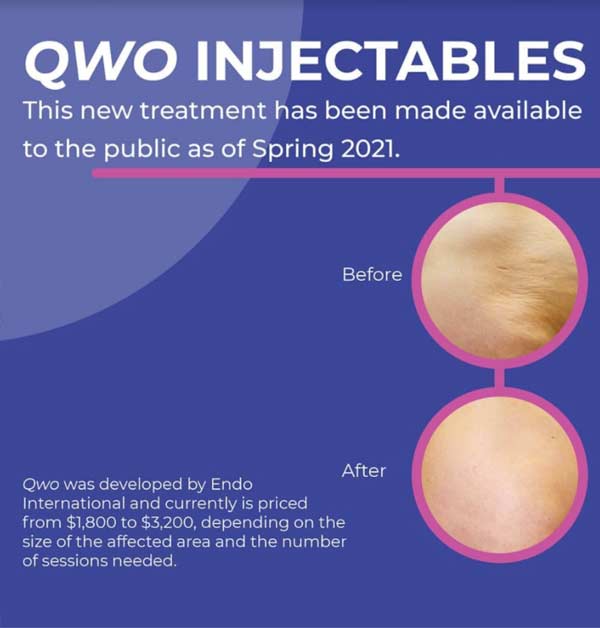
Update, September 2026: Qwo is no longer available. The FDA approved it in July 2020 as the first injectable for cellulite, but on December 6, 2022 its manufacturer announced it would stop producing and selling it, citing concerns about the extent and variability of bruising after the first treatment and the potential for prolonged skin discoloration (manufacturer announcement). This article now covers what that history means for providers and which cellulite treatments are available today.
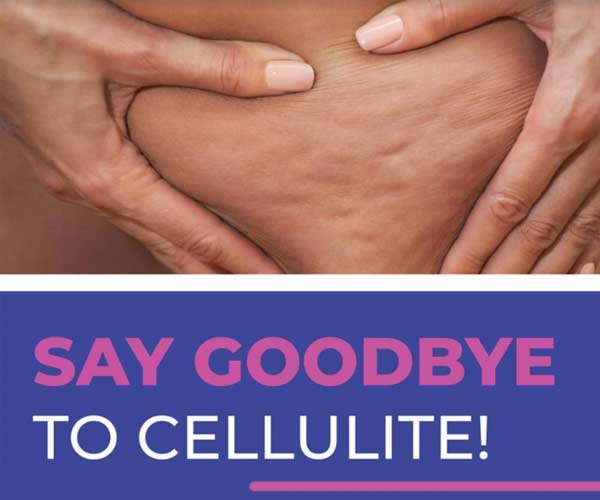
Cellulite, or a dimpling effect in the skin which can be a part of the aging process, is estimated to affect the large majority of adult women. For how widely experienced cellulite is, and how eager patients are to treat it, there are still relatively few options with strong medical evidence behind them.
In July 2020, the US Food and Drug Administration approved Qwo (collagenase clostridium histolyticum-aaes) for moderate to severe cellulite in the buttocks of adult women (FDA approval letter). It was the first FDA-approved injectable for cellulite, and its short run on the market is a useful lesson in how much patient tolerance of side effects matters for an aesthetic treatment.
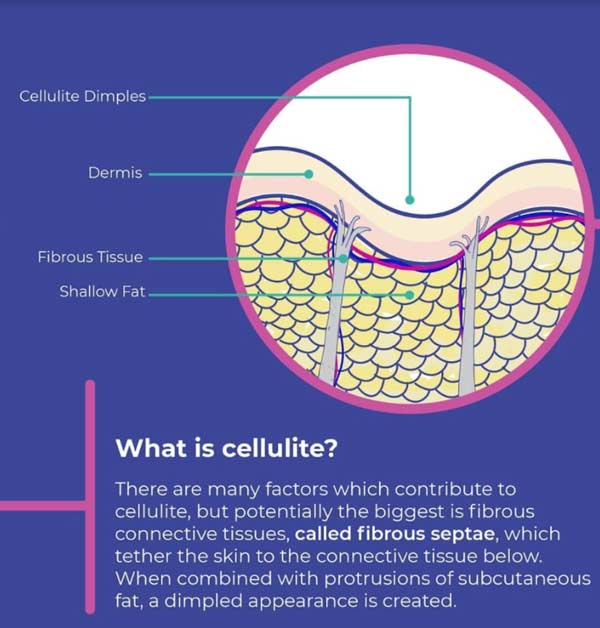
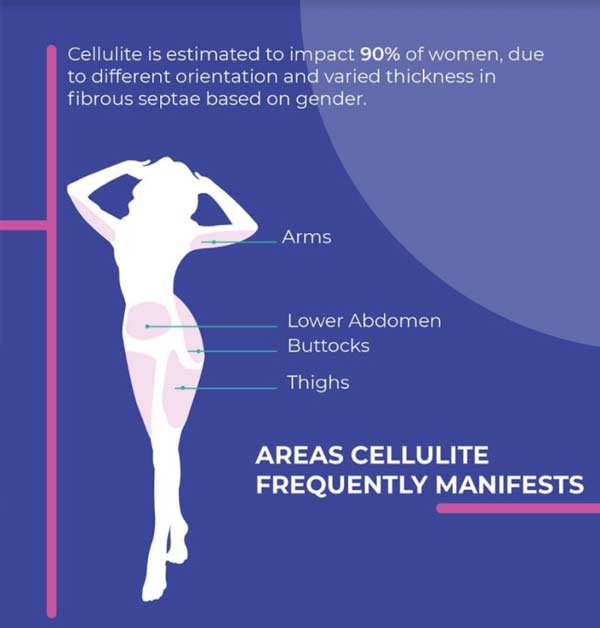
There are many factors which contribute to cellulite, but potentially the biggest is fibrous connective tissues, called fibrous septae, which tether the skin to the connective tissue below. When combined with protrusions of subcutaneous fat, a dimpled appearance is created. Cellulite manifests most frequently on the buttocks, thighs, lower abdomen and arms, and tends to impact women much more frequently than men, due to different orientation and varied thickness in fibrous septae based on gender.
Women also have fewer Beta receptors in areas such as the hips, thighs, and upper arms, areas that are commonly prone to cellulite. Estrogen also inhibits catecholamine-mediated lipolysis in the cells, and these hormone changes over time can cause cellulitic changes in the subcutaneous fat layer. Additional factors can include multiple pregnancies (brings on hormonal changes and venous insufficiency), congenital predispositions, smoking (decreases oxygenation of fat layers), poor diet, impaired venous and lymphatic drainage, and a genetic predisposition to smaller subcutaneous fatty chambers.
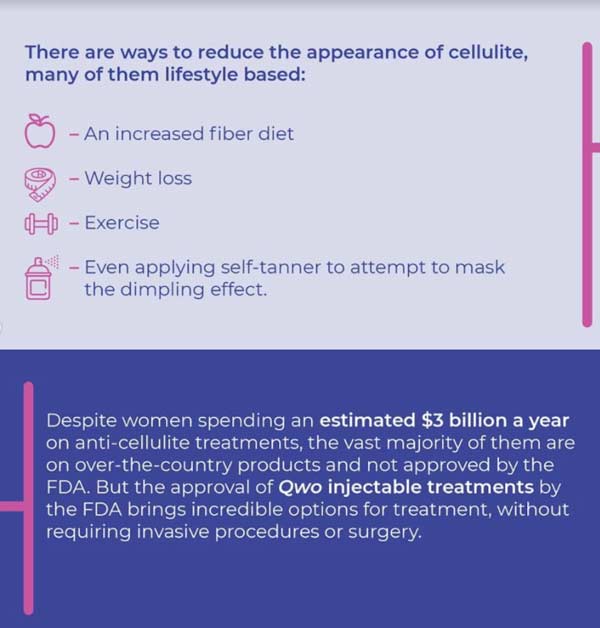
There are ways to reduce the appearance of cellulite, many of them lifestyle based: an increased fiber diet, weight loss, exercise, even applying self-tanner to attempt to mask the dimpling effect. But despite women spending an estimated $3 billion a year on anti-cellulite treatments, the vast majority of them are on over-the-counter products and not approved by the FDA. Today the FDA-cleared in-office options are devices rather than injectables, covered below.
Ready to put this into practice?
Explore Empire's hands-on, CME-accredited Aesthetic & Injectable Training courses — live patients, expert faculty, and ongoing mentorship.
HOW QWO WORKED, AND WHY IT MATTERED
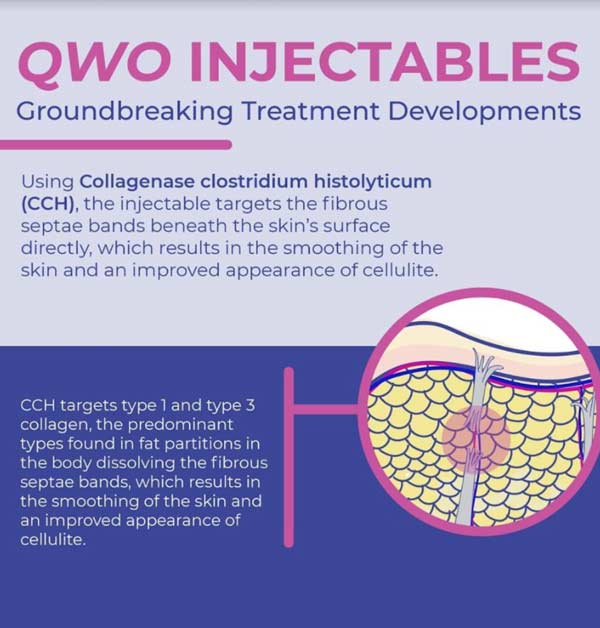
Collagenase clostridium histolyticum (CCH) utilizes collagenase, an enzyme that helps break down collagen, and in the case of CCH specifically targets type 1 and type 3 collagen, the predominant types found in fat partitions in the body. The injectable targets the fibrous septae bands beneath the skin’s surface directly, which results in the smoothing of the skin and an improved appearance of cellulite.
That mechanism, releasing the fibrous septae that pull the skin down, is the same target most current cellulite treatments aim at. What ended Qwo was not the mechanism but its side-effect profile in practice: bruising after the first session was more extensive and variable than many patients would accept for a cosmetic result.
CELLULITE TREATMENTS AVAILABLE NOW
With Qwo gone, the FDA-cleared in-office treatments for cellulite are devices that release or disrupt the fibrous septae:
- Cellfina, a powered subcision system cleared for long-term improvement in the appearance of cellulite in the buttocks and thighs of adult females (FDA 510(k) K192185).
- Avéli, a manual septa-release instrument first cleared in 2021 (FDA 510(k) K212399) and later given an extended clearance for long-term reduction.
- Resonic, a rapid acoustic pulse device cleared for long-term improvement in the appearance of cellulite (FDA 510(k) K222629).
Results vary, and these devices treat depressed dimples rather than skin laxity or excess fat, so patient selection matters. For a clinician-level comparison of every option and the evidence behind it, see the Empire On-Demand guide to cellulite treatments that have evidence.
Empire Medical Training also offers a Mesotherapy course covering body contouring techniques.



 Claim Your Prize!