







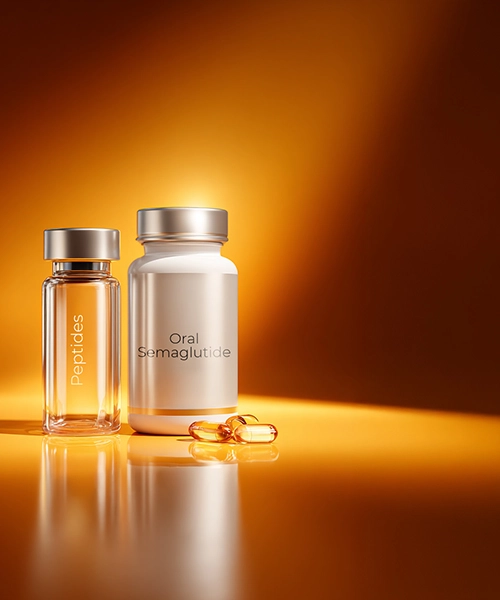
Peptides have become one of the most requested and least understood categories in aesthetic practice. Patients arrive asking for “the peptide that tightens skin” after reading a serum advertisement; colleagues ask which compounds they can actually source. Both questions have gotten harder to answer, because the regulatory ground under injectable peptides has shifted substantially since 2023 and is still moving in 2026.
This guide is written for practitioners. It covers what peptides plausibly do in skin, which ones have evidence behind them, how to talk to patients about realistic outcomes, and — critically — where these compounds currently sit with the FDA. If you took a peptide CME course before 2024, some of what you learned about sourcing is now out of date.
What Peptides Actually Do in Skin
Peptides are short chains of amino acids, typically 2–50 residues. In skin, the ones that matter act as signaling molecules: they bind receptors or interact with the extracellular matrix and change what fibroblasts do. That is the whole mechanism worth explaining to a patient. They are not filler, they are not a toxin, and they do not add volume.
The signaling effects most often described in the literature fall into a few buckets:
- Matrix signaling. Certain peptides upregulate collagen and elastin synthesis by fibroblasts, and modulate matrix metalloproteinases — the enzymes that break matrix down. The net effect on dermal density is gradual rather than immediate.
- Wound-healing and remodeling pathways. Several peptides were first characterized for tissue repair, which is why they surface in aesthetics at all. The remodeling that helps a wound close is the same biology that improves texture over months.
- Anti-inflammatory activity. Chronic low-grade inflammation contributes to matrix degradation. Peptides that damp this may support skin quality indirectly.
- Growth-hormone secretagogue activity. A separate class stimulates endogenous GH release. Effects on skin here are systemic and indirect, and the evidence for a specifically cutaneous benefit is thinner than the marketing suggests.
That last distinction matters clinically and is where a lot of patient education goes wrong. A GH secretagogue is not a skin drug that happens to be injected. It is a systemic endocrine intervention with a downstream cosmetic claim attached. Those are different risk conversations.
The FDA Picture Changed — and It Is Still Changing
This is the section that has aged worst in most peptide content online, including our own earlier version of this article. Here is the current state of play.
Most peptides used in aesthetic and anti-aging practice are not FDA-approved drugs. They reach patients through compounding pharmacies, which means their availability is governed by the FDA's 503A bulk drug substances list. That list has three practical buckets: Category 1 (under evaluation, may be compounded while under review), Category 2 (identified as posing significant safety risks — effectively do not compound), and substances not nominated at all.
Beginning in 2023, the FDA moved a number of widely used peptides into Category 2, which abruptly cut off legitimate compounded supply for compounds many practices had built protocols around. GHRP-2 and GHRP-6 remain among the substances restricted from routine 503A compounding. If you are still teaching or using protocols built on those two, that is worth reviewing now.
In April 2026 the FDA reversed course on part of this, removing twelve peptides from Category 2 — among them GHK-Cu (injectable only) and TB-500 (thymosin beta-4), both of which are directly relevant to skin.
The nuance that matters, and that a lot of commentary got wrong: removal from Category 2 is not the same as clearance. It removes the “significant safety risks” designation. It does not by itself place a substance on the 503A bulks list or make it approved. The Pharmacy Compounding Advisory Committee review process is what determines eventual status, and GHK-Cu is scheduled for review ahead of that outcome.
The practical takeaway for a practice: verify current status before you build a protocol or quote a patient, and verify it with your compounding pharmacy rather than a conference slide. This is a live regulatory question in 2026, not settled background. Any peptide course — including any article, this one included — is a snapshot of a moving target.
The Best Peptides for Skin: What Has Evidence Behind It
Setting sourcing aside for a moment, the peptides with the most credible skin-specific rationale are the ones acting locally on the matrix rather than systemically through the pituitary.
GHK-Cu (Copper Tripeptide-1)
GHK-Cu is the most studied peptide in this space and the one with the clearest dermal rationale. It has been characterized extensively for wound healing and matrix remodeling, and it is the compound most likely to come up when a patient says “copper peptides.” It was among the peptides removed from Category 2 in April 2026, injectable form included. We cover it in depth in our guide to what GHK-Cu peptides do.
Thymosin Beta-4 / TB-500
Characterized primarily for tissue repair and regeneration. The aesthetic interest follows from the same remodeling biology. Also removed from Category 2 in the April 2026 action — again, removal is not clearance.
Growth Hormone Secretagogues (Sermorelin, Ipamorelin, GHRP-2, GHRP-6)
These work upstream, prompting endogenous growth hormone release rather than acting on skin directly. Any skin benefit is a downstream systemic effect, and it is the least well-evidenced claim in the category. Their regulatory status also varies considerably compound to compound — GHRP-2 and GHRP-6 sit in the restricted group, while ipamorelin's status has moved through the nomination and review process separately. Do not treat this class as interchangeable, either clinically or legally. We cover the mechanism in more detail in our overview of secretagogues and how they are used.
Peptides for Skin Tightening and Loose Skin: Setting Honest Expectations
“Peptides for skin tightening” is one of the most common searches patients run before they walk into a consultation, and it sets up an expectation that peptides cannot meet on their own.
Ready to put this into practice?
Explore Empire's hands-on, CME-accredited Functional & Regenerative Medicine courses — live patients, expert faculty, and ongoing mentorship.
Peptides do not tighten skin the way energy devices or a surgical lift do. There is no immediate contraction. What matrix-active peptides plausibly offer is a gradual improvement in dermal quality — texture, tone, and density — over a course of months, as fibroblast activity changes. For a patient with mild laxity and good baseline skin, that can be a real and visible improvement. For a patient with significant laxity, it is not a substitute for the treatment they actually need, and promising otherwise will cost you the relationship.
The honest consultation framing is that peptides are a skin-quality intervention, not a lifting intervention. Patients who want lift need to hear about the modalities that produce lift. Patients who want better skin over time are the right candidates.
Timeframes matter too. Onset is measured in weeks, not days, and meaningful change in perceived texture and firmness is typically discussed at the three-to-six-month mark. Anyone promising a faster result is describing a different treatment.
Where Peptides Fit Alongside Toxins, Fillers and Biostimulators
Peptides do not compete with the core injectable armamentarium. They occupy a different axis.
- Versus neurotoxins. Botulinum toxin addresses dynamic rhytids by reducing muscle activity. Peptides do nothing for dynamic lines. Different indication entirely.
- Versus fillers. Fillers replace volume immediately and structurally. Peptides do not add volume. A patient with volume loss needs volume.
- Versus biostimulators. This is the real overlap. Sculptra and Radiesse also drive collagen through fibroblast stimulation, with a substantially larger evidence base and clear regulatory standing. If the goal is collagen stimulation, biostimulators are the better-supported first-line option.
- Versus topical peptide serums. Topical peptides face a genuine bioavailability problem — most do not cross the stratum corneum in meaningful quantity. This is the honest argument for injection, and it is also why patients who have tried a serum and seen nothing are not necessarily wrong about that serum.
In practice, peptides make most sense as an adjunct within a broader regenerative plan rather than as a headline treatment.
Safety, Candidacy and Documentation
Peptides are generally well tolerated, and injection-site reactions — redness, transient swelling — are the most common adverse events. But “naturally occurring in the body” is not a safety argument, and it should not appear in your patient materials. Insulin is naturally occurring. Dose, route and context determine risk.
Exercise particular caution with:
- Any history of malignancy. GH secretagogues raise IGF-1. The theoretical concern about growth signaling in the setting of malignancy is enough to make this a firm conversation with the patient's oncologist, not a judgment call at the aesthetic consult.
- Pregnancy and breastfeeding. Insufficient data. Do not treat.
- Autoimmune disease. Immunomodulatory peptides warrant coordination with the managing physician.
- Endocrine disorders. Anything acting on the GH axis belongs in a conversation with endocrinology.
Document your sourcing. If a compound's 503A status changes — and several have, twice, in three years — you want a record of what you used, from which pharmacy, and when. For a fuller treatment of the risk conversation, see are peptide injections safe.
Frequently Asked Questions
What do peptides do for skin?
They act as signaling molecules. Matrix-active peptides such as GHK-Cu prompt fibroblasts to increase collagen and elastin production and modulate the enzymes that degrade the matrix, which gradually improves dermal quality. They do not add volume, relax muscle, or lift tissue.
What are the best peptides for skin?
For skin specifically, the peptides with the most direct rationale are those acting locally on the matrix — GHK-Cu being the most studied. Growth hormone secretagogues are frequently marketed for skin but work systemically, and the evidence for a specifically cutaneous benefit is weaker.
How long do peptides take to work for skin?
Early changes are typically discussed at four to six weeks, with more meaningful change in texture and firmness assessed at three to six months. This is a gradual intervention. Patients expecting a filler-like or toxin-like timeline will be disappointed.
Are peptides good for skin, or is it marketing?
Both, depending on the peptide. GHK-Cu has a genuine and substantial research base. Much of the broader “peptides for anti-aging” category is extrapolated from systemic effects and sold well beyond what the data support. The distinction between a matrix-active peptide and a GH secretagogue is the most useful filter a practitioner can apply.
Can I still get these peptides compounded?
It depends on the specific compound and on when you are asking. GHRP-2 and GHRP-6 remain restricted from routine 503A compounding. Twelve peptides including GHK-Cu (injectable) and TB-500 were removed from Category 2 in April 2026, but removal is not clearance and the review process is ongoing. Confirm current status with your compounding pharmacy before building a protocol.
Do injectable peptides work better than peptide serums?
Injection bypasses the bioavailability problem that limits topical peptides, which is the strongest argument for the injectable route. That is a claim about delivery, not a guarantee of clinical superiority for any given indication.
Training in Peptide Therapy
Peptides are a category where the regulatory knowledge is as clinically important as the injection technique, and where both have changed since most practitioners were last trained. Empire Medical Training's Peptide Therapy Master Course covers peptide therapy across rejuvenation, weight loss, muscle building and hair restoration in a nine-module system, including the compounding and regulatory landscape practitioners have to navigate.
If your interest is specifically the regenerative side of facial aesthetics, the Facial Contouring Injectables: Sculptra®, Radiesse®, Exosomes & PDRN Certification Workshop covers biostimulators and regenerative injectables hands-on, including how to sequence them with the rest of your injectable practice.



 Claim Your Prize!