







 Medically reviewed by
Mark Tager, MD
Integrative & Functional Medicine Physician; Author, ‘Feed Your Skin’
Medically reviewed by
Mark Tager, MD
Integrative & Functional Medicine Physician; Author, ‘Feed Your Skin’ The macronutrients — protein, fat, and carbohydrate — are the nutrients the body needs in large amounts, both to build and repair tissue and to fuel daily metabolism. In clinical nutrition, the useful questions are rarely “how many grams” in isolation. They are about quality: which proteins supply the full set of amino acids, which fats fortify the skin barrier rather than inflame it, and which carbohydrates feed the gut rather than spike blood sugar. This is the lens Dr. Mark Tager brings to Empire's precision nutrition curriculum, and it is the lens this guide uses.
This is clinical education for providers, not medical advice, and nothing here is a treatment recommendation, protocol, or substitute for individualized clinical judgment. The goal is to teach the science and the reasoning — the food-first foundations that everything else in precision nutrition is built on.
Protein and amino acids: the building blocks
Digestion breaks the protein in food into amino acids, the building blocks of the body's own proteins. Adequate protein is necessary not only for body muscle but for the facial and neck muscles, and for healthy hair, skin, and nails. There is a structural reason the skin angle matters so much here: roughly thirty percent of the protein in the body is collagen — the matrix that holds tissues together and lets them stay flexible. Protein is, quite literally, the raw material of the skin's scaffolding.
Consuming high-quality protein becomes especially important with age, as muscle mass is naturally lost. A common clinical starting point for an average healthy adult is around 0.8 grams of protein per kilogram of body weight per day — about 56 grams for many adults — with the figure rising for athletes, who may need 1.2 to 2.0 grams per kilogram. (Some popular voices in the muscle-building world push toward a gram per pound; that is a much higher target and not a universal requirement.) Healthy people do not need to worry about these ranges harming kidney function. The specific per-patient calculations and how they shift with health status are worked through in Empire's course.
Complete vs. incomplete protein, and the vegan/vegetarian gaps
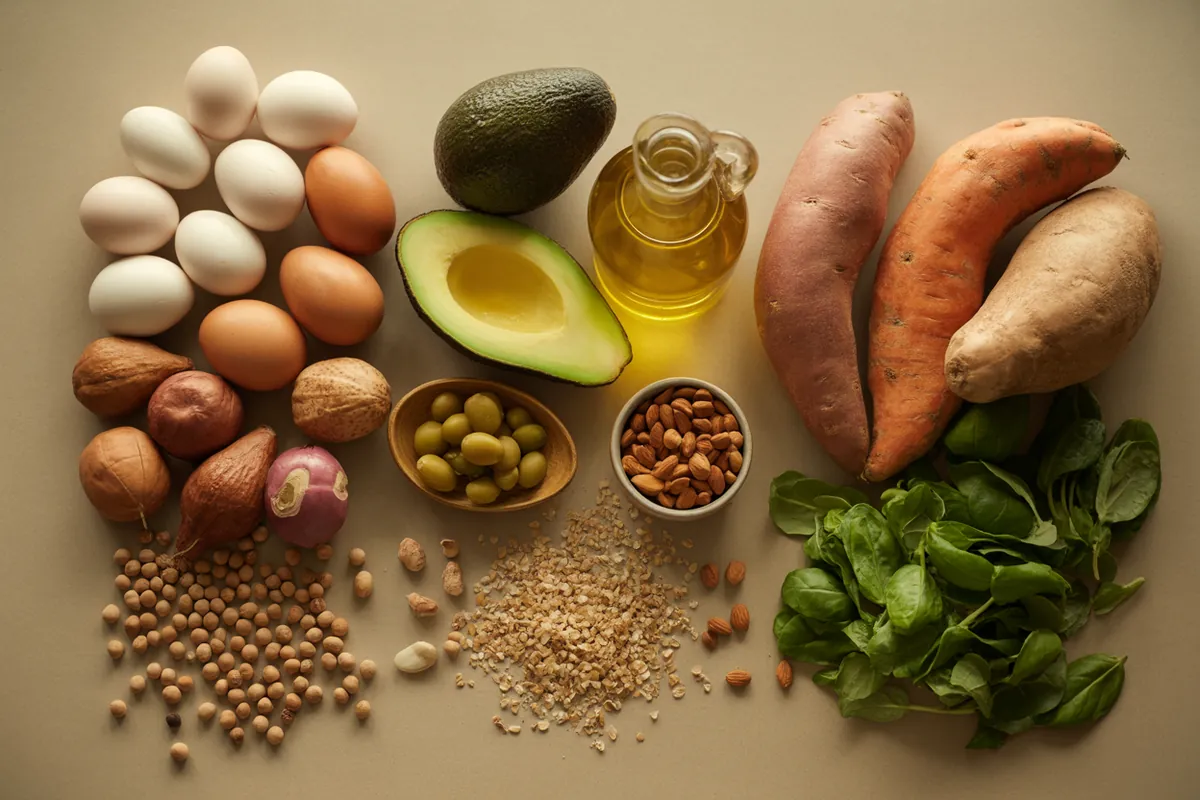
The best sources of complete protein — protein supplying the full set of amino acids — are animal sources: lean chicken, seafood, and eggs. An egg holds about eight grams of protein, essentially all of it in the white; Tager notes that discarding the yolk also discards its vitamins, minerals, and choline, which is important for wrapping the nerve cells that run throughout the body. Plant sources such as legumes, lentils, nuts, and whole grains are rich in amino acids and serve as real building blocks, and it is possible to meet the lower end of protein needs from plants with enough variety.
The honest caution is about the surrounding nutrients. Vegans and vegetarians more easily fall short on iron, calcium, protein, zinc, vitamin B12, and vitamin D — and B12 in particular is found almost exclusively in animal foods, putting vegans at a real disadvantage without supplementation. Where a patient is open to it, occasionally adding eggs, dairy, fish, or seafood corrects several gaps at once; where they are not, targeted supplementation (covered in our companion guide on micronutrients) becomes necessary rather than optional, especially for young women and during pregnancy or breastfeeding.
Fats: essential fatty acids and the skin barrier
Fat is not the dietary villain it was once made out to be. Certain fats are essential for the integrity of the skin, where they support barrier protection and tissue repair, and they wrap and protect many nerve cells. The clinically important fats are the ones the body cannot make: the essential fatty acids (EFAs), which must come from the diet.
Omega-3, omega-6, and the ratio that shifted
EFAs divide into two families. Omega-3 fats are often cast as “good” and omega-6 as “bad,” but the more accurate story is about balance. Omega-6 fatty acids — abundant in corn, soybean, sunflower, safflower, cottonseed, grapeseed, and sesame oils — are genuinely essential, but a high omega-6 to omega-3 ratio may be linked to inflammation. Before World War II, the typical dietary ratio was roughly three to four parts omega-6 to one part omega-3. After the war, the industrialized production of highly refined plant oils — promoted as heart-healthy — tipped that balance heavily toward omega-6.
The food-first correction is straightforward: more fatty fish, ground flaxseed, unroasted and unsalted nuts, and seeds like chia and walnuts, which also carry meaningful protein. The skin payoff is real and specific — omega-3s help fortify the skin barrier, and small studies of flaxseed and hemp-seed oils have shown improvements in transepidermal water loss and skin sensitivity. We go deeper into this in our guide on omega-3 fatty acids and skin health.
Saturated fat, handled honestly
The majority of nutrition professionals and clinicians recommend limiting saturated fat intake — including the saturated fat in palm and coconut oils — and that remains the mainstream clinical position. At the same time, the responsible framing is not “all saturated fat is poison.” The more useful message for patients is to shift the overall pattern: more monounsaturated fat (olive oil) and omega-3s, as in a Mediterranean-style diet that helps bring down LDL cholesterol, rather than fixating on a single nutrient. One practical safety note worth flagging: high-dose fish oil, vitamin E, and similar supplements can interfere with coagulation and should be paused before procedures and used cautiously alongside anticoagulants.
Carbohydrates: refined vs. whole, and glycemic load
Carbohydrates are the body's preferred source of immediate energy — amylases break complex carbohydrates into the glucose used for fuel. The clinically meaningful split is not “carbs good or bad” but refined versus whole. Refined carbohydrates — white bread, pastries, and other refined grains — are digested very quickly, spike blood sugar, and drive inflammation; that same glucose surge feeds glycation, the non-enzymatic attachment of glucose to proteins that stiffens and ages the skin.
Whole grains are the opposite story. As complex carbohydrates, they take longer to digest and so avoid rapid glucose spikes, and they carry minerals like iron, magnesium, zinc, and selenium along the way. The clinical instinct should be to lower glycemic load — favor slow, fiber-rich carbohydrate over fast, refined carbohydrate — a theme that runs through Empire's anti-inflammatory diet approach.
Fiber and gut health
Whole grains are also the diet's primary source of fiber — and most Americans do not get enough. Fiber comes in two forms. Soluble fiber dissolves into a gel that slows digestion, supports fullness and steady blood sugar, and binds cholesterol for removal; it is also the preferred food for beneficial gut bacteria, which ferment it into short-chain fatty acids such as butyrate that help protect and heal the gut lining. Insoluble fiber — in whole wheat, brown rice, and bulgur — adds bulk and promotes regularity. Because soluble fiber feeds the microbiome that produces major neurotransmitters and short-chain fatty acids, carbohydrate quality ties directly into gut health. Getting a balance of both fiber types is the practical goal.
Hidden sugars and “detox” juices
The average American eats roughly a hundred pounds of refined sugar a year, and much of it hides in foods marketed as healthy. Tager's running list is worth committing to memory: breakfast cereals, instant oatmeal, yogurt, granola, protein bars, nut butters, smoothies, pasta and barbecue sauces, salad dressings, and ketchup. Patients who “detox” with juices should know those juices are typically high in fructose — a sugar — not a cleanse. The single highest-yield habit is reading labels for added sugar; the American Heart Association suggests limiting added sugar to about 100 calories a day for women and 150 for men.
Digestion: how enzymes unlock the macronutrients
None of these macronutrients are useful until they are broken down. Enzymes are the activators that start the process — amylase breaks down carbohydrates and starches, proteases break down protein into amino acids, and cellulase helps break down the cellulose in plants. Digestion begins before the first bite: anticipation makes us salivate and release enzymes, and chewing mixes them in. The pancreas, liver, gallbladder, stomach, small intestine, and colon all contribute enzymes downstream.
This matters clinically because enzyme capacity is not fixed. With age, many people produce inadequate enzymes to break down proteins, fats, and carbohydrates, and stomach acid (HCl) — essential for absorbing B12, iron, calcium, folic acid, vitamin C, and vitamin D — can decline or be suppressed by medications. Most common food intolerances trace to enzyme insufficiency — difficulty handling fructose, sucrose, or lactose — rather than true allergy. Distinguishing intolerance from genuine IgE-mediated food allergy is a clinical skill, and the practical gold standard for pinning down reactive foods is a structured elimination diet, not unvalidated panels.
Putting macronutrients to work for skin and healthy aging
The synthesis is where the food-first message pays off. Protein supplies the amino acids — including proline, glycine, and hydroxyproline — that, together with vitamin C and iron, build healthy collagen fibers; without enough vitamin C, collagen forms abnormally. Essential fatty acids fortify the skin barrier from the inside, the omega-3 mortar between the barrier's bricks. Fiber-rich whole carbohydrates steady blood sugar, feed the microbiome, and slow the glycation that ages skin. Read together, the macronutrients are not three separate diets but one coherent, plant-forward, whole-food pattern.
It is also where overclaiming creeps in, so a note of candor: a varied whole-food diet beats chasing isolated nutrients. The same logic applies to supplements — collagen peptides may offer modest, emerging support as amino-acid substrate, but drinking collagen does not rebuild a face, and high-dose isolated antioxidants can be useless or harmful. Supplement to correct a documented gap, not to megadose. That evidence-honest framework — vendor-neutral, food-first, deficiency-driven — is exactly what Empire's training is built to teach.
Teach your patients to eat for their skin and their span
Empire Medical Training's Precision Nutrition Master Training, developed by Dr. Mark Tager, MD, takes clinicians from macronutrient science through assessment, supplementation, and a practice-ready program — food-first, evidence-honest, and built for real patient conversations.
Explore the Precision Nutrition Training → Claim Your Prize!