







 Medically reviewed by
Mark Tager, MD
Integrative & Functional Medicine Physician; Author, ‘Feed Your Skin’
Medically reviewed by
Mark Tager, MD
Integrative & Functional Medicine Physician; Author, ‘Feed Your Skin’ An anti-inflammatory diet is not a fad protocol or a 30-day cleanse. It is a durable eating pattern built to lower the chronic, low-grade inflammation that sits underneath much of what we treat — from premature skin aging to cardiometabolic disease. For clinicians, the value of the concept is that it reframes food as a lever on a biological process patients can actually feel and, increasingly, see in their skin.
This guide is part of Empire's Precision Nutrition resource center and reflects the clinical reasoning Dr. Mark Tager, MD teaches in our training. It is education for providers, not medical advice; it does not replace diagnosis, current guidelines, or individualized clinical judgment.
Inflammation, “inflammaging,” and the skin
Many patients now arrive already familiar with the idea of inflammaging — the principle that certain foods trigger inflammation that, over time, ages the body. The mechanism is worth understanding because it connects diet directly to the skin. When free radicals generated by internal metabolism and external stressors outpace the body's protective systems, the result is oxidative stress. That damage accumulates: DNA is altered, cellular proteins are damaged, cell membranes are disrupted, and transcriptional factors are affected. Critically for aesthetics, oxidative stress activates the matrix metalloproteinases (MMPs) that break down collagen more quickly.
Inflammatory foods also feed a second, parallel process: glycation. Glycation is the non-enzymatic attachment of a glucose molecule to a protein, changing its configuration and function. The same reaction that produces hemoglobin A1c when glucose binds red-blood-cell protein also occurs in the skin — when excess glucose attaches to collagen, it makes the molecule brittle and contributes to lines and wrinkles. We cover that pathway in depth in our companion guide on glycation, sugar, and skin aging and the broader free-radical picture in antioxidants and oxidative stress. The clinical point is that lowering dietary inflammation is not abstract — it shows up in tone, texture, and barrier function.
The inflammatory pattern: what to limit first
Before reaching for anti-inflammatory supplements like curcumin or fish oil, the higher-yield move is to educate patients about the foods to limit or avoid. The core offenders are consistent:
- Refined carbohydrates — white bread, pastries, and other refined grains are digested quickly, spiking blood sugar and driving inflammation. Many patients also carry some degree of non-celiac gluten sensitivity, so moving them off refined wheat can relieve symptoms as well.
- Added sugars — the average American eats roughly 100 pounds of refined sugar a year. High intake from sodas, sweets, and processed foods promotes inflammation and weight gain, which further stresses the body. Added sugar hides in foods marketed as healthy: breakfast cereals, flavored yogurt, granola, protein bars, smoothies, pasta sauces, salad dressings, and condiments.
- Processed and charred meats — bacon, sausage, and deli meats carry preservatives such as sodium nitrate (which can convert to nitrosamines), and high-temperature cooking generates advanced glycation end products that raise oxidative stress. Higher intake is associated with elevated inflammatory markers including interleukin-6, C-reactive protein, and homocysteine.
- Ultra-processed foods — the single biggest driver of the Standard American Diet. More than half of daily calories in the United States now come from ultra-processed packaged snacks, sugary drinks, instant meals, and processed meats, typically high in added sugar, unhealthy fats, and sodium.
A practical aside Dr. Tager makes often: the patients who shrug off “pre-diabetic” or “elevated A1c” will frequently change their habits when the same message is framed around the tone and texture of their skin. Beauty is a powerful motivator, and it is a legitimate clinical lever.
Additives, emulsifiers, and the microbiome
One of the most important points in the anti-inflammatory story is also one of the least obvious: the problem is not only the macronutrients, but the food additives engineered to make ultra-processed “fake foods” more appealing and shelf-stable. Many of these additives — notably emulsifiers and artificial sweeteners — can change the composition of the gut microbiome, and that shift can trigger inflammation linked to a range of diseases. Emulsifiers blend and stabilize ingredients that would otherwise separate; their convenience comes at a possible microbial cost.
Artificial sweeteners deserve special scrutiny because they were marketed for decades as the harmless alternative to sugar. These low-calorie sweeteners (LCS) deliver intense sweetness with few or no calories, but emerging science complicates the picture. In diabetics, the brain still perceives the sweet taste and signals the pancreas anyway. And some synthetic compounds — saccharin most notably — have been shown in animal studies to alter the microbiome and shift metabolic pathways relevant to brain, gut, and skin health. An honest caveat matters here: this is largely animal and mechanistic data, not proof of harm in humans, and not all sweeteners behave alike. There is no current evidence that stevia or monk fruit interfere with the microbiome, which makes them reasonable alternatives to discuss with patients.
The most durable skill you can hand a patient is not a banned-ingredient list but the habit of reading the Nutrition Facts label and steering clear of long additive lists. That single behavior change addresses additives, hidden sugar, and ultra-processing at once. Because so much of this runs through the microbiome, this topic sits at the border of nutrition and gut health — explored further in Empire's gut health resource center.
The omega-6 to omega-3 imbalance
Dietary fats are where a lot of anti-inflammatory advice goes wrong by oversimplifying. The honest framing is about balance, not villains. Omega-6 fatty acids are essential for health — the issue is the modern ratio. Before World War II, most Americans ate roughly three to four times more omega-6 than omega-3. That ratio has since tipped dramatically toward omega-6, largely through refined seed oils — corn, soybean, sunflower, safflower, cottonseed, grapeseed, and sesame — that are inexpensive, shelf-stable, and ubiquitous in processed foods, snacks, and restaurant frying. A high omega-6 to omega-3 ratio is linked to inflammation.
The corrective is not to fear all omega-6 but to rebalance by adding omega-3 sources: fatty fish, flaxseed, and unroasted, unsalted nuts and seeds such as chia and walnuts. The skin payoff is real and supported by research — flaxseed oil, rich in alpha-linolenic acid, has been shown to improve transepidermal water loss and skin sensitivity, and a balanced-ratio hemp seed oil improved dryness in atopic dermatitis. We go deeper on this in our guide to omega-3 fatty acids and skin.
Anti-inflammatory eating: plant-centric, fiber, and phytochemicals
The other half of the anti-inflammatory equation is what you add. Dr. Tager frames it as becoming more plant-centric — and the reason is the roughly 5,000 phytochemicals found across the colored hues of vegetables and fruits. These are the antioxidants that protect cells from oxidative-stress damage, which is why “eat the rainbow” is more than a slogan. Each color family carries different compounds:
- Flavonoids — quercetin in onions and apples, anthocyanins in berries and red cabbage, catechins in green tea and cacao.
- Carotenoids — beta-carotene in carrots and sweet potatoes; lutein and zeaxanthin in leafy greens for eye health; lycopene in tomatoes.
- Polyphenols — a broad antioxidant group in fruits, vegetables, tea, coffee, and dark chocolate, including resveratrol and ellagic acid.
- Tannins in tea, berries, and pomegranates, which carry both antioxidant and anti-inflammatory effects and may support gut health; and glucosinolates in cruciferous vegetables that support detoxification.
Plants are also the primary source of fiber, and most Americans fall short. Soluble fiber — in oats, barley, beans, lentils, apples, citrus, and carrots — is the preferred food for the beneficial gut bacteria, which ferment it into short-chain fatty acids like butyrate. Getting a variety of both soluble and insoluble fiber daily is part of the anti-inflammatory pattern, not an afterthought.
The gut-inflammation-skin axis
This is where the anti-inflammatory diet becomes mechanistic rather than aspirational. The gut hosts the microbiome — ten to one hundred trillion symbiotic organisms, mostly bacteria — that ferment dietary fiber into short-chain fatty acids (SCFAs). Butyrate maintains the integrity of the gut lining; propionate and acetate travel into circulation to other organs, including the skin, where they exert antimicrobial effects that help healthier skin bacteria thrive. A diet rich in fiber and phytochemicals literally feeds the system that protects the skin from the inside.
The reverse is equally important. The microbiome's chief disruptors are a low-fiber diet, a high-sugar diet, antibiotics, systemic inflammation, and obesity — precisely the profile of the inflammatory pattern above. When the gut lining is damaged, increased intestinal permeability (leaky gut) can allow partially digested food particles, toxins, and microbial fragments into the bloodstream, triggering immune responses and inflammation that can manifest in the skin as acne, rosacea, atopic dermatitis, and eczema. An anti-inflammatory diet works on both ends of this axis at once — reducing the disruptors while feeding the repair machinery. The deeper microbiome, SIBO, and leaky-gut mechanics live in Empire's gut health resource center.
The Mediterranean pattern and the “detox” trap
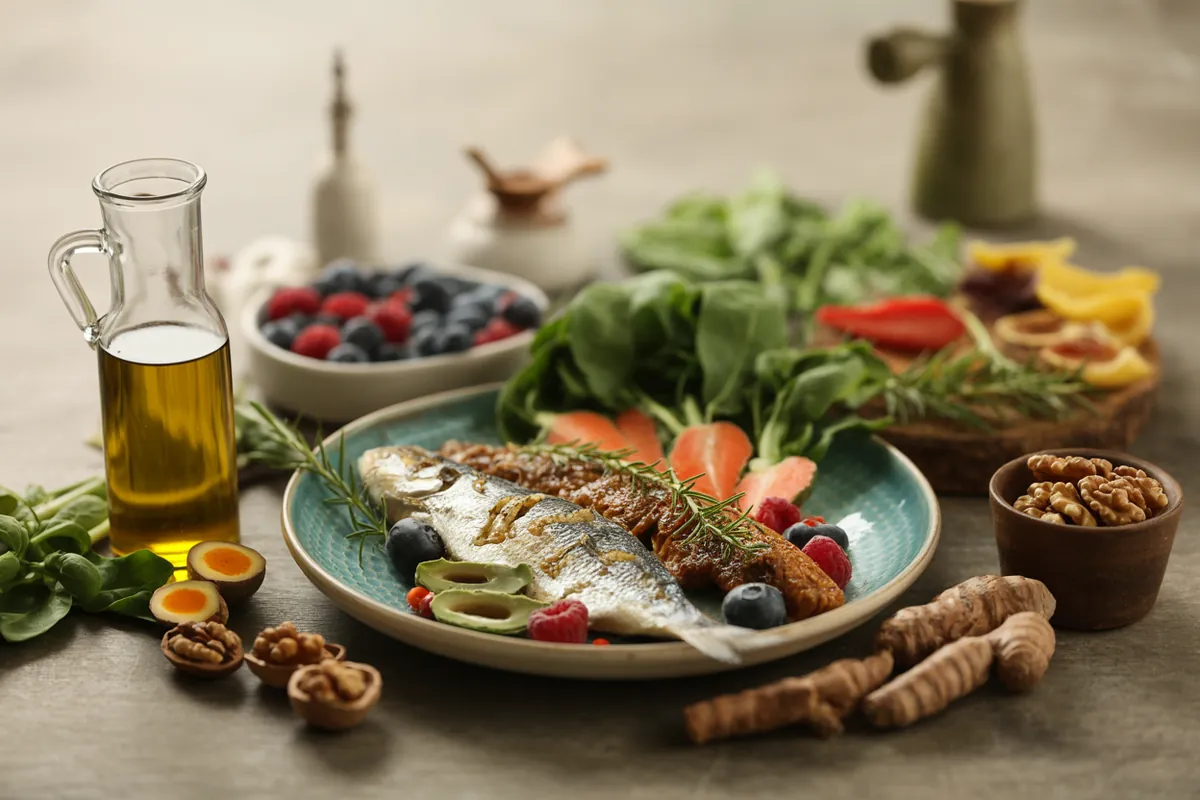
When patients ask for a specific diet to follow, the most defensible answer based on the research is the Mediterranean diet. Inspired by the traditional eating of Greece, Italy, and Spain, it emphasizes vegetables, fruits, whole grains, legumes, nuts, olive oil, and moderate fish and poultry. Its monounsaturated fats from olive oil and omega-3s from fish help lower LDL cholesterol; its high fiber content and healthy fats support stable blood sugar and insulin sensitivity. Research links it to reduced risk of heart disease, stroke, and type 2 diabetes, better cognitive aging, weight management, and improved gut health — which is why it functions as a real-world anti-inflammatory template rather than a brand or a cleanse.
That distinction matters because nutrition is rife with overclaiming. A common example is the patient who relies on juice “detox” regimens — those juices are typically high in fructose, a sugar, working against the very goal. The honest position is that the body already detoxifies through the liver and gut; the job of an anti-inflammatory diet is to support those systems with fiber, phytochemicals, and adequate protein, not to chase a commercial cleanse. Likewise, anti-inflammatory supplements such as fish oil or curcumin can have a role, but they belong after the dietary foundation, and curcumin and fish oil can interact with anticoagulants — a reminder that “natural” is not the same as “free of interactions.” In the interest of transparency, Dr. Tager openly discloses that he consults for supplement companies; Empire's training, and this guide, teach a vendor-neutral framework rather than any brand.
Scope, red flags, and where nutrition stops
An anti-inflammatory diet supports health; it does not diagnose or treat disease, and it is not a substitute for medical work-up. Certain findings warrant evaluation rather than a dietary plan: unintended weight loss, difficulty swallowing, GI bleeding, or signs of severe nutrient deficiency should prompt appropriate investigation. Drug-nutrient interactions deserve attention too — supplements layered on top of anticoagulants or other medications can carry real risk. Used within scope, anti-inflammatory nutrition is one of the highest-yield, lowest-risk levers in a healthy-aging practice; the skill is knowing where it fits and where it ends.
Build precision nutrition into your practice
Empire Medical Training's Precision Nutrition Master Training, developed by integrative physician Dr. Mark Tager, MD, teaches the science of inflammation, the gut-skin axis, and food-first anti-inflammatory patterns — plus the assessment and business models to apply them with patients. Taught vendor-neutral, for physicians, nurses, and allied clinicians.
Explore the Precision Nutrition Training → Claim Your Prize!