








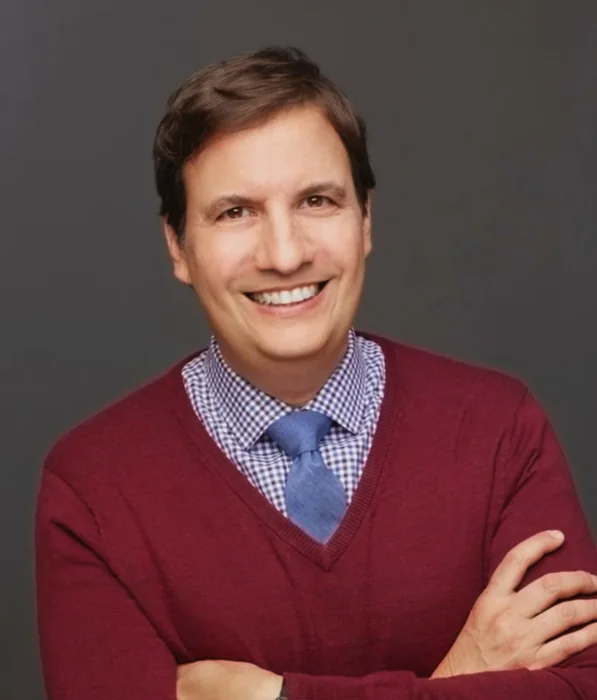
 Medically reviewed by
Peter Bongiorno, ND, LAc
Naturopathic Doctor & Licensed Acupuncturist; Integrative & Functional Medicine
Medically reviewed by
Peter Bongiorno, ND, LAc
Naturopathic Doctor & Licensed Acupuncturist; Integrative & Functional Medicine Adding heavy metal detox to a practice is, done well, less a new revenue line and more a new lens on the patients you already see — the ones with fatigue, mood changes, sleep disruption, or neurological symptoms that never quite resolve on a conventional workup. Toxic burden is one of several contributing factors to chronic illness, alongside genetics, diet, nutrient deficiencies, stress, and the microbiome, and it is frequently the one that goes unexamined. This guide is written for clinicians evaluating whether and how to offer this service. It situates the work inside the broader field of heavy metal toxicity and is clinical education, not medical or business advice.
One caveat sets the tone for everything below. This is a topic with genuine misuse potential — an entire wellness industry markets unproven “detox” to healthy people. The responsible version of this work looks nothing like that. It confirms real toxicity before treating, respects the established limits of chelation, and refers when a case exceeds scope. The fastest way to learn that discipline is structured training, which is why every section below points back to Empire's Heavy Metals & Chronic Illness Training.
The patient demand is real — and underserved
Patients arrive at integrative and functional practices having already cycled through specialists without answers. As course faculty Dr. Peter Bongiorno describes it, a 79-year-old with depression and cerebellar ataxia who had been told nothing could be done turned out to be eating albacore tuna nearly every day; a 34-year-old pharmacist whose anxiety spiked after eating protein had been advised the problem was psychological — until lead from traditional dishware sent from home was identified and treated. These are not exotic cases. They are the kind of complex, multi-symptom presentations that fill an environmental medicine practice precisely because other clinics could not crack them.
The underlying interest in toxic burden and environmental medicine has grown alongside the evidence. Recent literature ties childhood lead exposure to population-level mental-health and personality effects, links heavy metals and mineral deficiencies to migraine, and associates airborne metal pollutants with poor sleep quality. Forest fires and burning communities — increasing with climate change — release lead and other metals into the air; older patients release stored lead from bone as hormones shift through andropause and menopause. The demand side, in other words, is a population reality, and most practices are not equipped to address it.
Who can offer it: scope and the chelation line
Heavy metal detox is not one service but a spectrum, and where you sit on the licensing ladder determines how far you can go. The gentle end — exposure-history taking, source removal counseling, diet and lifestyle change, sweating and movement, antioxidant and mineral support, and gentle natural binders — is broadly within the reach of integrative and functional clinicians, and it is where Dr. Bongiorno starts most patients. Much of a patient's metal burden can be moved with these less invasive means.
The chelation end is different. Chelation therapy — administering agents such as EDTA, DMSA, or DMPS to mobilize and excrete metals — is a medical treatment that requires physician oversight, carries real risk, and must be performed within a licensed prescriber's scope of practice. It is the established treatment for documented, clinically significant heavy metal poisoning, and it is genuinely dangerous when used carelessly. Knowing exactly where the gentle approach ends and where prescriber-level treatment begins is itself a core competency — and one that depends on your license, your state's scope rules, and your training. For the procedure itself, see our overview of chelation therapy.
Getting trained is the key step
If there is a single decision that determines whether this becomes a credit to your practice or a liability, it is committing to real training before you treat a single patient. There is no shortcut license for “heavy metal detox”; competence is built. Clinicians who do this well come up through environmental and functional medicine education, and the field has long-standing training bodies — organizations such as ACAM (founded 1973) and functional-medicine programs — precisely because the safety margins are narrow and the interpretation is nuanced.
Empire Medical Training's Heavy Metals & Chronic Illness Training is the most direct path. Developed by Dr. Bongiorno — a naturopathic doctor and licensed acupuncturist with a research background at the NIH — it teaches the science and the clinical reasoning: how metals damage mitochondria, deplete glutathione, displace essential minerals, and disrupt neurotransmitters; how to recognize and source exposures; how to test and, critically, how to interpret the limits of testing; and how to treat safely and within the evidence. The goal of training is not to hand you a protocol to copy — it is to give you the judgment to know when toxic burden is part of a patient's picture and when it is not.
Learn to offer this the right way
Empire's Heavy Metals & Chronic Illness Training is a CME-accredited program covering heavy metal physiology, exposure sources, testing and its limits, mineral depletion, and chelation safety — developed by Dr. Peter Bongiorno, ND, LAc. It is built for clinicians who want to add this service to their practice responsibly, not recklessly.
Explore the Heavy Metals Training →The clinical framework, step by step
Responsible practice follows a consistent sequence, and each step has a dedicated guide in this resource center. The framework is what separates a clinician from a “detox” vendor.
- Exposure history first. Before any test, take a detailed history. The tuna eaten daily, the lead dishware from home, the dental amalgams, the antiperspirants, the well water, the occupation — the source is usually hiding in the patient's everyday life. Our guide to sources of heavy metal exposure maps where to look.
- Appropriate testing. Match the compartment to the question — blood for recent exposure, urine for acute load and chelation follow-up, hair or nails for long-term exposure — and read the results in clinical context, not in isolation. See heavy metal testing for how each method is used and where it falls short.
- Remove the source. The first and most important treatment step is always to stop the exposure. Switching from albacore to salmon, replacing leaded dishware, addressing the water supply — source removal alone can begin to lower a patient's burden.
- Supportive, gentle detox. Clean up diet, restore minerals, support elimination through the kidneys, bile, and sweat, and support antioxidant pathways — including glutathione, the body's master detox antioxidant, which is why glutathione IV therapy is relevant here. A healthy gut and elimination system can clear a meaningful share of metals on their own; our gut health resources connect this thread.
- Chelation only for confirmed toxicity. Pharmacologic chelation is reserved for documented, significant toxicity and used under physician oversight with kidney and mineral monitoring. See the full heavy metal detox overview for how the gentle and less-gentle approaches fit together.
Deliberately, this page does not reproduce doses, titration schedules, provoked-challenge procedures, or step-by-step protocols. Those carry real risk and belong inside training and individualized clinical judgment, not on a public page — they are taught in depth in Empire's course.
Practicing responsibly — and avoiding the pitfalls
This is the section to read twice, because the difference between a respected environmental medicine practice and a discredited one lives here. Patient safety comes before everything else.
The over-diagnosis and over-treatment trap is the central danger. Nearly everyone carries some measurable metal burden; finding metals is not the same as proving they are driving a given patient's symptoms. The clinical discipline is to treat only when the exposure history, the signs and symptoms, and the testing all point in the same direction — and to be honest that you can never guarantee a symptom will resolve. Chasing numbers in asymptomatic patients, or attributing every complaint to metals, is exactly the failure mode that has earned parts of this field a bad reputation.
Be candid about provoked (challenge) urine testing. Provoked testing — giving a chelator, then measuring mobilized metals in urine — predictably raises urinary metal levels in almost anyone, and there are no established reference ranges for the provoked state. Mainstream toxicology does not endorse it as a diagnostic test, and that critique is fair on the evidence. Practitioners who use it should understand its limits, frame it honestly with patients as a tool rather than a verdict, and never let a provoked number alone justify aggressive treatment.
Respect what chelation is and isn't supported for. Chelation is the established treatment for serious, documented poisoning. It is not a validated treatment for autism, generalized “detox,” or cardiovascular disease — the TACT trial generated discussion but did not establish chelation as standard cardiovascular care, and the honest position is that the evidence outside true toxicity remains unsettled. Chelation also carries real risks: it depletes essential minerals like zinc, copper, selenium, and magnesium; it stresses the kidneys; and rare serious adverse events, including deaths tied to dosing errors and overly rapid infusion, are documented. It is contraindicated in renal insufficiency and congestive heart failure.
Document thoroughly, monitor, and know when to refer. Check kidney function and creatinine clearance before and during chelation; replace minerals; watch for skin, electrolyte, and infusion-related reactions. And refer out when you must: significant acute poisoning is a medical emergency requiring toxicology or emergency care, not an outpatient detox plan. A clinician who refers appropriately is practicing well, not failing.
Service and pricing models
Environmental medicine and heavy metal work are typically cash-pay services. Comprehensive history-taking, the broad lab panels these patients often need, and the time-intensive nature of complex-case management usually sit outside conventional insurance reimbursement, and patients seeking this care generally expect a private-pay model. We will not quote specific fees here — pricing varies widely by region, license, modality, and clinic, and any number we invented would be misleading.
What matters more than the number is the structure. These are longer visits with extended initial workups, follow-up testing, and ongoing management rather than one-off transactions, which favors a model built around thorough initial consultations and continuity of care. The gentle, lifestyle-and-supplement tier is accessible to most integrative clinicians; the chelation tier requires prescriber-level scope and infrastructure. Pricing should reflect the clinical time and judgment involved — and it should never create an incentive to over-test or over-treat, which is both a clinical and an ethical hazard.
The business case
The durable business case is not a price list — it is a referral engine built on outcomes. When you genuinely help a patient whose hypertension, mood, sleep, or unexplained neurological symptoms improved after a metal issue was addressed, that patient tells others, and so do the clinicians who could not help them. Dr. Bongiorno frames the work as diving deeper into the complex conditions “most of their other doctors aren't able to help with,” and that is precisely the differentiated position a heavy-metals competency creates.
It also compounds. Heavy metal work sits naturally alongside the rest of an anti-aging and functional medicine practice — IV nutrition, gut health, hormone optimization — so it deepens existing patient relationships rather than requiring a separate audience. The constraint on growth is rarely demand; it is the clinician's confidence and competence. Training is what lets you be the clinician dismissed patients are looking for, without taking on undue risk.
Training: your fastest, safest path
Every section of this guide converges on the same step. The clinical framework, the responsible-practice guardrails, the scope-of-practice judgment, and the business differentiation all depend on knowing the material cold — and the most efficient way to get there is structured education from a clinician who has practiced it for decades.
Empire's Heavy Metals & Chronic Illness Training is built for exactly this: it teaches the physiology, the exposure mapping, the testing and its limits, the gentle-to-less-gentle treatment spectrum, and the safety boundaries — so that when you add this service, you add it the way it should be added. If you are serious about offering heavy metal detox, the course is where you start.
 Claim Your Prize!