







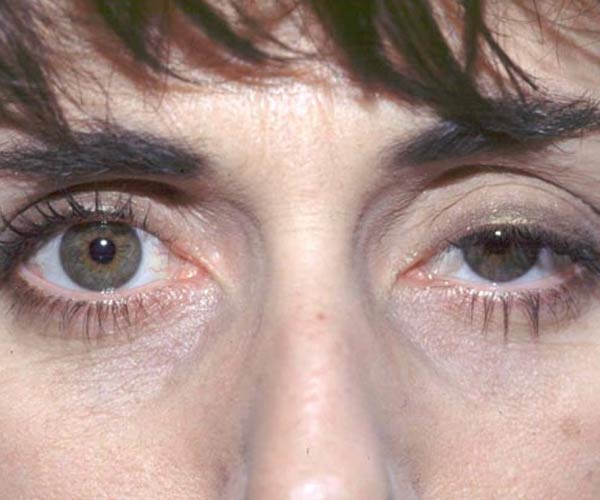
Ptosis (pronounced TOE-sis — the “p” is silent) is the drooping of the upper eyelid. It can be present from birth, develop with age, follow an injury or surgery, signal a neurologic condition, or appear as a temporary complication of botulinum toxin injection. Those causes are not variations on one theme. They are different problems that look similar in a mirror, with completely different implications — from “this will wear off” to “this needs evaluation today.”
If you’ve landed here because your eyelid looks lower after a Botox® appointment, there’s a distinction most content skips, and it’s the most important thing on this page: eyelid ptosis and brow ptosis are not the same thing. They come from different muscles, different mistakes, and different management paths. This guide covers what ptosis is, how to tell the two apart, the mechanism behind toxin-related ptosis, how long it lasts, what a prescriber may consider, when drooping means something more serious, and how technique prevents it.
What Is Ptosis?
Ptosis — formally, blepharoptosis — is abnormally low positioning of the upper eyelid margin. It can affect one eye (unilateral) or both (bilateral ptosis), and ranges from a lid sitting a millimeter or two low to complete ptosis, where the lid covers the pupil and obstructs vision.
The muscle at the center of the story is the levator palpebrae superioris. It runs from behind the eye socket into the upper eyelid, and when it contracts, your eyelid lifts. It does the overwhelming majority of the work of opening your eye. A second, smaller muscle — Müller’s muscle — sits beneath it and contributes roughly 2 millimeters of additional lift. Unlike the levator, it is under sympathetic (involuntary) control. That detail becomes relevant later.
Beyond the visible droop, ptosis can present as:
- Uneven-looking eyes, with one appearing smaller or more hooded
- A reduced upper visual field — the sensation of looking out from under something
- Chronic brow-raising and forehead ache, as the frontalis compensates, or neck strain from chin-up posture used to see past the lid
- Eye fatigue, especially late in the day
- In children, amblyopia (lazy eye) if the lid obstructs visual development
Eyelid Ptosis vs. Brow Ptosis: The Distinction That Matters
Most people who report “droopy eyelid after Botox” are describing one of two entirely different things. Telling them apart determines everything that follows.
Eyelid Ptosis (True Blepharoptosis)
The eyelid margin itself has dropped. The lash line sits lower and covers more of the iris. Your brow may be in a perfectly normal position — the problem is below it. This is the levator failing to lift.
In the Botox context, this happens when toxin reaches the levator. The usual route is diffusion from a glabellar (frown line) injection: the corrugator and procerus sit close to the orbital septum, and toxin placed too low, too laterally, or in too large a volume can migrate through it to the levator just behind. The levator weakens. The lid drops. The patient did nothing wrong.
Brow Ptosis (Heavy Brow)
The eyelid is fine — the eyebrow has dropped, and the brow and its overlying skin push down onto the lid, making the eye look hooded and smaller. The lash line is still where it belongs.
This is a frontalis problem. The frontalis is the only muscle that lifts your eyebrows. Over-treating it — too many units, or placement too low on the forehead — removes the lift, and the brow settles under its own weight and the pull of the depressors. It looks like a droopy eyelid to the patient. It is not one.
Brow ptosis on one side only is also a frequent form of uneven Botox, and patients often report it as one eye looking smaller rather than as a brow problem at all.
A rough self-check: in the mirror, lift your eyebrow with a finger. If the eye opens up and looks normal, you’re likely dealing with brow ptosis — the lid was fine, the brow was sitting on it. If the lid margin still covers more of your iris with the brow lifted, that points toward true eyelid ptosis. This is orientation, not a diagnosis; your injector or physician should make the call.
The distinction matters because the two behave differently. Brow ptosis is the more forgiving of the two and improves as frontalis function returns. True eyelid ptosis is the one that prompts a conversation about temporizing options. Both are temporary.
How Long Does Botox-Related Ptosis Last?
Toxin-related ptosis typically appears within 2 to 10 days of treatment, often around day 5 to 7 as the toxin reaches full effect. A lid that dropped within an hour of injection is more likely swelling than toxin.
Duration usually runs 3 to 6 weeks, though it can extend toward the full life of the treatment in more significant cases. It improves gradually rather than abruptly, and commonly recovers before the intended cosmetic effect wears off — the levator typically received only a fraction of the dose by diffusion rather than a direct injection.
The uncomfortable part: there is no reversal agent for botulinum toxin. Nothing can be injected to undo it, the way hyaluronidase dissolves a hyaluronic acid filler. The effect ends when nerve terminals regenerate their signaling — a timeline that belongs to your biology. Anyone offering to dissolve, flush, or neutralize your Botox is describing something that does not exist. Our overview of what Botox is and how it works explains why.
Apraclonidine Drops: What a Prescriber May Consider
Clinicians sometimes use one option to temporize toxin-induced eyelid ptosis while it wears off. A caveat first: this is a prescription medication and a decision for your prescriber, not a self-treatment. It is described here so you know what your clinician may be talking about, not so you can seek it out on your own.
Apraclonidine (brand name Iopidine®) is an alpha-adrenergic agonist originally developed for glaucoma. Its relevance comes from Müller’s muscle — that second, smaller eyelid elevator under sympathetic control. Because Müller’s muscle responds to alpha-adrenergic stimulation and is not the muscle the toxin affected, stimulating it can recruit a couple of millimeters of lift the levator can no longer provide. It doesn’t treat the toxin. It borrows lift from a muscle the toxin didn’t touch.
Practical realities worth knowing:
- The effect is temporary — measured in hours — and requires redosing.
- It is cosmetic camouflage, not a cure. The ptosis still wears off on its own schedule.
- The lift is modest — a couple of millimeters. It helps mild to moderate cases and does little for significant ones.
- It is not appropriate for everyone. It carries its own contraindications, interactions, and side effects, and this use is off-label. Related agents such as phenylephrine and oxymetazoline are sometimes discussed in the same context; all are prescriber decisions.
If your eyelid has dropped after treatment, contact your injector or a physician and let them examine you. They may consider drops; they may simply advise waiting. Either answer is legitimate, and neither is one you should reach on your own.
Ready to put this into practice?
Explore Empire's hands-on, CME-accredited Aesthetic & Injectable Training courses — live patients, expert faculty, and ongoing mentorship.
Other Causes of Ptosis: The Differential That Matters
Botox is one cause of ptosis, and far from the most common. Assuming a recent injection explains a drooping lid can delay the diagnosis of something more serious.
Congenital Ptosis
Present at birth, usually because the levator didn’t develop normally. It requires evaluation in childhood — not for appearance, but because a lid obstructing the visual axis can prevent normal visual development and cause amblyopia. It may be associated with strabismus, and it does not correct itself.
Aponeurotic (Age-Related) Ptosis
The most common form in adults: the levator’s tendon-like attachment to the lid stretches or detaches over decades. Contact lens wear, eye rubbing, prior eye surgery such as cataract extraction, and aging all contribute. It develops slowly, over years.
Neurologic Causes
These are the ones that make ptosis a symptom rather than a cosmetic issue:
- Third cranial nerve palsy — often with a dilated pupil and eye movement problems. Can indicate an aneurysm.
- Horner syndrome — mild ptosis with a constricted pupil and reduced sweating on that side of the face, from interruption of the sympathetic pathway.
- Myasthenia gravis — ptosis that worsens through the day and with sustained upgaze, often with double vision. Classically fluctuating.
- Stroke — particularly with facial weakness, speech changes, limb weakness, or numbness.
Mechanical and Traumatic Causes
Eyelid trauma, tumors or masses in the lid, scarring, and significant swelling can all weigh the lid down or restrict its movement.
When Ptosis Is an Emergency
Ptosis can be the visible edge of something dangerous. Recent Botox is not a reason to dismiss any of the following.
Seek urgent medical evaluation for sudden ptosis accompanied by:
- A pupil that is a different size than the other, or that doesn’t react to light
- Double vision or any change in vision
- Severe or sudden headache — especially the worst headache of your life
- Facial droop, slurred speech, weakness, or numbness — call emergency services
- Difficulty swallowing, speaking, or breathing
- Generalized muscle weakness away from the face
- Drooping that fluctuates through the day or worsens with fatigue
- Eye pain, proptosis (bulging), or signs of infection
Toxin-related ptosis is a painless, isolated finding: it appears days after a known injection, involves the lid alone, and comes with none of the above. Anything that doesn’t fit that picture needs a physician now, not a message to your medspa.
How Ptosis Is Prevented in Aesthetic Injection
Toxin-induced ptosis is not bad luck. It is a diffusion and placement problem, and it is preventable.
- Respect the orbital rim. Keeping injections a safe distance above the bony rim — conventionally around a centimeter — keeps toxin away from the septum and the levator behind it.
- Control the volume and depth. Smaller volumes at higher concentration diffuse less; large, dilute boluses spread further than intended, and the levator is what they find. Injecting into the target muscle, not below it, keeps the effect where it belongs.
- Know the glabellar anatomy. The corrugator and procerus sit uncomfortably close to structures you don’t want to weaken. Depth and lateral extent both matter.
- Don’t over-treat the frontalis. This is the brow ptosis lever. Conservative dosing, placement high enough on the forehead, and preserved lateral frontalis function protect brow position.
- Assess before injecting. Pre-existing lid asymmetry, prior eye surgery, and a naturally low or hooded brow all change the plan — and belong in the chart and the baseline photos.
- Give aftercare that matters. No rubbing or massaging treated areas; stay upright for several hours. Mechanical manipulation can move product where it wasn’t placed. Our do’s and don’ts after Botox covers the rest.
- Start conservative. Units can be added at two weeks. They cannot be removed.
Our guide to Botox injection sites covers the landmarks and depths for each treatment area in detail.
Frequently Asked Questions
What is ptosis of the eyelid?
Ptosis (blepharoptosis) is abnormally low positioning of the upper eyelid margin. It results from weakness, damage, or underdevelopment of the levator palpebrae superioris — the muscle that lifts the lid — or from mechanical weight on the lid. It may be congenital, develop with age, follow trauma or surgery, signal a neurologic condition, or occur temporarily after botulinum toxin injection.
Can ptosis correct itself?
It depends entirely on the cause. Ptosis from botulinum toxin resolves on its own, typically over 3 to 6 weeks, because the toxin’s effect is temporary by mechanism. Congenital and age-related aponeurotic ptosis are structural and do not self-correct. Ptosis from a neurologic condition resolves only if that condition is treated — which is why the cause needs to be identified rather than assumed.
Can ptosis be fixed?
In most cases, yes — but the route differs. Structural ptosis is corrected surgically by tightening or reattaching the levator, with ptosis crutches as a non-surgical alternative. Toxin-related ptosis is managed by waiting it out, sometimes with prescription drops to temporize; there is no reversal agent for botulinum toxin, so it cannot be undone on demand.
What is bilateral ptosis?
Ptosis affecting both upper eyelids. It can be congenital, age-related, or a sign of a systemic neurologic condition such as myasthenia gravis — particularly when it fluctuates through the day or worsens with fatigue. Bilateral ptosis that appears suddenly warrants prompt medical evaluation.
What is complete ptosis?
Ptosis severe enough that the lid covers the pupil and blocks vision, sometimes with the eye essentially closed. It indicates significant levator dysfunction and requires evaluation by an ophthalmologist. In children it is urgent: an obstructed visual axis can permanently impair visual development.
Do apraclonidine eye drops treat ptosis?
Apraclonidine is an alpha-adrenergic agonist a prescriber may consider for temporarily lifting a toxin-affected eyelid. It stimulates Müller’s muscle — a second, sympathetically controlled lid elevator the toxin didn’t affect — producing a couple of millimeters of lift for a few hours. It does not treat the ptosis or shorten its course, and it is prescription-only, off-label for this use, not appropriate for everyone, and never a self-treatment.
Is ptosis the same as blepharoplasty?
No — one is a condition, the other an operation. Ptosis is a low eyelid margin from levator dysfunction, and ptosis repair surgery addresses that muscle. Blepharoplasty removes excess eyelid skin, a separate issue from lid position. They are sometimes performed together, but blepharoplasty alone will not fix true ptosis.
How long does ptosis last after Botox?
Typically 3 to 6 weeks. It usually appears 2 to 10 days after treatment and improves gradually, often recovering before the intended cosmetic effect fades, since the levator generally received only a small amount of toxin by diffusion rather than a direct dose.
Ptosis Is a Technique Complication — and Technique Is Trainable
Botox-induced ptosis doesn’t come from the drug. It comes from a needle placed too low, too deep, or a volume too large to stay where it was put. Every prevention measure above is a decision made before injection: knowing where the orbital septum is, understanding how dilution drives diffusion, recognizing anatomy that narrows the margin for error, and having the judgment to dose conservatively and add later. That knowledge is also what lets an injector distinguish eyelid ptosis from brow ptosis — and recognize the drooping lid that isn’t from toxin at all and needs a neurologist rather than reassurance.
Empire Medical Training has taught healthcare professionals aesthetic injection technique since 1998. Our Botox Training & Certification course is CME-accredited and hands-on, covering periorbital and glabellar anatomy, diffusion control, dilution and dosing, patient assessment, and complication recognition and management — with live-patient injection under expert supervision. Avoiding a complication and knowing what to do when one appears are both learnable. Neither is learnable from a slide deck.



 Claim Your Prize!