







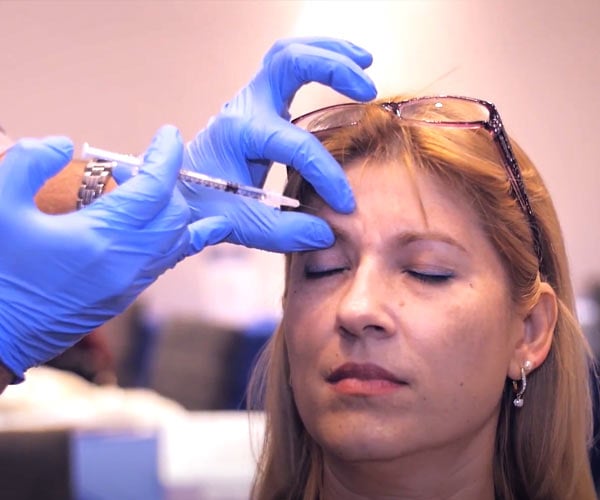
A nurse esthetician is a registered nurse who has added aesthetic medicine training to an existing nursing license and works in a medical spa, dermatology practice, or plastic surgery office. The role goes by several names — aesthetic nurse, esthetic nurse, cosmetic nurse — and it is one of the more common ways experienced RNs move out of hospital shift work into elective, cash-pay medicine.
It is also one of the most misunderstood job titles in healthcare, because “esthetician” on its own means something entirely different. This guide covers what the role involves, how it differs from a licensed esthetician, what it pays, how long it takes, and what certification does — and doesn’t — do for you.
What Is a Nurse Esthetician?
The title is descriptive rather than a licensure category: no state issues a separate “nurse esthetician license.” What you hold is an RN — or NP — license, and the aesthetics piece is training, experience, and often voluntary certification layered on top.
That distinction matters because it determines what you can legally do. Your authority comes from your nursing license and your state’s nurse practice act — not from a weekend course or a certificate on the wall.
Nurse estheticians typically work under the supervision of, or by delegation from, a physician or other authorized prescriber — in medical spas, cosmetic dermatology practices, plastic and facial plastic surgery offices, outpatient clinics, and ophthalmology practices.
Depending on state law and the practice’s delegation structure, they may perform or assist with Botox® injections, dermal fillers, laser treatments for skin and hair, microdermabrasion, chemical peels, tattoo removal, sclerotherapy, and other minimally invasive procedures. In surgical settings, they may also provide pre- and post-operative support for patients undergoing facial plastic surgery, body contouring such as liposuction, or reconstruction after trauma, burns, or major surgery.
Esthetician vs. Nurse Esthetician: The Difference That Actually Matters
This is the single most important thing to understand before planning a career around either title, and most of the confusion online comes from treating the two as the same job with different pay. They are not. They are different professions, licensed by different boards, with different legal ceilings.
An esthetician is licensed by a state cosmetology or barbering board. The training is in skincare: facials, superficial chemical peels, extractions, waxing and other temporary hair removal, dermaplaning, and product recommendation. Estheticians are skilled professionals, and in many practices they are the ones who build the long-term client relationship. But an esthetician is not a medical provider and cannot inject — no amount of esthetician experience creates injection authority. Estheticians also generally cannot diagnose, prescribe, or perform procedures that penetrate below the epidermis, though the exact line varies by state.
A nurse esthetician is a registered nurse first. The RN license is issued by a state board of nursing after a nursing degree and the NCLEX-RN exam. Because an RN is a medical professional working within a defined scope of practice, a nurse esthetician may — where state law allows, under appropriate physician supervision or delegation — administer injectables, operate medical-grade lasers, and perform procedures that break the skin.
There is real overlap at the surface: both roles can typically perform treatments that don’t break the skin — superficial peels, temporary hair removal, facial massage, and skincare consultation. The divergence is everything above that line. Injectables, medical lasers, and pre-operative clinical support sit on the nursing side. The nurse esthetician also brings a deeper base of medical knowledge — pharmacology, anatomy, sterile technique, patient assessment, complication recognition — which is precisely why practices pay for it.
One practical note: a licensed esthetician who wants injection authority cannot get there by adding aesthetics certifications. The path runs through nursing school — a multi-year detour worth knowing about before investing in the wrong credential.
What Does a Nurse Esthetician Do Day to Day?
The work blends clinical procedure with consultative sales, which surprises nurses coming from hospital environments. A typical day may include:
- Consultations. Assessing facial anatomy, listening to the patient’s goals, and setting realistic expectations — where most patient dissatisfaction is prevented.
- Procedures. Injectables where permitted and delegated; devices such as laser hair removal, resurfacing, and IPL; peels and microneedling.
- Surgical support, documentation, and retention. Pre-op prep and post-op follow-up in surgical settings, plus photography, charting, two-week checks, complication management, and rebooking.
The hours are a large part of the appeal. Aesthetic practices generally run business hours by appointment. No nights, no weekends, no holidays, no codes. For nurses burning out on twelve-hour floor shifts, that alone drives the career change — though the honest trade-off is a role where patient volume, revenue, and retention are explicitly part of the job.
Nurse Esthetician Salary: What to Expect
Because most nurse estheticians are RNs, aesthetic nurse pay tends to track registered nurse compensation broadly, with meaningful upside for injectors in busy practices. Anyone quoting you a single national number is oversimplifying — and a lot of the figures circulating online are recycled from wage surveys that are several years stale. The honest answer: nurse esthetician salary varies widely, and the spread is driven by specific, identifiable factors rather than luck.
What Drives the Number
- Whether you inject. The biggest single lever. A nurse performing neuromodulator and filler treatment generates far more revenue per hour than one running facials and laser hair removal, and compensation follows revenue.
- Geography. Pay is generally higher in high-cost-of-living markets, particularly major coastal metros. But supply and demand cut both ways — nurses willing to work where experienced aesthetic providers are scarce can sometimes command higher starting pay than the cost-of-living math predicts.
- Setting and seniority. A high-volume plastic surgery practice, a physician-owned medspa, and a franchise chain all pay differently. Junior cosmetic nurses typically assist or lead on lower-complexity procedures like hair removal; experienced nurses with additional credentials handle a wider range of treatments and earn accordingly.
- Compensation structure. Many aesthetic roles include commission on treatments and product. Base salary alone can badly understate total earnings in a busy practice and overstate them in a slow one. Ask how the plan works before you take the job.
Where the Real Upside Is
Two moves reliably raise a nurse esthetician’s ceiling. The first is becoming a nurse practitioner. NP compensation runs meaningfully above RN compensation across healthcare, and in aesthetics the gap widens further because of autonomy. Depending on your state’s rules, an RN may be permitted to inject only under supervision, while an NP may have broader authority — including, in some states, the ability to supervise others. Our guide to Botox laws by state covers how much this varies.
The second is stacking procedural competencies. Botox and dermal filler training is the entry point, not the destination. Nurses who add cosmetic laser, PDO threads, sclerotherapy, and body contouring become materially harder to replace — a nurse who can run five revenue-generating services is worth more than one who can run two.
How to Become a Nurse Esthetician
Becoming an aesthetic nurse takes several years, and there is no shortcut around the nursing license. Here is the path.
- Earn a nursing degree. Either a two-year Associate Degree in Nursing (ADN) or a four-year Bachelor of Science in Nursing (BSN). A BSN opens more doors and is the prerequisite for most graduate nursing programs later.
- Pass the NCLEX-RN and get licensed. This makes you a registered nurse — the foundation of everything that follows.
- Get clinical nursing experience. Dermatology, plastic surgery, and ophthalmology experience is directly relevant, but general med-surg or ER experience builds the clinical judgment aesthetics quietly depends on.
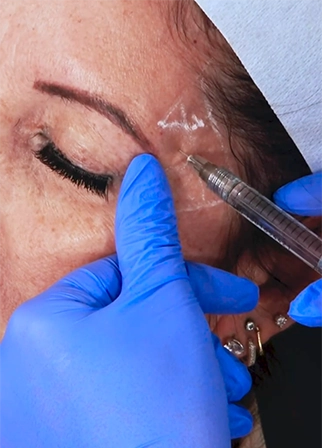
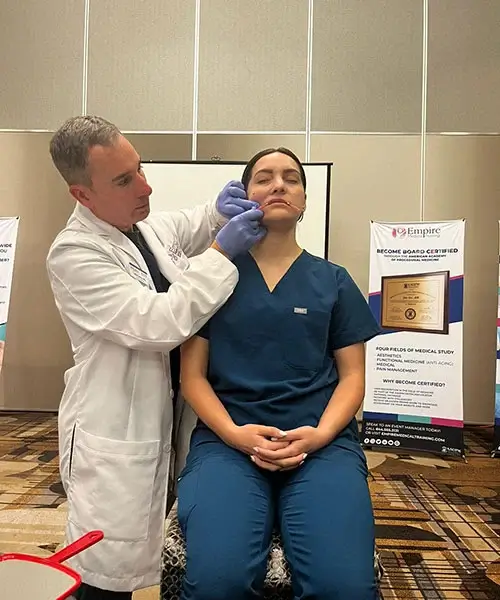
- Get hands-on aesthetics training. Nursing school does not teach facial anatomy for injectors, neuromodulator dosing, filler technique, or complication management. That comes from dedicated CME training, and it should be hands-on, with live-patient injection under supervision. Our guide to Botox certification for nurses covers what to look for.
- Find a supervising physician and start practicing. Aesthetic nursing is learned by repetition under someone experienced. Your first role matters more than your first paycheck.
- Pursue board certification, if it fits your goals — and consider advancing to NP if you want maximum autonomy and earning potential.
Timeline: roughly four to seven years from a standing start — two to four for the degree, plus clinical experience, plus the aesthetic hours certification requires. Far less if you are already a licensed RN, in which case aesthetics training is a matter of days and you can be injecting within weeks.
Do Nurse Estheticians Need Certification?
Not to work. Certification in aesthetics is voluntary, and it is not what grants you the legal right to inject — your RN license and your state’s scope-of-practice rules do that. Any program implying that its certificate confers legal authority is misleading you. What certification does is signal competence to employers and patients, which can matter for negotiation and credibility.
The recognized board certifications in this field come from the Plastic Surgical Nursing Certification Board:
Ready to put this into practice?
Explore Empire's hands-on, CME-accredited Medical Aesthetics Career Pathways courses — live patients, expert faculty, and ongoing mentorship.
- CANS — Certified Aesthetic Nurse Specialist. The credential most associated with medical aesthetics and injectables.
- CPSN — Certified Plastic Surgical Nurse. Oriented toward plastic surgical nursing practice.
Both require an active, unrestricted RN license plus documented experience in aesthetic or plastic surgical nursing. Historically, CANS candidates have needed roughly two years of experience under a board-certified physician in one of four core specialties — plastic, aesthetic, or cosmetic surgery; dermatology; facial plastic surgery; or ophthalmology — plus a substantial number of documented practice hours (commonly cited as 1,000) in one of those areas. Requirements are revised periodically, so verify current eligibility criteria directly with the certifying board.
Certification is a milestone, not a starting gate: you get the hours by working, which means training and a job come first.
Scope of Practice: Verify Before You Assume
Everything about who may inject, under what supervision, and after what training is determined at the state level, and it varies significantly. Some states permit RNs to inject neuromodulators and fillers under physician supervision, with supervision itself defined differently — on-site, immediately available, or reachable by phone. Some require a good-faith exam by a prescriber first. Some restrict certain devices to physicians or advanced practice providers. Medical spa ownership rules differ too, which matters if you eventually want your own practice.
Two rules keep you out of trouble: verify with your state board of nursing — not a recruiter, not a training company, not a Facebook group — and get your delegation relationship in writing. Our overview of who can administer Botox covers how these rules shake out by provider type, but treat it as orientation, not legal advice.
Is Nurse Esthetician a Good Career?
For the right nurse, yes — with clear eyes about what it is.
The case for it: Demand for qualified nurses remains strong across healthcare, and aesthetic medicine is no exception — medical spas and plastic surgery practices consistently have more open positions than they can fill with experienced injectors. The schedule is predictable. Patients are elective, motivated, and glad to be there. The work is skill-based and improves with repetition. And there is a genuine path to practice ownership that barely exists in hospital nursing.
The case against it: It is a commercial environment, and revenue expectations are explicit. You give up the acuity and clinical variety many nurses love. Compensation is variable and, early on, may not beat a hospital differential. And the field attracts predatory training operations selling certificates that confer nothing — scrutinize any program leading with income claims rather than curriculum and hands-on hours.
If the appeal is only “better hours and more money,” the fit tends to be poor. If you also like the work itself — the anatomy, the precision, the long-term patient relationship — it holds up as a career. For a closer look, see our guide to the cosmetic nurse career path.
Frequently Asked Questions
What does a nurse esthetician do?
A nurse esthetician is an RN who performs cosmetic treatments — commonly Botox and dermal filler injections, laser treatments, chemical peels, and microneedling — typically under physician supervision or delegation in a medspa, dermatology, or plastic surgery practice. The role also includes consultation, patient assessment, documentation, and complication management. In surgical settings, aesthetic nurses may assist with procedures and provide pre- and post-operative care.
How much does a nurse esthetician make?
Pay generally tracks registered nurse compensation, with real upside for nurses who inject. The range is wide and depends on geography, practice setting, seniority, credentials, and whether the role includes commission. Nurse practitioners in aesthetics earn meaningfully more than RNs. For a number relevant to you, look at posted aesthetic nurse roles in your own market and ask how base and commission are structured.
How long does it take to become a nurse esthetician?
From a standing start, roughly four to seven years: two to four years for an ADN or BSN, plus clinical experience, plus aesthetic training and the practice hours certification requires. If you are already a licensed RN, hands-on aesthetics training takes days rather than years, and you can be treating patients within weeks — board certification is the piece that still requires accumulated hours.
Do you need to be an RN to be a nurse esthetician?
Yes. The “nurse” in nurse esthetician is not decorative — it is the entire basis of the role’s legal authority. You need an active RN license, or an advanced practice license such as NP. A licensed esthetician, medical assistant, or aesthetics certificate holder without a nursing license cannot practice as a nurse esthetician and cannot inject.
What is the difference between an esthetician and a nurse esthetician?
An esthetician is licensed by a state cosmetology board, works in skincare — facials, superficial peels, waxing, dermaplaning — and cannot inject, prescribe, or perform medical procedures. A nurse esthetician is a registered nurse with aesthetics training who, where state law permits and under appropriate supervision, can administer injectables and operate medical devices. Different license, different board, different scope.
Is nurse esthetician a good career?
It suits nurses who want predictable hours, elective patients, and a skill-based role with a path to ownership — and demand for experienced injectors is strong. The trade-offs are real: it is a revenue-driven environment, compensation varies, and you leave clinical acuity behind.
Do nurse estheticians need certification?
No — certification is voluntary and does not create injection authority. Your RN license and your state’s nurse practice act do. That said, the CANS (Certified Aesthetic Nurse Specialist) and CPSN (Certified Plastic Surgical Nurse) credentials from the Plastic Surgical Nursing Certification Board are recognized markers of expertise. Both require an active RN license plus documented aesthetic or plastic surgical nursing experience — confirm current requirements with the board, since they change.
Looking for a Role, or Hiring for One?
Empire runs a placement service for exactly this. The Medical Match is free to Empire graduates and works in both directions: clinicians looking for a position complete a job opportunity form, practices looking to fill one complete an employer form, and Empire matches against its database of healthcare professionals.
Empire members also get Empire Jobs, the job board inside the Empire portal — browse and apply to current postings, or post a role and manage the applications if you are the one hiring.
Start Your Aesthetics Career with Real Hands-On Training
Nursing school gives you the license. It does not give you facial anatomy for injectors, dosing judgment, or the ability to manage a complication at the chair. That comes from training and repetition — and no certificate substitutes for either.
Empire Medical Training has trained healthcare professionals in aesthetic medicine since 1998. Our Medical Training for Registered Nurses program is built for RNs entering aesthetics, and our CME-accredited Botox Training & Certification course puts a syringe in your hand with live patients under expert supervision — because competence with a needle comes from using one.



.webp)
 Claim Your Prize!