








Suzetrigine, marketed as Journavx, is the first genuinely new mechanism in oral analgesia most of us will see in our careers, and it arrived in a way that should interest aesthetic practice specifically: the pivotal trial that supported its approval was conducted in patients recovering from abdominoplasty. A cosmetic surgical population. That is an unusual place for a new analgesic to earn its label, and it is worth understanding precisely what the label does and does not now permit.
I am an anesthesiologist, so my instinct with any new analgesic is to read the label before I read the enthusiasm. Having done that, my assessment is that suzetrigine is a real and useful addition to the oral tier of an aesthetic comfort plan — and that several of the claims already circulating about it in the aesthetic trade press are not label claims at all. Both of those things need saying.
What Suzetrigine (Journavx) Is
Suzetrigine is a selective blocker of the NaV1.8 voltage-gated sodium channel. The label's own mechanism language is worth quoting rather than paraphrasing:
"Suzetrigine is a selective blocker of the NaV1.8 voltage-gated sodium channel, compared to other known voltage-gated sodium channels (NaV1.1 through 1.9). NaV1.8 is expressed in peripheral sensory neurons including dorsal root ganglion neurons, where its role is to transmit pain signals (action potentials). By selectively inhibiting NaV1.8 channels, suzetrigine inhibits transmission of pain signals to the spinal cord and brain."
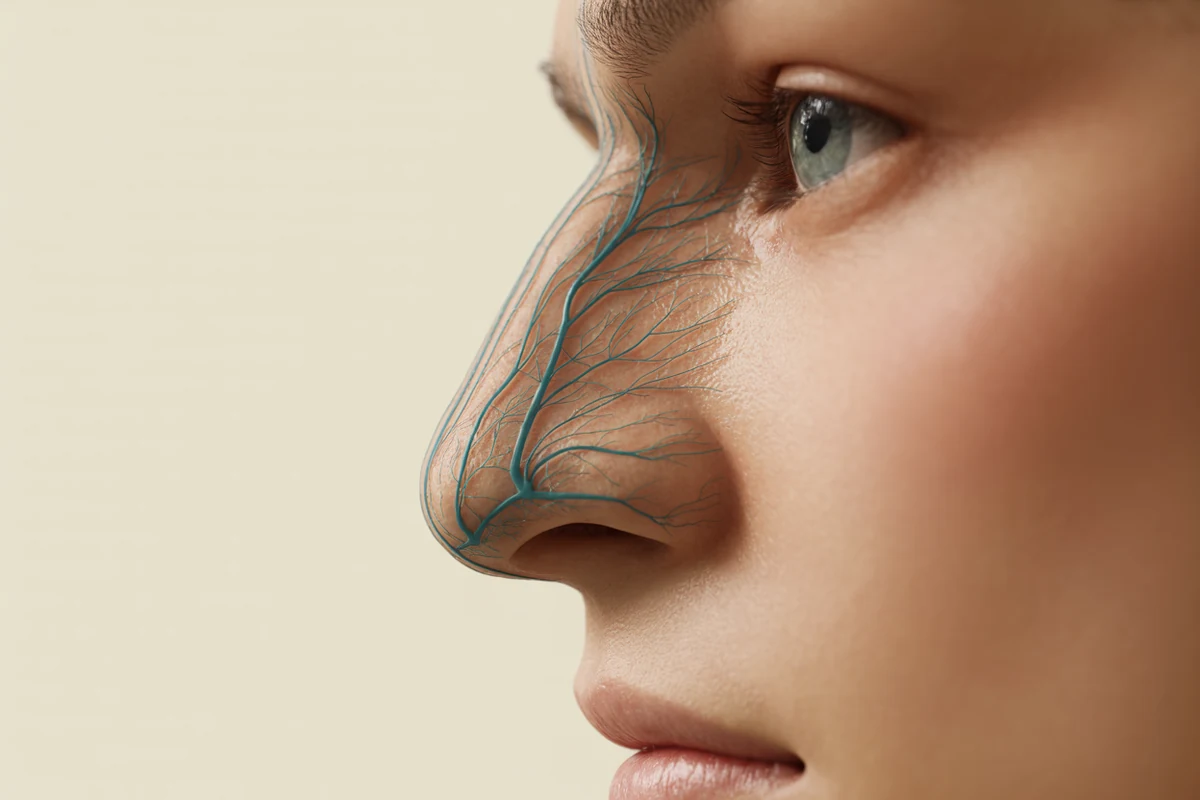
Why this matters to an injector: this is the same family of target as your lidocaine. Local anesthetics are non-selective voltage-gated sodium channel blockers delivered locally, which is why they must be delivered locally — a systemic non-selective sodium channel blocker is a cardiotoxicity problem, as anyone who has read about local anesthetic systemic toxicity understands. Suzetrigine's design solution is subtype selectivity rather than local delivery. NaV1.8 is concentrated in peripheral sensory neurons; NaV1.5 sits in cardiac tissue and NaV1.1–1.2 in the central nervous system. Hit only 1.8 and you can give it by mouth.
FDA's approval announcement described it as reducing pain "by targeting a pain-signaling pathway involving sodium channels in the peripheral nervous system, before pain signals reach the brain." That is the regulator's own framing, from the press release. Note that it is FDA's press language, not label language — the label itself makes no blood-brain-barrier claim and never uses the phrase "peripherally restricted." If you see that phrase attributed to the label, it is not there.
Approval date: January 30, 2025. Manufacturer: Vertex Pharmaceuticals. Controlled substance status: none. It is not scheduled.
The Suzetrigine Indication, Exactly as It Now Reads
The label was revised, and the revision matters.
The original January 2025 indication read: "JOURNAVX is indicated for the treatment of moderate to severe acute pain in adults." Most secondary sources still quote that sentence. The current label, revised 1/2026, reads:
"JOURNAVX is indicated for the treatment of moderate to severe acute pain, including postoperative pain, in adults."
"Including postoperative pain" is the clause that changes the conversation for aesthetic practice.
Suzetrigine On-Label vs Off-Label: Draw This Line Carefully
Here is the distinction I want every injector to hold, because it is the difference between defensible practice and a difficult conversation with a board.
Treating pain after an aesthetic procedure is within the approved indication. Moderate-to-severe acute pain, including postoperative pain, in adults. A patient with genuine post-procedural pain after a body contouring procedure, an aggressive ablative resurfacing, or an extensive thread lift is a patient with moderate-to-severe acute postoperative pain. That is what the drug is approved for.
Giving it before the procedure, as pre-emptive procedural analgesia, is off-label and unstudied. Both pivotal trials — the abdominoplasty study of 1,118 adults and a companion bunionectomy study — dosed patients after the procedure, for post-operative pain over roughly 48 hours. There is no approved indication, and to my knowledge no trial, for pre-procedural or peri-procedural administration.
Off-label prescribing is lawful and routine in medicine. But it is a decision you make knowingly, document, and can defend — not a use you assume because a mechanism sounds appealing. In an elective aesthetic setting, where the procedure is not medically necessary, the threshold for an unstudied off-label use should be higher than it would be in a hospital, not lower.
Two Suzetrigine Claims the Label Does Not Support
This is the part of the article I care most about.
"It is non-addictive"
The label is silent on abuse and dependence. There is no Section 9 — the standard Drug Abuse and Dependence section — in the prescribing information at all. The table of contents runs from 8.7 straight to Section 10, Overdosage, under the usual footnote that omitted sections are not listed.
Silence is not an affirmative negative finding. What you can say with confidence, and what is defensible in writing and in conversation with a patient, is:
- It is not an opioid.
- It is not a controlled substance and carries no DEA schedule.
What you should not say is "non-addictive," "no addiction potential," or "no risk of dependence," because those are affirmative safety claims that the label does not make. This distinction sounds pedantic until you are the one who wrote it in a patient handout.
"It does not affect your ability to drive"
The label is explicitly silent on driving and operating machinery. There is no warning, no precaution, and no Section 5 entry on CNS effects. Somnolence appears once in the adverse reactions section, as a reason for discontinuation in a small fraction of patients.
Again, the absence of a driving warning is genuinely favourable compared with a benzodiazepine or an opioid, both of which carry explicit language. But "the label does not warn about driving" and "the label says it does not affect driving" are different sentences, and only the first one is true. Use the first one.
What Actually Constrains Prescribing Suzetrigine
The interesting clinical content of this label is not the efficacy section. It is the interactions.
Contraindication. There is exactly one, and it is a drug interaction: concomitant use with strong CYP3A inhibitors is contraindicated. Moderate CYP3A inhibitors also increase exposure and require attention. Aesthetic patients are not a pharmacologically simple population — antifungals, certain antibiotics, some antiretrovirals and a number of common supplements sit in this space. Take a real medication history.
Ready to put this into practice?
Explore Empire's hands-on, CME-accredited Aesthetic & Injectable Training courses — live patients, expert faculty, and ongoing mentorship.
Suzetrigine is itself a CYP3A inducer. That creates the mirror-image problem: it can reduce exposure to sensitive CYP3A substrates a patient is already taking.
Hormonal contraception. This is the interaction most likely to catch an aesthetic practice out, because the demographic overlap is enormous. The label warns of hormonal contraceptive failure. Patients using progestins other than levonorgestrel or norethindrone need additional non-hormonal contraception during treatment and for 28 days after stopping. If you prescribe this drug to a woman of reproductive age and do not have that conversation, you have created a problem far larger than the one you were solving.
Hepatic impairment. Avoid in severe hepatic impairment (Child-Pugh C); dose reduction in moderate impairment (Child-Pugh B).
Food and grapefruit. The starting dose is taken on an empty stomach — at least an hour before or two hours after food — specifically to avoid delaying onset. Subsequent doses may be taken with or without food. Grapefruit is to be avoided during treatment, consistent with the CYP3A story.
Duration. The label states that use "has not been studied beyond 14 days." Read that precisely: it is a not-studied-beyond statement, not a regulatory maximum duration. Do not write "maximum 14 days" in your protocol; write what the label writes.
Common adverse reactions: pruritus, muscle spasms, increased creatine phosphokinase, and rash.
I am deliberately not publishing a dosing regimen here. One exists on the label, with a distinct starting dose, a maintenance dose, and adjustments for hepatic impairment and CYP3A inhibitors. Read it on the label, not in a blog post.
Where Suzetrigine Fits in an Aesthetic Comfort Plan
With all of that on the table, here is my honest read.
The best-supported use is post-procedural. The procedures in an aesthetic practice that produce genuine moderate-to-severe acute pain over the following day or two are a short list: extensive PDO thread lifting, aggressive ablative laser resurfacing, large-volume body contouring including deoxycholic acid treatment, and extensive biostimulator or subcision work. For those patients, an oral non-opioid that is not a controlled substance and whose pivotal evidence comes from a post-surgical cosmetic population is a meaningfully attractive option compared with reaching for a short opioid course.
It does not replace the rest of the comfort ladder. It is not an anxiolytic. It will not make a needle stick painless. It does not substitute for a well-placed infraorbital block, for ice, or for the non-pharmacologic measures that carry most of an aesthetic case mix.
Its real significance may be cultural. Aesthetic medicine has been quietly uncomfortable about post-procedure opioid prescribing for years, and has largely handled it by prescribing very little and telling patients to take acetaminophen. A genuinely new non-opioid mechanism, approved on evidence from an elective cosmetic surgical population, changes the shape of that conversation.
What to do on Monday
Read the label — the actual prescribing information, not the summary. Then decide, as a practice, a single written position: which procedures in your schedule generate post-procedural pain severe enough to consider it, whether you will use it pre-procedurally at all (and if so, that this is off-label and documented as such), and how your intake form will capture CYP3A inhibitors and hormonal contraception. That last item is the one most practices will miss.
Empire Medical Training covers procedural comfort inside the hands-on curriculum rather than as a bolt-on, and the procedures where this drug is most relevant are taught in Advanced PDO Thread Lift Training, Complete Cosmetic Laser Training and Complete Facial Aesthetic Training.
Prescribing is scope- and state-dependent, and this discussion reflects Dr. Jennifer Thomas-Goering's clinical practice as taught in Empire Medical Training's hands-on curriculum. Verify all prescribing information against the current FDA label. This article is educational and is not a substitute for training.
Dr. Jennifer Thomas-Goering, DO, MBA is a board-certified anesthesiologist, clinical lead instructor and executive committee member at Empire Medical Training, and founder of an aesthetics practice in Ann Arbor, Michigan.
Frequently Asked Questions
Is suzetrigine a controlled substance?
No. Suzetrigine carries no DEA schedule and is not an opioid. Note the distinction from a stronger claim: the label contains no Drug Abuse and Dependence section at all, so it makes no affirmative statement about abuse potential. "Not an opioid" and "not a controlled substance" are defensible; "non-addictive" is not a label claim.
Can suzetrigine be given before an aesthetic procedure?
That would be off-label. Both pivotal trials dosed patients after the procedure — one in abdominoplasty patients, one in bunionectomy — for post-operative pain. The approved indication covers moderate to severe acute pain, including postoperative pain, in adults. Pre-procedural administration is unstudied and should be a documented, deliberate off-label decision if made at all.
What is the most important interaction to screen for?
Two. Concomitant strong CYP3A inhibitors are an outright contraindication. And because suzetrigine is a CYP3A inducer, the label warns of hormonal contraceptive failure — patients on progestins other than levonorgestrel or norethindrone need additional non-hormonal contraception during treatment and for 28 days after stopping.
Does suzetrigine affect driving?
The label does not warn about driving or operating machinery, and contains no CNS-effects warning. That compares favourably with benzodiazepines and opioids, which carry explicit language. But the absence of a warning is not an affirmative statement of safety, and it should not be communicated to patients as one.
Which aesthetic patients might actually benefit?
Those with genuine moderate-to-severe pain in the day or two after a procedure — extensive thread lifting, aggressive ablative resurfacing, large-volume body contouring, deoxycholic acid treatment, extensive subcision. It does not help with needle-stick discomfort during a toxin or filler appointment, and it is not an anxiolytic.
Disclaimer
This article reflects the clinical opinions and experience of Dr. Jennifer Thomas-Goering, DO, MBA, an independent faculty member contributing to Empire Medical Training's curriculum. The views expressed are the author's own and do not necessarily represent those of Empire Medical Training.
It is professional education, not medical advice, and is no substitute for hands-on training or independent clinical judgment. Licensed clinicians remain responsible for their own patient selection, technique and outcomes, for verifying current product labelling, and for practising within their scope and applicable law. Empire Medical Training accepts no liability for reliance on this content.



 Claim Your Prize!