







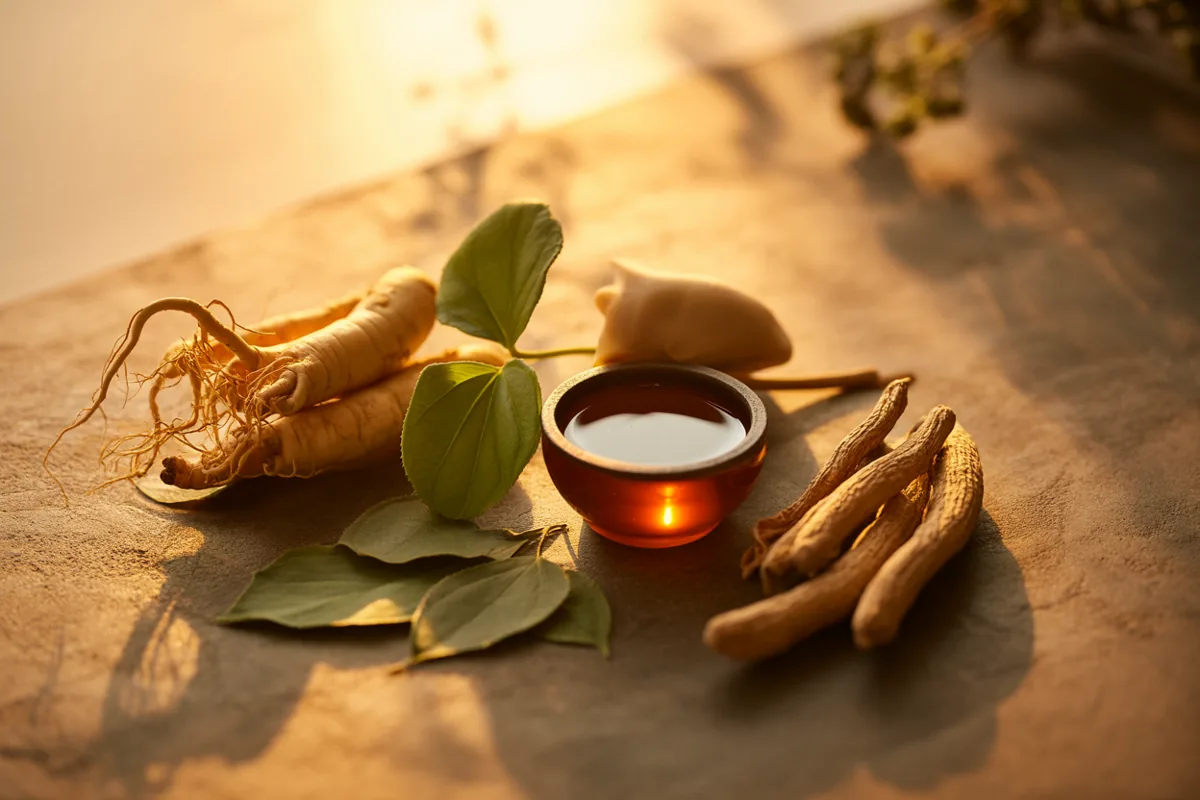
A patient hands you a ginseng cream and asks if it does anything. Another wants to know whether her cica gel is safe on skin you resurfaced last week. A rep wants you to retail a ferment essence. The answer to all three is not “botanicals are gentle”; it is: what tier of evidence exists for this ingredient, and does any of it describe what the patient wants?
Hanbang is the Korean term for traditional Korean medicine, and hanbang skincare means cosmetics built on herbal ingredients and prescriptions drawn from that tradition, most often from the Donguibogam, the early-17th-century Korean medical encyclopedia. A 2020 paper in Integrative Medicine Research mined that text and extracted 52 herbs with distinct skin-action profiles.
Two rules make the rest usable. Traditional use is not clinical evidence: it tells you a plant was available and tolerated by people who could not measure an outcome. And in-vitro collagen upregulation is not a clinical outcome — an extract that raises type I collagen or filaggrin in cultured keratinocytes has shown a plausible mechanism and nothing more. No penetration, no dose, no patient, no endpoint.
Does Hanbang Skincare Work? The Three Tiers and the Verdict
Tier 1 is human randomized or split-face evidence with a control. Tier 2 is small clinical work: single-arm, uncontrolled, multi-ingredient, or run by the company selling the ingredient. Tier 3 is in-vitro or animal only.
The evidence is weakest exactly where the marketing is loudest. Houttuynia cordata and Artemisia (mugwort) have no single-ingredient human topical trials. Galactomyces ferment filtrate has small uncontrolled studies run by its own manufacturer. Snail mucin has a handful of small industry-funded trials. Propolis is the only one here with adequately powered randomized data, and that is for cold sores. Triage ingredient by ingredient, as you should the rest of the Korean influence on current aesthetic practice.
Ginseng: oral wrinkle data, almost no topical case
Tier 1, oral. A 24-week randomized, double-blind, placebo-controlled trial in 82 Korean women over 40 improved facial wrinkles and raised type I procollagen on biopsy. Two limits: the product was red ginseng plus Torilus fructus and Corni fructus, so nothing is attributable to ginseng alone, and it found no change in elasticity, epidermal water content, erythema or pigmentation — making it evidence against the hydration and brightening claims the category runs on.
Tier 2, topical. One trial of 23 randomized subjects on an enzyme-modified ginseng cream lowered photo-damage score and roughness versus placebo. That is the entire controlled topical dataset.
Tier 3. Ginsenoside compound K, named constantly in hanbang marketing, has no published human skin trial. Before anyone sells it as brightening: in B16F10 cells compound K did not inhibit tyrosinase and it increased melanin content. Ginseng’s ceramide-and-hydration story is a hairless-mouse study.
Centella Asiatica and Cica: The Best Procedural-Recovery Signal Here
Tier 1. In a split-face, double-blind, randomized, placebo-controlled trial in 30 patients after Er:YAG resurfacing, a standardized Centella asiatica gel produced significantly less erythema on the treated side plus blinded-physician improvement in wound appearance at days 2, 4 and 7. But the effect size was small, skin biophysics did not differ, and texture only trended. It helps the first week; it has not been shown to change the final result.
Tier 2. A six-month double-blind trial in 20 photoaged women improved hydration, roughness and wrinkle depth — but the product was 5% ascorbic acid plus 0.1% madecassoside, and ascorbic acid carries its own photoaging evidence.
Tier 3. Atopic dermatitis: every dataset is keratinocytes and mouse models, with no human trial. Telling an eczema patient that cica treats her disease is a claim the literature does not contain.
The allergen note that matters most in clinic
Centella and its triterpenes are documented contact allergens, with eight indexed allergic contact dermatitis reports spanning 1985 to 2024, the most recent describing two patients who reacted to a 1% Centella ointment. Do not overstate it either: the “weak sensitizer” characterization is guinea-pig data and no patch-test prevalence figure exists. The issue is exposure, not potency: cica now sits in mass-market barrier products applied to compromised skin, and prolonged application to broken skin is exactly what promotes sensitization.
Licorice and green tea: the anti-redness end
Licochalcone A, from Glycyrrhiza inflata, has real human anti-erythema data: prospective randomized vehicle-controlled trials significantly reduced post-shave and UV-induced erythema. Caveats stay attached: provocation models in healthy skin, no published subject numbers, nearly all authors at one manufacturer. On pigment, the human licorice dataset is one 20-patient split-face study of liquiritin cream, subjectively graded, with mandatory sunscreen in both arms. Glabridin, the constituent every brightening brief cites, has no human trial at all.
Green tea shows why tier discipline matters. Topical green tea polyphenols do dose-dependently reduce UV-induced erythema and DNA damage in human skin — photoprotection biology, not a sunscreen substitute. But the best-designed photoaging trial, 40 women randomized to topical plus oral green tea or placebo for eight weeks, found no clinical improvement and more subjective irritation in the treated group. Oral green tea carries a safety signal: LiverTox scores concentrated extract likelihood “A” for clinically apparent liver injury with over 100 published cases, and EFSA flags 800 mg EGCG per day or more from supplements for a rise in serum transaminases.
Ferments, mugwort and heartleaf: mechanism without patients
Fermented skincare. The best human Galactomyces data are two 8-week studies in a combined 104 young Japanese women that reduced pore area, roughness and redness — no vehicle arm, and nearly every author employed by the company marketing the ingredient. No peer-reviewed report supports the popular claim that ferments cause fungal acne; it circulates on consumer forums. A patient with confirmed Malassezia folliculitis who flares on a ferment essence should stop and be re-evaluated — because the ingredient has no proven benefit worth the uncertainty, not because the literature shows harm.
Mugwort. Species are not interchangeable: A. princeps (Korean ssuk), A. argyi, A. vulgaris and A. annua carry different evidence and different allergen profiles, so read the INCI name. No randomized trial has tested topical Artemisia in patients with atopic dermatitis; the barrier story, filaggrin and loricrin upregulation via AHR/OVOL1, is cultured keratinocytes, and the anti-itch data are mice. Meanwhile Artemisia is Compositae, and the sesquiterpene lactone mix screening for that family is positive in about 0.8% of patch-tested patients in North America and about 1% in Europe, and a negative mix does not exclude it.
Ready to put this into practice?
Explore Empire's hands-on, CME-accredited Aesthetic & Injectable Training courses — live patients, expert faculty, and ongoing mentorship.
Heartleaf. Houttuynia cordata has no human topical evidence of its own; its anti-inflammatory and antiviral claims rest on cell culture and mice. Its strongest citation is an 8-week randomized trial in 60 acne patients that cut lesion counts using a four-herb blend, so Houttuynia’s own contribution is unknown.
Two ingredients that are not hanbang
Propolis is bee resin, not a Korean herbal botanical, though it is marketed alongside them. It carries the strongest human efficacy evidence in this article: two randomized trials in a combined 776 patients found a 0.5% standardized propolis lip preparation healed herpes labialis faster than 5% aciclovir cream. That licenses little: one proprietary extract, on the lip, for a viral indication. No propolis acne trial exists. Propolis is also a known contact allergen on the standard North American screening series, and positivity tracks the test material: 3.7% to Chinese propolis in 2019, 14.7% to Brazilian propolis in 2020, 2.2% to Chinese propolis in 2021 to 2022.
Snail mucin is a modern cosmetic ingredient popularized by K-beauty, not Korean traditional medicine; its dermatology literature developed around a Spanish-developed Cryptomphalus aspersa secretion. Its best study is a randomized, double-blind, split-face trial in 20 patients after two non-ablative fractional laser sessions: 40% snail secretion versus vehicle for 28 days, with significantly lower microcolumn density and fewer side effects on the treated side. The manufacturer employed a co-author. In a separate three-month vehicle-controlled trial, fine lines and wrinkles improved in the placebo arm too. Snail proteins are allergenic and cross-reactive with shellfish tropomyosin, yet no reaction to a topical snail-mucin cosmetic has been published; tell a shellfish-allergic patient exactly that, and that this little evidence does not justify the unknown.
Korean Herbal Skincare Claims: Cosmetic Versus Drug
Korea has a legally defined middle category the US does not: functional cosmetics, which require MFDS pre-market evaluation or a filed report and are typically built on pre-approved actives. The Enforcement Rule of the Cosmetics Act lists 11 claim categories — not five, as secondary sources often state — among them wrinkle improvement and elasticity, prevention or lightening of melanin deposition, and relief of hair-loss symptoms.
So in Korea, “wrinkle improvement” and “hair-loss symptom relief” are permitted, pre-reviewed cosmetic claims. In the US, a product intended to cleanse, beautify or alter appearance is a cosmetic, and the moment you promise a physiological effect the same product is a drug — generally an unapproved one. The ingredient did not change; the claim did. That line is yours to hold, and it tightens when you retail, because then you are the one making the claim. And render the Korean pigment category as “brightening” or “pigment-evening,” never “whitening” or bleaching.
Sunscreen shows the same split, and it changed twice this year. US sunscreens are OTC drugs with a closed list of actives; Korea and the EU treat them as cosmetics on a positive list. As of FDA’s September 10, 2026 update, the only US actives affirmatively classified as GRASE are zinc oxide, titanium dioxide and bemotrizinol — bemotrizinol added by final order OTC000039 on June 10, 2026, the first new active in the US sunscreen monograph since the late 1990s. Twelve older organic filters, oxybenzone and avobenzone among them, remain legally marketable while FDA has said more data are needed — which is neither “unsafe” nor “banned.” And on September 10, 2026, final order OTC000008-1 removed PABA and trolamine salicylate.
How to triage this chairside
A defensible position: hanbang-style ferment, mugwort and heartleaf products are reasonable moisturizers unlikely to help a diagnosed skin disease. Compositae and propolis sensitization are the risks to screen for, and a patient whose dermatitis worsens on a soothing botanical needs patch testing, not a different botanical.
Around procedures, exactly two ingredients here have controlled human periprocedural data: Centella after Er:YAG resurfacing and C. aspersa secretion after non-ablative fractional laser. Both are short-horizon recovery signals, not outcome changers. If you build a post-procedure retail shelf, keep it short and unfragranced: personal-care-product contact dermatitis rose more than 2.7-fold over two decades of North American patch-test surveillance. No trial has tested routine length in either direction, so do not tell a patient more steps help, or fewer.
When the goal is a topical with a defined molecule rather than a botanical extract of variable composition, cosmeceutical peptides are a better-characterized conversation — see Empire on GHK-Cu and peptides for skin, plus the longer piece on copper peptides in skin renewal. The same discipline applies to the measurable parameters behind the layered-routine ideal and to patients arriving with Korean product requests.
Frequently asked questions
What is hanbang skincare?
Hanbang is traditional Korean medicine; hanbang skincare means cosmetics formulated around herbal ingredients from that tradition, frequently traced to the Donguibogam. Commercially it dates to Amorepacific’s ABC Ginseng Cream in 1966. The claim that MFDS formally defines the term and sets a minimum herb content appears only in trade blogs.
Does centella asiatica work?
For one narrow thing, yes. In a split-face randomized placebo-controlled trial in 30 patients after Er:YAG resurfacing, a standardized Centella gel reduced erythema in week one, though durable outcomes were null. The photoaging trial usually cited combined madecassoside with 5% ascorbic acid, so it is not attributable to Centella. For atopic dermatitis the evidence is cells and mice.
Is there evidence for ginseng in skincare?
The better evidence is oral. A 24-week randomized placebo-controlled trial in 82 women improved wrinkles and raised type I procollagen on biopsy, but the product was a three-herb mixture and the trial found no change in elasticity, water content, erythema or pigmentation. Controlled topical evidence is one 23-subject trial.
Are fermented skincare ingredients better?
Nothing published establishes that fermentation improves a cosmetic outcome. The Galactomyces studies are small, lack vehicle arms and were authored by the ingredient’s own manufacturer, and no human trial isolates rice or Saccharomyces ferment filtrate as a single active. Unproven as a class advantage.
Can patients use these after procedures?
Two have controlled periprocedural human data: Centella after Er:YAG resurfacing and 40% Cryptomphalus aspersa secretion after non-ablative fractional laser, both improving early recovery signs without changing the final outcome. Everything else is unstudied there, and post-procedure skin is compromised skin — the scenario most likely to sensitize — so keep lists short and unfragranced.
Where to learn this properly
Topical selection is inseparable from what you do to the skin first. Empire’s Complete Facial Aesthetic Training includes medical-grade chemical peels and microneedling — the two interventions most often paired with the products here, and the two whose recovery windows determine what belongs on a patient’s face afterward. Providers wanting one modality can go deeper on choosing a chemical peel course and on what microneedling training should cover. The rule holds throughout: name the tier before you name the benefit.

 Claim Your Prize!