







 Medically reviewed by
Chris Croley, MD
Board-Certified Anesthesiologist & Critical Care Physician; Empire Chief Medical Officer
Medically reviewed by
Chris Croley, MD
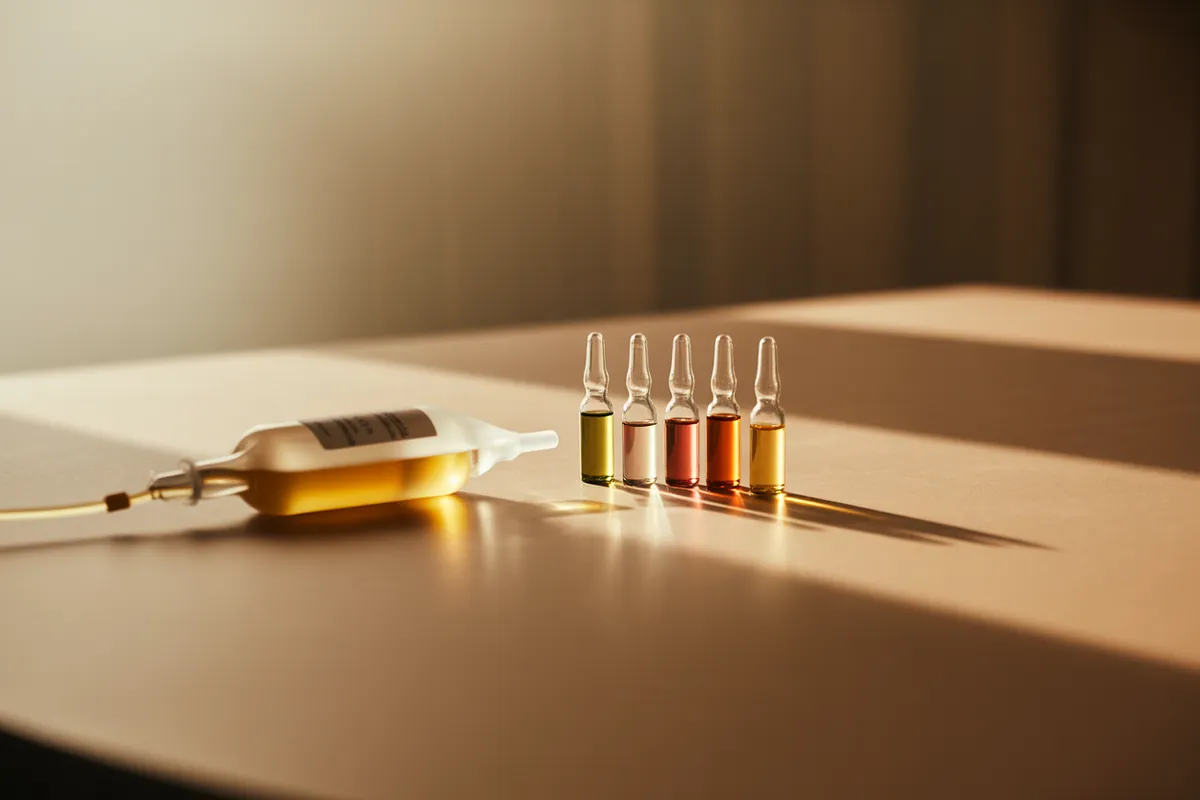
Board-Certified Anesthesiologist & Critical Care Physician; Empire Chief Medical Officer Most patients hear about an IV drip by its marketing name — the “immunity” bag, the “beauty” drip, the “recovery” infusion. Clinicians need to see one level deeper: every one of those formulas is built from the same modest library of vitamins, minerals, amino acids, and antioxidants. Learn the individual nutrients well, and you can read, build, or critique any custom infusion. This guide is the nutrient-by-nutrient reference, written for providers, and it sits within Empire's broader IV nutrition therapy resources.
A word on framing before we start. The appeal of the IV route is real — it bypasses the gut and can deliver nutrients the digestive system would otherwise limit. But “more direct” is not the same as “more is always better.” Throughout, we separate the established role of a nutrient (correcting a documented deficiency) from the elective wellness use, where the data are thinner. This is clinical education, not medical advice or a treatment protocol.
The IV nutrient toolkit
An IV infusion is assembled, not prescribed off a shelf. You begin with a base fluid — most often 0.9% normal saline or lactated Ringer's — and add the nutrients the patient needs. A typical wellness infusion lives in a 500 mL bag, which delivers a measure of hydration plus the vitamins and minerals over roughly 20 to 30 minutes; protocols that are truly about fluid replacement, like athletic recovery or hangover, step up to a 1,000 mL base.
The components fall into a few families: water-soluble vitamins (the B complex, B12, and vitamin C), fat-soluble vitamins (A, D, E, K), minerals (magnesium, calcium, zinc, and trace elements), amino acids, and antioxidants such as glutathione and alpha-lipoic acid. The water-soluble vitamins and the magnesium/zinc/calcium minerals are the day-to-day workhorses because the body does not store them well and they tolerate being in solution. The sections that follow walk through each family. The exact concentrations, dilution volumes, and how the pieces combine into a finished, osmolarity-balanced bag are taught in Empire's course — here we focus on what each nutrient is and why it earns its place.
B vitamins and B12
The B-vitamin family is the metabolic engine of any energy-oriented infusion. As Dr. Croley frames it in the course, these vitamins are essential for converting the food we eat into usable energy, which is why they anchor recovery, fitness, and wellness drips. A standard B-complex blend brings together B1 (thiamine), B2 (riboflavin), B3 (niacin), B5 (pantothenic acid), and B6 (pyridoxine). They work in harmony — supporting energy conversion, red blood cell formation, nervous-system health, skin and muscle tone, and stress and mood regulation. They are especially useful for patients with gastrointestinal conditions in whom oral absorption is compromised.
One safety point deserves emphasis: parenteral thiamine can rarely provoke anaphylaxis or angioedema, so an intradermal test dose is reasonable in patients with prior sensitivities. B vitamins are well tolerated overall, but anaphylaxis is always possible, and patients should be monitored.
B12 (cobalamin) earns its own line. It is critical for healthy nerve cells, brain function, DNA synthesis, and red blood cell production. Deficiency — common in older adults, in Crohn's or celiac disease, and on vegetarian or vegan diets — produces fatigue, weakness, memory problems, and, if untreated, neurological injury and anemia. B12 replacement is straightforward and is one of the cleanest examples of correcting a real deficiency: mild cases respond to oral supplements, while more significant deficiency or absorption problems are better served by injection. Because B12 is frequently paired with metabolism-focused weight protocols, it has a dedicated guide of its own — see B12 injections for weight loss for how it is used in that setting, and where the energy-versus-fat-loss claims need honest qualification.
Magnesium and calcium: the Myers' staples
If the B complex is the engine, magnesium is the mineral that does the most clinical heavy lifting. It is a cofactor in over 300 metabolic reactions and is involved in healthy bone, heart, and brain tissue, energy production, muscle relaxation, stress reduction, sleep support, and reducing the severity of headaches. Surveys suggest a large fraction of the population falls short of the recommended intake, which is part of why magnesium appears in so many infusions — and why it is a centerpiece of the migraine protocol, where it is the primary active ingredient.
Two practical notes from the course. First, IV magnesium can transiently raise serum levels several-fold, which is a feature when correcting deficiency but a reason for care in patients with cardiac or kidney disease. Second, magnesium is the nutrient most likely to produce that warm, flushing sensation patients describe mid-infusion; it is generally benign and rate-related, but it is worth warning patients about so the warmth does not alarm them.
Calcium is the other classic mineral, essential for bone health, muscle function, nerve transmission, blood clotting, and heart-rhythm regulation. In IV form it is given as calcium gluconate or calcium chloride depending on the clinical need, and it demands particular caution in patients with cardiac or kidney conditions. Together, magnesium and calcium are the mineral backbone of the original Myers' cocktail — the mid-20th-century blend of vitamins and minerals that became the template for modern IV therapy and still shapes how these drips are built today.
Vitamin C and vitamin D
Vitamin C (ascorbic acid) is a water-soluble antioxidant the body does not store, so it must be replenished regularly. At the modest doses used in everyday wellness drips it supports immune function, helps neutralize free radicals, and — the reason it appears in nearly every “beauty” formula — acts as a required cofactor for collagen synthesis. There is also a meaningful absorption argument: oral vitamin C tops out around a few grams per day before causing GI intolerance, so doses beyond that are only achievable intravenously. That said, the high-dose, oxidative use of vitamin C is a different therapy with its own indications, mechanism, and mandatory G6PD screening; it is covered separately in our guide to high-dose vitamin C IV.
Vitamin D functions less like a vitamin and more like a hormone, acting on a vast number of genes and central to calcium absorption, bone health, immune regulation, and more. Deficiency is widespread and linked to a long list of conditions. Clinically, though, vitamin D is usually replaced by deep intramuscular injection or oral dosing rather than routine IV infusion, because its fat-soluble nature and infrequent high-unit dosing suit those routes — and because fat-soluble vitamins can accumulate, levels should be monitored to avoid toxicity. In short: vitamin C is the IV-friendly antioxidant; vitamin D is the one you most often deliver by injection and track with labs.
Trace minerals: zinc and immune support
Zinc is the trace mineral that earns its place in immune- and wound-focused infusions. It participates in DNA synthesis, protein metabolism, wound healing, eye health, and hormone production, and the body must obtain it through diet. In IV form it is typically given as zinc sulfate for better solubility and stability, and it frequently rides along inside a combined mineral blend of magnesium, zinc, and calcium — a one-bag approach to electrolyte balance, immune support, and musculoskeletal health.
This is why zinc anchors the immunity-oriented drip alongside vitamin C: the two are the recurring “immune” pairing, often finished with glutathione. Whether that combination meaningfully prevents or shortens illness in a well-nourished patient is exactly the kind of claim to keep honest — it is plausible and popular, not proven. The role of trace minerals in immune-focused protocols, and the candid discussion of what the evidence does and does not support, is developed further in our guide to IV therapy for immune support.
Amino acids, glutathione, and other additives
Amino acids are the building blocks of protein and participate in muscle repair, immune response, hormone production, tissue repair, and energy. They divide into essential amino acids — the nine the body cannot make, including leucine, isoleucine, and lysine — and non-essential ones such as alanine, glutamine, and glycine, which the body can synthesize but still relies on. In IV clinics, amino acids are generally used as a blend sourced from a compounding pharmacy, tailored toward muscle recovery, immune support, or nutritional support in patients who absorb poorly or are recovering from surgery or illness. Because formulations differ between pharmacies, Dr. Croley's guidance is to monitor patient response when a blend is substituted and switch sources if results change.
Several non-vitamin additives round out the toolkit. Glutathione — a tripeptide of cysteine, glutamic acid, and glycine — is one of the body's most abundant antioxidants, supporting free-radical defense, detoxification, immune activity, and protein synthesis; in IV practice it is most often given as a slow push at the end of an infusion. Alpha-lipoic acid is an antioxidant that works in both water and fat compartments and is frequently used as a standalone treatment. CoQ10 supports mitochondrial energy production and is typically given by intramuscular injection. And the MIC injection (methionine, inositol, choline, often with B12) is widely marketed for weight loss — here honesty matters: as Dr. Croley notes, there is no good scientific evidence that the injection itself causes fat loss, and any benefit more likely reflects the energy bump and the accompanying diet and exercise. Where antioxidants and NAD intersect with anti-aging claims, those topics get their own dedicated treatment within the cluster.
Correcting deficiency vs. elective wellness
This is the distinction that separates responsible IV nutrition from hype, and it is worth stating plainly. When a patient has a documented deficiency or a malabsorption problem — low B12 with neurological symptoms, magnesium depletion, an inability to absorb nutrients after surgery — replacing that nutrient intravenously is well-founded medicine with a clear mechanism and a measurable endpoint. The body genuinely needs what you are giving, and the IV route solves a real absorption barrier.
Elective wellness infusions are a different category. A “boost” of vitamins for an already well-nourished person who feels run down may produce a real sense of well-being — hydration alone accounts for a good deal of it — but the evidence that topping up nutrients above normal levels improves outcomes is limited. That does not make wellness infusions illegitimate; patients value them and they are a reasonable elective service. It does mean providers should describe benefits accurately, avoid implying that a drip treats or prevents disease, and remember the FDA's specific concern about unsubstantiated health claims. If a patient with a normal gut can get the same nutrient from a pill, the honest framing is convenience and experience, not medical necessity. This same logic is unpacked in detail in our comparison of IV vs. oral supplements.
Safety and compatibility
Combining nutrients is where IV therapy stops being a menu and becomes a clinical skill. Several conceptual cautions govern how a custom drip is built — the specific calculations and recipes belong in the course, but every provider should understand the principles.
- Osmolarity and fluid balance. Each additive changes the tonicity of the bag. Highly hyperosmolar components (vitamin C is a notable example) must be balanced against the base fluid so the final solution stays roughly isotonic; getting this wrong risks vein irritation or fluid shifts. Reviewing osmolarity with a pharmacist when adding ingredients is standard practice.
- The immediate-use limit. Under immediate-use preparation, a mixture must be administered promptly and you are limited to no more than three sterile drugs in one bag — and the fluid itself counts as one. This is why providers piggyback a second bag or give an ingredient like glutathione as a separate IV push rather than overloading a single bag.
- Sterility and compounding. True sterile compounding falls under USP <797> with its engineering controls; most clinics instead practice immediate reconstitution and dilution under proper aseptic technique, or source complex blends from a qualified compounding pharmacy. Visual inspection of every preparation before use is non-negotiable.
- Patient screening. Confirm no allergy to any component (including preservatives), use caution in heart failure and chronic kidney disease where fluid and electrolyte loads are risky, and screen for G6PD deficiency before any high-dose vitamin C. Anaphylaxis, infiltration, and circulatory overload are the reactions to be ready for.
None of this is meant to discourage — most day-to-day IV nutrition is simpler than the compounding regulations imply. But the difference between a safe custom infusion and a risky one is exactly this kind of judgment, which is why structured training matters.
Training to build custom infusions
Knowing the nutrients individually is the foundation; combining them safely into infusions matched to a patient is the skill. Empire Medical Training's IV Nutrition Therapies course teaches the pharmacology of each vitamin, mineral, amino acid, and antioxidant covered here, then moves into patient selection and screening, osmolarity and compatibility, sterile preparation and immediate-use rules, IV insertion technique, and emergency management — taught by Dr. Chris Croley, who has run IV nutrition services in his own clinic for years. It situates IV therapy alongside the wider field of peptide therapy and hormone optimization so you can offer integrated wellness care.
Learn to build IV nutrient infusions the right way
Empire Medical Training's IV Nutrition Therapies course covers the science of every key vitamin and mineral, plus patient selection, compounding and compatibility, insertion technique, and emergency protocols — taught by board-certified physicians and available in person and via livestream.
Explore the IV Nutrition Course → Claim Your Prize!