







 Medically reviewed by
Joseph B. Beavers, MD
Family Medicine Physician & Empire Peptide Course Faculty
Medically reviewed by
Joseph B. Beavers, MD
Family Medicine Physician & Empire Peptide Course Faculty Peptide therapy is the clinical use of peptides — short chains of amino acids — to signal precise biological responses in the body. Interest has surged alongside the rise of GLP-1 medications for weight loss, but the field is far broader: peptides are studied for tissue repair, immune function, skin and hair, cognition, and longevity. This pillar guide is designed to be the single, honest reference clinicians and curious patients can use to understand the whole landscape, then go deeper through the individual peptide guides linked below.
Because peptide therapy is a Your-Money-or-Your-Life medical topic, accuracy matters. Throughout this guide we distinguish carefully between what is FDA-approved, what is investigational, and what is genuinely unproven — and we hedge efficacy claims accordingly. Nothing here is medical advice; it is clinical education for providers and an orientation for patients deciding whether to ask their physician about peptide therapy.
What are peptides?
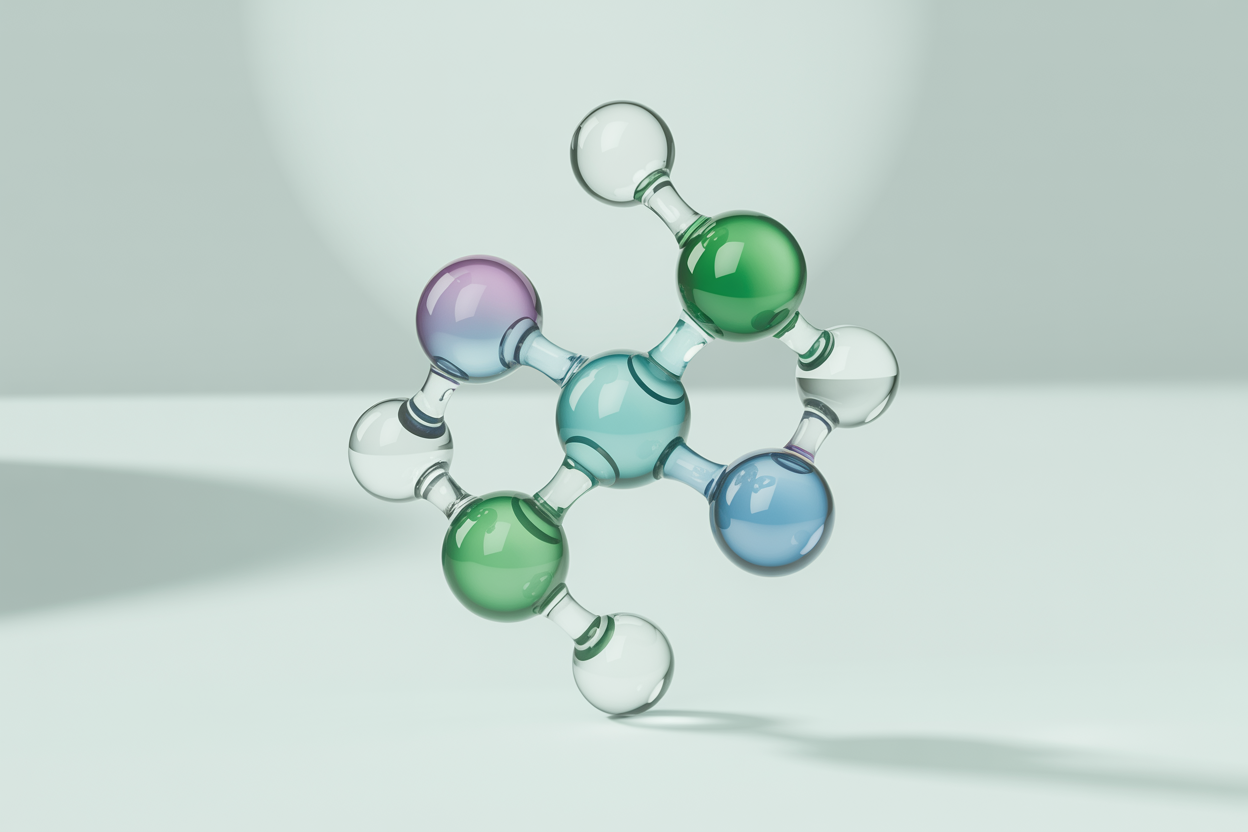
A peptide is a short chain of amino acids — the same building blocks that make up proteins. The difference is largely one of length: peptides are short (broadly tens of amino acids or fewer), while proteins are long, folded chains. That short length is the whole point. Peptides are small enough to act as crisp biological messages, and the body uses them constantly as signaling molecules.
You already run on peptides. Insulin is a peptide. So is GLP-1 (glucagon-like peptide-1), the gut hormone behind today's most talked-about weight-loss medications. Oxytocin, glucagon, and the growth-hormone-releasing hormones are peptides too. Each one binds a specific receptor and produces a specific, predictable effect — lower blood sugar, signal satiety, trigger a contraction, prompt a hormone release. Peptide therapy applies that same natural signaling logic deliberately: a clinician selects a peptide whose message matches a clinical goal.
This is what makes peptides conceptually different from many conventional drugs. A small-molecule drug such as ibuprofen or metformin generally works by interfering with normal physiology — blocking an enzyme or perturbing a metabolic pathway to force a clinical effect. Peptides work the opposite way: they are how physiology normally signals. Used therapeutically, they amplify, restore, or direct signals the body already runs. That is why the most useful mental model is signal, not replace: a growth-hormone secretagogue nudges the pituitary to make more of its own hormone rather than substituting for it, and a repair peptide accelerates a healing cascade the body is already trying to run.
This distinction also explains peptide behavior at the receptor. Because a peptide binds one receptor with high affinity, its effects — including its side effects — tend to be predictable from that receptor rather than scattered across the body. A useful clinical principle is that the receptor predicts the side-effect profile: GLP-1 receptor activation slows gastric emptying, so nausea and satiety are the mechanism working, not an unrelated toxicity. That specificity is the source of both the enthusiasm around peptides and the need for rigor: the right peptide, correctly dosed and sourced, can be elegant; the wrong one, or a contaminated one, carries real risk.
How peptide therapy works
Therapeutic peptides work through receptor signaling. A peptide fits a receptor the way a key fits a lock, and binding sets off a downstream cascade inside or around the cell. The clinical art lies in matching a peptide's signaling action to a patient's need, then delivering it at a dose and frequency that produce the intended effect without overshooting it.
Because peptides are made of amino acids, many are broken down in the digestive tract, which shapes how they're given. Common routes of administration include:
- Subcutaneous injection — the most common route for many therapeutic peptides, including GLP-1 agonists and growth-hormone secretagogues.
- Oral — used where a peptide is formulated to survive digestion or act locally in the gut.
- Topical — common for skin- and wound-oriented peptides such as copper peptides.
- Intranasal — used for certain cognitive and neuro-oriented peptides.
Behind every protocol sits pharmacokinetics — how a peptide is absorbed, distributed, broken down, and cleared. The single variable that shapes most dosing decisions is half-life, and across peptides it varies enormously: some clear from the bloodstream in minutes, others persist for days. That spread is why a peptide given nightly and one given weekly can belong to the same broad family yet be dosed in completely different ways. A short half-life is sometimes a feature rather than a flaw — for growth-hormone secretagogues it helps preserve the body's natural pulsatile rhythm, which a long-acting signal would blunt over time. Equally important, how long an effect lasts is often very different from how long the molecule circulates, so clinicians dose to track the biological response rather than the plasma level.
Route, dose, and schedule are therefore not interchangeable details — they determine whether a protocol is effective and tolerable. The same molecule given by a different route can require an entirely different protocol because bioavailability differs so sharply. This is precisely why structured training, rather than internet protocols, is the dividing line between responsible and reckless peptide use.
The major classes of therapeutic peptides
The peptide landscape is wide, but most clinically discussed peptides fall into a handful of functional families. Evidence and regulatory status differ sharply within and across these classes, so the groupings below are for orientation, not endorsement.
Metabolic & GLP-1 peptides
The most established and best-evidenced class. GLP-1 and dual GLP-1/GIP receptor agonists influence satiety, insulin response, and gastric emptying. Several agents in this family are FDA-approved for type 2 diabetes and/or chronic weight management, which is why this class has driven peptide therapy into the mainstream.
Growth-hormone secretagogues
These peptides prompt the pituitary to release the body's own growth hormone, rather than administering growth hormone directly — a distinction with meaningful clinical and regulatory implications. They are studied in the context of body composition, recovery, and aging.
Tissue-repair peptides
This family is discussed for healing of soft tissue, tendon, and gut lining. Several of the most-searched repair peptides remain investigational — not approved as drugs — and the human evidence base is limited, so claims here should be hedged carefully.
Immune-modulating peptides
Some peptides are studied for their role in supporting or regulating immune signaling. As with repair peptides, regulatory classification has shifted over time, making sourcing and compliance central to responsible use.
Regenerative & skin peptides
Copper-binding and related peptides are used in regenerative and aesthetic contexts for their studied roles in wound healing and collagen signaling, frequently applied topically.
Cognitive & nootropic peptides
A smaller, more investigational group studied for effects on focus, stress, and neuroprotection, often delivered intranasally. Evidence in humans is early, and these should be approached with particular caution.
Peptide directory
Below is a map of the individual peptides clinicians and patients ask about most. We are publishing in-depth, evidence-reviewed guides for each one. Two are live now; the rest are in production and publishing soon. Check back — this directory will fill in over the coming weeks.
Metabolic & weight
Growth-hormone secretagogues
Sexual health
By clinical goal
Reading the evidence honestly
One of the most important skills in peptide medicine is being candid about how strong the evidence actually is for any given peptide — because it varies from rigorous to preliminary. A useful way to think about it is in tiers. At the top sit peptides supported by randomized controlled trials and FDA approval, such as the GLP-1 and GLP-1/GIP receptor agonists. Below that are peptides approved in other countries and backed by human trials but not by the U.S. FDA. Further down are peptides with emerging human evidence — real studies, sometimes small randomized trials, but nothing approaching a phase-three program. And at the base are peptides supported largely by preclinical and animal data, strong mechanism, and case reports, where for some compounds the bulk of the published work traces back to a single research group.
None of this means a lower-tier peptide is automatically inappropriate — it means the conversation has to be honest. “There is strong randomized-trial data for this” is a different sentence than “there is promising preclinical data and a small case series.” Both can be a reasonable basis for a clinical decision, but the patient deserves to know which one they are hearing. Framing a peptide accurately by tier is the foundation of genuine informed consent, and it is a recurring theme in serious clinical training.
How peptides are sourced & regulated
With peptides, the molecule is only as good as where it came from — so sourcing and regulation are not background details, they are central to safe practice. Most clinically used peptides that are not finished FDA-approved drugs are prepared by compounding pharmacies, and there are two categories worth understanding. 503A pharmacies are traditional compounders that prepare patient-specific prescriptions under state board oversight. 503B outsourcing facilities are FDA-registered and FDA-inspected and operate under cGMP — the same quality standard pharmaceutical manufacturers use — making 503B the higher sourcing standard where it is available. A legitimate pharmacy can tell you instantly which category it operates under; one that cannot is a red flag.
The non-negotiable document in this field is the Certificate of Analysis (CoA) — ideally lot-specific and from an independent third-party lab — confirming the product's identity, purity, and potency, and reporting endotoxin testing. Endotoxins are bacterial byproducts that, even in trace amounts, can cause clinically significant reactions in an injectable, so this testing matters. The opposite end of the spectrum is the “research-chemical” market: products labeled “not for human use,” sold outside pharmacy oversight, with no reliable guarantee of what is actually in the vial. Purity and even peptide content can vary wildly. Sourcing from licensed 503A or 503B pharmacies with a verifiable CoA — never from gray-market vendors — is the line between defensible care and avoidable harm.
The regulatory landscape itself has been a moving target. Before late 2023, many peptides existed in a gray area, compounded under interim policy. In September 2023 the FDA placed roughly nineteen peptides into a category reflecting significant safety concerns, prohibiting them from 503A compounding. A key nuance that trips up many clinicians is that the 503A system is a positive list: a substance has to be affirmatively permitted, so simply being removed from the restricted list is not the same as being cleared to compound. More recently, federal officials signaled intent to restore access to a group of peptides, and in 2026 a number were moved out of the restricted category — but several still await formal review by the FDA's compounding advisory committee (PCAC), with additional votes and rulemaking expected through 2026 and into 2027. The practical takeaway is that any peptide's status can change within months, and responsible practice means verifying the current status of each compound before using it rather than relying on what was true last year.
What peptide therapy is used for
Peptides are studied and applied across a range of clinical goals. The strength of evidence varies dramatically from one application to the next, so each is framed honestly below. Dedicated application guides for the areas below are in production and publishing soon.
Weight loss & metabolic health
This is the most established use and the engine behind the field's growth. GLP-1 and GLP-1/GIP receptor agonists are studied and approved for chronic weight management and may produce clinically meaningful weight reduction when paired with metabolic workup, titration, nutrition, and monitoring. (Dedicated guide coming soon.)
Muscle & recovery
Repair and growth-hormone-axis peptides are studied for recovery, body composition, and soft-tissue healing. Much of this work is early or investigational, so benefits should be described as potential rather than proven. (Dedicated guide coming soon.)
Skin & anti-aging
Copper and other regenerative peptides are used in aesthetic and regenerative contexts for their studied roles in collagen signaling and wound healing, often topically. (Dedicated guide coming soon.)
Hair restoration
Certain peptides are studied as adjuncts in hair and scalp protocols. Evidence here is limited, and peptides are typically one component of a broader plan rather than a standalone solution. (Dedicated guide coming soon.)
Longevity
A number of peptides are explored for aging-related and cellular-health goals. This is among the most speculative areas; longevity claims should be treated with particular skepticism until stronger human data exist. (Dedicated guide coming soon.)
Is peptide therapy safe? Regulation and side effects
Honesty matters most here. The safety of peptide therapy is not a single answer — it depends on which peptide, how it's sourced, and who is administering it.
On regulatory status: some peptides, notably GLP-1 receptor agonists, are FDA-approved drugs with well-characterized safety and efficacy data. Many other peptides discussed in wellness and anti-aging settings are investigational — not approved as drugs — or have historically been available only through compounding pharmacies. Importantly, the FDA has restricted several peptides for compounding, and the regulatory picture continues to evolve. Responsible practice means knowing the current status of every peptide before using it.
On side effects: profiles differ by peptide. GLP-1 agonists are commonly associated with gastrointestinal effects such as nausea; injectable peptides can cause injection-site reactions. For many investigational peptides, the human safety data are simply limited, which is itself a reason for caution rather than reassurance.
The single largest real-world risk in this field is unregulated "research-chemical" sourcing — peptides bought from gray-market suppliers, labeled "not for human use," with no guarantee of identity, purity, or sterility. Self-administration of such products, without physician oversight, is where the genuine danger lies. Supervised care using compliantly sourced product, with proper patient selection, dosing, and monitoring, is a fundamentally different and far safer proposition.
How peptide therapy is practiced safely
Good peptide medicine is as much about operational discipline as it is about choosing the right molecule. Many therapeutic peptides arrive freeze-dried (lyophilized) and must be reconstituted with the correct diluent before use, then stored cold and used within a defined window. The handling details are not trivia: peptides are degraded by heat, by freezing once reconstituted, and by mechanical force, so technique genuinely affects how potent the dose a patient receives actually is. Labeling each vial with its contents, concentration, and dates is a thirty-second habit that prevents some of the most common errors in a peptide practice. These are exactly the kinds of skills a structured course teaches hands-on rather than leaving to guesswork.
Responsible practice also means monitoring. Some peptide classes call for baseline and follow-up labs — growth-hormone secretagogues, for example, are commonly tracked with IGF-1, because the goal is a response in the upper-normal range rather than a supraphysiologic one, and you cannot interpret a follow-up value without a baseline to compare it to. Other peptides have no meaningful lab markers and are monitored clinically, by patient-reported response. Either way, clinicians watch for adverse events and know which findings warrant pausing a protocol — an injection-site reaction is managed differently than a sign that a dose has run too high, and certain presentations call for stopping and referring rather than adjusting. Active or recent malignancy is treated as a hard contraindication for the pro-angiogenic peptides in particular.
Underpinning all of it is documentation and informed consent. For any peptide used off-label or available only through compounding, the standard of care is a charted clinical rationale, an explicit disclosure of regulatory and evidence status, the known and theoretical risks, the alternatives discussed, and a monitoring plan — with a signed consent form to match. The chart note that explains why this patient, this peptide, now matters as much as the signature. Far from bureaucratic overhead, this is the structural support for a thoughtful clinical decision: if a clinician cannot write that rationale, that is itself a signal not to write the prescription. This is the dividing line between a practice that handles peptides like a profession and one that treats them like supplements.
How much does peptide therapy cost?
For patients, the monthly cost of peptide therapy varies widely with the specific peptide, whether it is branded or compounded, the dose, and the prescribing practice. Branded GLP-1 medications and compounded peptide protocols occupy very different price points, and insurance coverage is inconsistent — many peptide services are cash-pay. Rather than quote a single figure, the honest answer is that cost is highly peptide- and protocol-specific and should be confirmed with the prescribing clinician.
For providers, the more relevant question is the path to offering it: training, compliant supply relationships, and protocols. Peptide therapy is one of the higher-margin cash-pay service lines in functional and aesthetic medicine, which is a major reason practices are adding it — but margin is only legitimate when the underlying care is properly trained and sourced.
Get certified to offer peptide therapy
Empire Medical Training's Peptide Therapy Master Course is a comprehensive program covering peptide selection, evidence-based protocols, dosing, sourcing, and regulatory compliance — taught by board-certified physicians. Available in person and via livestream. It is also Course 1 of Empire’s Peptide Therapy Certification, which adds business, marketing and healthcare-law training, a documented case series and a final exam.
Explore the Certification →How providers get trained
Licensed physicians, nurse practitioners, physician assistants, and nurses can all add peptide therapy to their scope with appropriate training. A strong program goes well beyond a list of peptides — it teaches the clinical reasoning behind selection, current regulatory and sourcing realities, dosing and titration, side-effect management, and how to build the service into a practice safely. Empire's peptide curriculum is structured exactly this way and sits within the broader Academy of Anti-Aging & Functional Medicine, alongside hormone replacement, IV nutrient therapy, and weight management. Clinicians who want a formal credential can go further with the Empire Peptide Therapy Certification Program — two certification paths built on this same curriculum. To go deeper on individual peptides, explore the live guides in the directory above or return to the Resource Center as new guides publish.
 Claim Your Prize!