







 Medically reviewed by
Faride Ramos, MD, FAAMFM, ABAARM
Double Board-Certified in Internal & Functional Medicine
Medically reviewed by
Faride Ramos, MD, FAAMFM, ABAARM
Double Board-Certified in Internal & Functional Medicine Gut dysbiosis is one of the most frequently invoked terms in functional gastroenterology — and one of the most loosely used. At its core it describes a microbial community that has drifted out of balance. For clinicians, the value is not in the label but in the reasoning behind it: understanding what shifted, why it shifted, and how that imbalance propagates from the gut lumen outward into immunity, inflammation, and systemic health.
This guide situates dysbiosis within the broader study of gut health and is written for providers who want an accurate, practical overview grounded in real clinical reasoning. It is clinical education, not medical advice, and nothing here is a treatment recommendation, protocol, or substitute for individualized care and conventional GI evaluation when it is warranted.
What is gut dysbiosis?
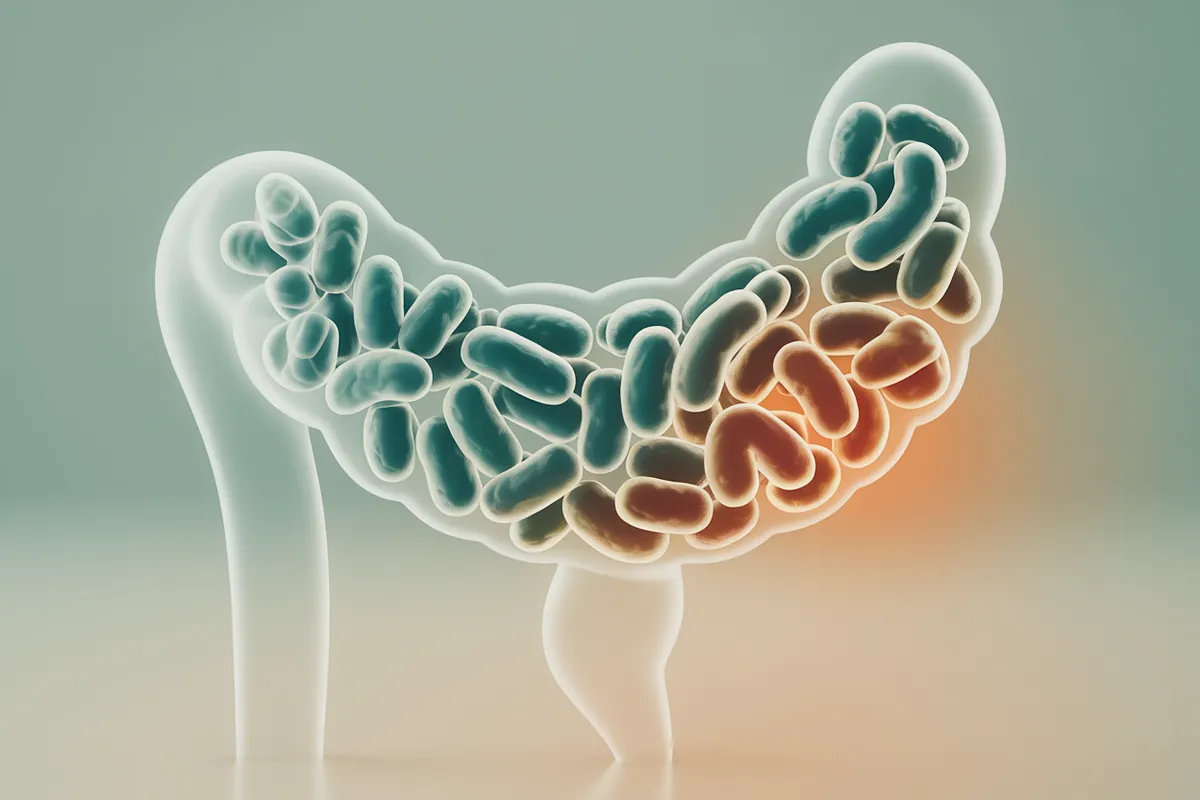
The gut microbiome is the community of bacteria, fungi, and other microorganisms that populate the digestive tract. In a healthy state it is dominated by commensal organisms — the beneficial bacteria that break down dietary fiber, ferment carbohydrates, produce short-chain fatty acids, generate protective mucus, support vitamin absorption, and help regulate fats and cholesterol. Alongside these live neutral organisms and a smaller population of potentially pathogenic ones: bacteria, fungi such as Candida, viruses, and parasites.
Dysbiosis is what we call it when that balance tips. In Dr. Ramos's clinical framing, dysbiosis exists when there is too much of any pathogenic microorganism in relation to the good bacteria. Practically, that can mean three overlapping shifts: a loss of beneficial commensals, an overgrowth of harmful or pathogenic microbes, and an overall reduction in microbial diversity. Diversity matters in its own right — it is, as she puts it, a cornerstone of a resilient gut, and its erosion is often the earliest signal that the ecosystem is in trouble. For the foundational physiology behind this balance, see our overview of the gut microbiome.
What causes dysbiosis?
Dysbiosis is rarely a single event. It is usually the accumulated result of inputs that favor harmful microbes and starve beneficial ones. Dr. Ramos groups the major contributors clinicians should screen for:
- Diet. What a patient eats feeds the microbiome directly. Diets low in fiber and dense in processed foods, sugar, and inflammatory triggers shift the community away from the fiber-fermenting commensals that produce protective short-chain fatty acids.
- Antibiotics and other medications. Antibiotics are a recognized driver — and not just the type, but the frequency of exposure over a lifetime. Other common medications matter too: chronic NSAID use can weaken the intestinal lining, and long-term proton pump inhibitors lower stomach acid in ways that permit microbial overgrowth.
- Chronic stress. Stress alters gut barrier function and motility through the gut-brain axis, creating conditions in which dysbiosis takes hold and persists.
- Infection. Bacterial, viral, parasitic, or fungal infections can disrupt the resident community and tip the balance toward pathogens.
- Low stomach acid. Adequate gastric acid is a first line of microbial defense. When it is insufficient — from PPIs, atrophic gastritis, or aging — harmful microbes are more likely to overgrow, a mechanism that links low acid directly to conditions like SIBO.
Dr. Ramos also emphasizes inputs many clinicians overlook: early-life colonization — whether a baby was born vaginally or by cesarean, and early antibiotic exposure — shapes the microbiome for years, along with hormonal fluctuations across the lifespan, alcohol, bile-acid imbalances, and aging-related changes. The recurring theme is a root-cause approach: identifying which of these inputs is driving a given patient's imbalance, rather than reflexively reaching for a probiotic and hoping it resolves.
The consequences of an imbalanced gut
Why does microbial balance matter so much? Because the gut is not a passive tube. As Dr. Ramos describes it, the digestive system does far more than process food: it houses a dense connection to the central nervous system — often called the second brain — and it is a primary arm of the immune system. When the microbiome is disordered, the consequences radiate along all three of these axes.
Digestive symptoms
The most immediate effects are local. Patients commonly report bloating, gas, irregular bowel habits, abdominal discomfort, and indigestion. Dysbiosis can impair nutrient absorption and, when harmful microbes overgrow the small intestine, contribute to the symptom picture of SIBO — bloating after meals, altered stools, and nutrient deficiencies.
The immune and inflammation link
The microbiome is an active immune modulator. A balanced community helps train and restrain the gut-associated immune tissue; an imbalanced one drives immune dysregulation and inflammation. When microbial imbalance coincides with a compromised gut barrier, undigested particles, microbial fragments, and toxins can cross into deeper tissues — the process described in our guide to leaky gut and increased intestinal permeability. Bacterial lipopolysaccharides crossing the barrier act as endotoxins, triggering an inflammatory cascade and raising the body's overall toxic and antigenic load.
The systemic reach
This is where dysbiosis becomes more than a digestive issue. GI dysfunction has been associated with conditions well beyond the gut — autoimmune disease, metabolic disorders, cardiovascular disease, and neuroinflammatory and cognitive conditions. Dr. Ramos is candid that much of the intestinal-permeability literature linking these systemically remains an area of active research rather than settled conventional doctrine. The honest clinical position is that the associations are real and worth taking seriously, while the causal mechanisms — and whether targeting permeability directly changes outcomes — are still being worked out. That candor is part of practicing this medicine responsibly.
Symptoms and recognition
Recognizing dysbiosis is complicated by the fact that its symptoms are nonspecific and overlapping. Bloating, gas, discomfort, irregular bowel habits, and food sensitivities are the common digestive presentations, while fatigue, skin issues such as eczema and psoriasis, and other systemic complaints may accompany them. Because these same symptoms appear across many GI conditions, dysbiosis is a pattern to investigate, not a diagnosis to assume.
The most important discipline here is screening for red flags that demand conventional GI workup before any functional approach. Rectal bleeding, unexplained weight loss, iron-deficiency anemia, persistent vomiting, or a markedly elevated fecal calprotectin are not features of garden-variety dysbiosis — they point toward inflammatory bowel disease, malignancy, or another structural pathology and warrant prompt referral and, where indicated, colonoscopy. As Dr. Ramos stresses, a high fecal calprotectin is itself a red flag that mandates a conventional workup. Functional gut medicine and conventional GI evaluation are complementary, not competing — and knowing where the line sits is a core clinical skill.
How dysbiosis is assessed
The cornerstone of dysbiosis assessment is comprehensive stool testing. A thorough panel profiles the commensal bacteria — ideally each should sit near the middle of its reference range, neither insufficient nor overgrown — alongside cultures for pathogenic bacteria, yeast such as Candida, and parasites. Beyond the organisms themselves, the better panels report functional markers organized around what Dr. Ramos calls the four I's: infection, inflammation, insufficiency, and imbalance.
Those markers turn a stool test from a microbial snapshot into a clinical map. Calprotectin distinguishes inflammatory bowel disease from irritable bowel syndrome and flags inflammation that needs escalation. Pancreatic elastase gauges digestive sufficiency. Short-chain fatty acids and beta-glucuronidase reflect microbial metabolic function. Bacterial and yeast dysbiosis markers — derived from microbial metabolites — help identify overgrowth even when cultures are ambiguous. Interpreting these together, rather than fixating on any single value, is what separates a useful workup from a confusing one. Our guide to functional stool testing walks through these panels in detail.
Stool testing is frequently paired with adjacent tools: breath testing when SIBO is suspected, intestinal-permeability biomarker panels, and simple methods like elimination diets and symptom tracking. The interpretive judgment to weave these together — and to know which test answers which question — is exactly what structured clinical training builds.
Restoring microbial balance
Functional medicine approaches dysbiosis through a staged framework — often taught as the 5R program, and at its heart a remove, replace, reinoculate, repair sequence. The logic is sequential: you cannot meaningfully repopulate a gut you have not first cleared and supported. Here is the conceptual shape of each phase; the specific agents, durations, and dosing are individualized to the patient's testing and are taught in Empire's course rather than reproduced here.
- Remove. Identify and address what is driving the imbalance — overgrown pathogens, dietary triggers and food sensitivities, and toxic exposures. This phase leans on dietary modification and targeted antimicrobials, including botanicals with clinically meaningful antimicrobial strength, chosen against what the stool test actually found.
- Replace. Restore the digestive capacity the gut needs to function — addressing low stomach acid, digestive support, and motility — so the downstream phases can succeed.
- Reinoculate (repopulate). Rebuild the beneficial community with diet and probiotics. This is where fiber-dense and, for tolerant patients, fermented foods do much of the work, supported by prebiotics that feed commensals and probiotics chosen to target the specific imbalance. Our guide to probiotics and prebiotics covers the conceptual distinctions here.
- Repair. Remodel the integrity of the gut lining and barrier. This phase supports mucosal healing and is closely tied to resolving the increased permeability discussed in our leaky gut guide; the gut-repair peptide BPC-157 is one cross-cluster tool clinicians increasingly study in this context.
Two themes run through every phase. Diet is foundational — Dr. Ramos returns to it repeatedly, because no protocol holds without it, and a structured gut-healing protocol and the right gut-health diet do much of the durable work. And diversity is the cornerstone therapy: the goal is not a single magic organism but a resilient, varied ecosystem, restored by feeding good bacteria and removing what crowds them out. The sequencing, the agent selection, and the retest-and-adjust judgment are what turn this framework from a list into a treatment — and that judgment is what clinical training develops.
Learn to assess and correct dysbiosis
Empire Medical Training's Functional Gut Health course teaches the microbiome science, functional stool interpretation, and the staged remove-replace-reinoculate-repair approach to correcting dysbiosis at its root — taught by Dr. Faride Ramos, double board-certified in internal and functional medicine.
Explore the Functional Gut Health Course →Training for providers
Dysbiosis sits at the intersection of conventional gastroenterology and functional medicine, which is exactly why it rewards structured education. The science is real, the testing is information-dense, and the framework for correcting it is staged and interpretation-heavy — none of which is well served by a single article. Providers who want to offer this confidently need fluency in microbiome physiology, the gut barrier, functional stool interpretation, and the remove-replace-reinoculate-repair sequence, along with the clinical judgment to recognize when a red flag means a patient belongs in a conventional GI workup instead.
Empire's Functional Gut Health training is built around exactly that practical judgment — teaching providers to read the testing, individualize the framework, and correct dysbiosis at its root rather than chase symptoms. For clinicians building a broader regenerative practice, it connects naturally to the wider Anti-Aging & Functional Medicine curriculum.
 Claim Your Prize!