







 Medically reviewed by
Faride Ramos, MD
Double Board-Certified, Internal & Functional Medicine; Functional Endocrinology
Medically reviewed by
Faride Ramos, MD
Double Board-Certified, Internal & Functional Medicine; Functional Endocrinology Few terms generate more patient questions — and more clinical confusion — than “adrenal fatigue.” Patients arrive exhausted, wired-but-tired, unable to tolerate stress, and frustrated that previous visits ended with a prescription that covered up symptoms without addressing the cause. They have read online that their adrenal glands are “burned out.” The instinct of a good clinician is to take the suffering seriously while being honest about the science — because the popular label and the actual physiology are not the same thing.
This guide is written for clinicians who want to engage that conversation accurately. It sits within Empire's broader functional medicine resource center and reflects the root-cause, systems-based teaching of Dr. Faride Ramos. It is clinical education, not medical advice, and nothing here is a treatment recommendation or a substitute for individualized care.
“Adrenal fatigue” is not a diagnosis — here’s why
The term “adrenal fatigue” was first described in the late 1800s and popularized in the 1930s, framed as a kind of nervous breakdown in which chronically overworked adrenal glands become depleted and can no longer keep up. It is an intuitive story, and it maps onto how millions of people genuinely feel. But intuitive is not the same as accurate. The Endocrine Society and mainstream endocrinology reject “adrenal fatigue” as a diagnosis because the proposed mechanism — adrenals that “burn out” and stop producing cortisol after prolonged stress — is not supported by the evidence.
That distinction matters clinically. The adrenal glands are remarkably resilient; they do not exhaust themselves the way a muscle fatigues. What can and does change under sustained stress is the regulation of the system — the timing, the rhythm, and the feedback — not the organ's raw capacity to make hormones. So the responsible move is to keep the searched term in the conversation (because that is what patients are asking about) while correcting it: what they are describing is far better understood as HPA-axis dysregulation.
What the HPA axis actually is
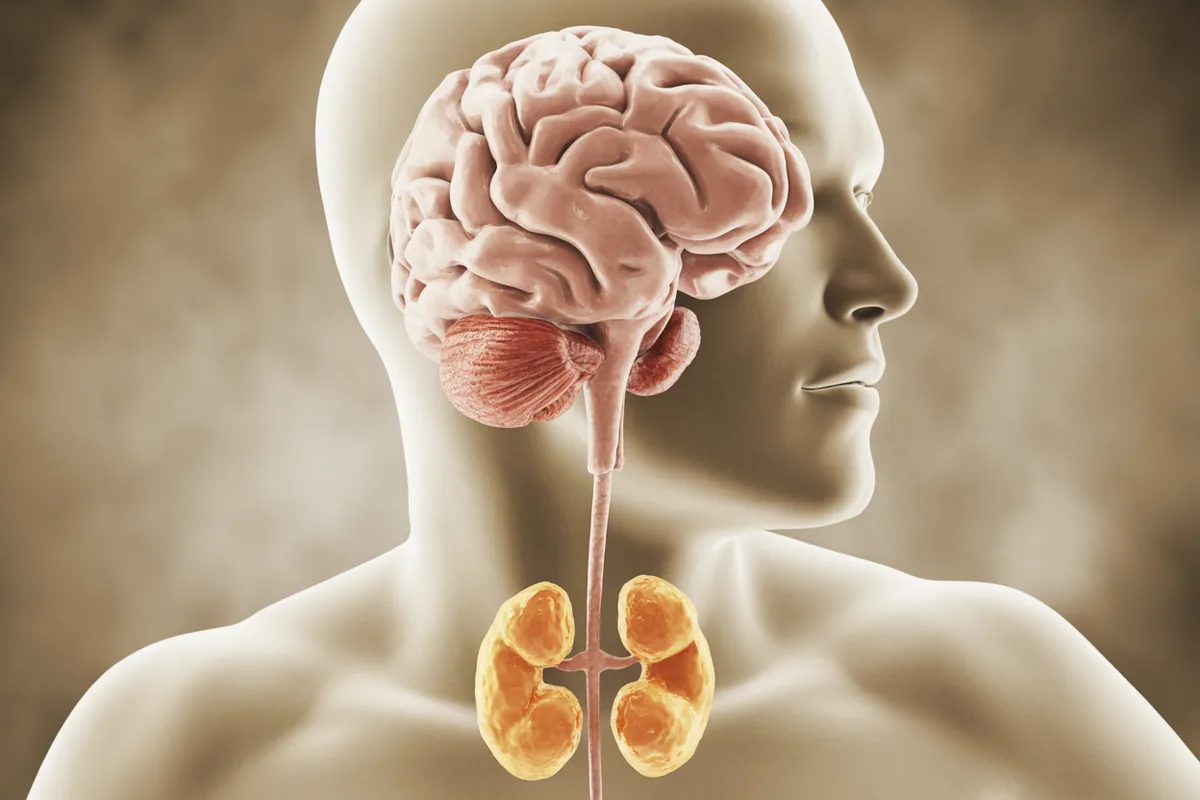
The HPA axis — hypothalamic-pituitary-adrenal axis — is the body's central stress-response circuit, and it is a feedback loop, not a one-way switch. As Dr. Ramos frames it, everything starts in the brain. A stressor — physical, physiologic, mental, or the sympathetic surge of epinephrine and norepinephrine — stimulates the hypothalamus and pituitary, which release ACTH. ACTH travels to the adrenal cortex and drives two parallel pathways: one producing cortisol, the other producing DHEA. Cortisol then feeds back negatively to the hypothalamus and pituitary, telling the system to switch the signal off.
That feedback loop is the whole point. In a healthy system, a stressor raises cortisol, cortisol does its job, and the loop quiets back down. Under chronic, unresolved stress, the signal never fully resolves — and that is where the rhythm gets distorted. Calling that distortion “fatigue” misdescribes it. The organ is not failing; the loop is dysregulated.
Cortisol’s role and the daily rhythm
Cortisol is produced by the adrenal glands at roughly 20 mg per day, and at a normal level it is fundamentally anti-inflammatory and adaptive: it raises blood sugar to supply energy, helps the body resist oxidative and damaging stress, and modulates the immune response. The problems begin at the extremes. Too much cortisol shifts it from anti-inflammatory to immune-suppressing; too little, sustained over time, leaves a patient depleted.
What makes cortisol so clinically useful is that it follows a circadian rhythm. Production is highest on waking, between roughly 7 and 8 a.m., then declines across the day through hundreds of pulses, reaching its lowest point in the small hours of the night. A healthy curve starts high in the morning — around an 18 on common salivary scales — and steps down gradually toward bedtime. When stress persists without resolution, that curve loses its shape: it may stay flat, drop too early, or fail to fall at night. The pattern of the rhythm, not a single number, is what tells the story.
The cortisol–DHEA relationship and downstream hormones
Cortisol does not act alone. It shares its origin in the adrenal cortex with DHEA, and the two come from the same steroid cascade that begins with cholesterol — the same cascade that ultimately feeds the sex hormones. Dr. Ramos describes hormones as a symphony that starts with cortisol, followed by thyroid, and then the sex hormones; pull on one and the others move. This is why a stress problem is rarely only a stress problem.
Clinically, functional practitioners pay attention to the cortisol-to-DHEA balance. A high, sustained cortisol output can be accompanied by shifts in DHEA, and that ratio is discussed in relation to energy production, insulin sensitivity, body composition, fat accumulation, protein breakdown, and bone health. DHEA itself is a precursor — the source of a large share of androgens and, in women, of endogenous estrogen — and it declines with age. It is worth being candid here: these cortisol:DHEA framings are clinical frameworks, not formal lab-confirmed diagnoses. They are a useful way to think about adrenal-axis balance, but a ratio should prompt a question about the patient, not become a label on its own. Where the conversation turns to replacing hormones rather than supporting rhythm, that belongs to a different discussion — see our hormone replacement therapy resources — and it intersects with thyroid and the broader picture covered in functional endocrinology.
Symptoms and the stages of HPA dysregulation
Patients with HPA-axis dysregulation tend to describe a recognizable cluster: persistent fatigue that sleep doesn't fix, a “second wind” after supper, low stress tolerance, irritability, brain fog, salt and sugar cravings, exercise intolerance, and poor recovery. The way these symptoms present often tracks with where the cortisol rhythm has shifted, which clinicians sometimes describe in stages:
- Early shift — elevated cortisol, low DHEA. Poor sleep (driven in part by melatonin suppression, since cortisol and melatonin compete), loss of muscle mass, central weight gain, glucose intolerance, low mood, and fluid retention.
- Middle shift — low-normal to flattened output. The curve loses its healthy slope and resilience erodes.
- Later shift — low cortisol across the day. Dominant fatigue, carbohydrate cravings, dark circles, headaches, salt cravings, exercise intolerance, and poor healing.
It is precisely this nonspecific, overlapping picture that makes the area treacherous. The same symptoms appear in thyroid dysfunction, in perimenopause, in depression, and in chronic fatigue. That overlap is exactly why a careful work-up — not pattern-matching to a trendy label — is the standard of care.
Rule out true adrenal disease first
This is the non-negotiable safety step. Before any functional framework is applied, real adrenal pathology must be excluded, because it is genuinely dangerous to miss. Addison's disease (primary adrenal insufficiency) is a confirmed condition in which the adrenal cortex truly fails to produce enough cortisol; at the prolonged, extreme low end, conventional medicine calls this addisonian, and it requires endocrinology-led diagnosis and replacement. At the opposite extreme, Cushing's syndrome reflects pathologic cortisol excess. Both are diagnosed with validated testing, not symptom questionnaires.
Red flags that demand a formal endocrine work-up and referral rather than a lifestyle plan include severe or rapidly progressive symptoms, unexplained weight loss or hyperpigmentation, electrolyte abnormalities, hypotension with dizziness, and any markedly abnormal cortisol result. Pregnancy, and a cardiac or cancer history, also change the calculus and warrant appropriate evaluation. The functional, rhythm-based approach in this guide is for the large middle ground of stressed, symptomatic patients after true disease has been ruled out — and it is clinician education, not a license for patient self-treatment.
A candid word on testing
Functional clinicians frequently use salivary cortisol testing to map the daily rhythm, collecting samples across the day to visualize the curve at home without needle sticks. Dr. Ramos notes this approach has substantial citation support and was used in stress research dating back to NASA's astronaut studies, and that it can reveal a loss of circadian rhythm that a single morning blood draw would miss. It is a reasonable tool for answering a specific question about timing.
Honesty requires noting the other side. Functional lab interpretation is debated. Salivary cortisol mapping is not how mainstream endocrinology diagnoses adrenal disease, and concepts like “optimal” ranges narrower than standard lab references are contested. The discipline that keeps testing useful is simple: a test should answer a question, not fish for one. Order it to characterize a rhythm you suspect, interpret it in the context of the whole patient, and never let a saliva chart override the work-up that excludes true disease. The deeper logic of when and how to test responsibly is covered in our guide to cortisol and chronic stress.
Lifestyle-first management
Here is where the root-cause lens earns its keep. The goal is not to “boost the adrenals” with a stack of supplements; it is to remove the chronic stressor and restore the rhythm. Dr. Ramos reinforces this with every patient: the foundation is lifestyle, and it comes first.
- Nutrition. A lower-glycemic, whole-food pattern with adequate fiber and balanced protein, fat, and carbohydrate at each meal — because a diet heavy in refined carbohydrates is itself a recurring physiologic stressor, several times a day.
- Stress modulation. Engaging the parasympathetic side of the nervous system — diaphragmatic breathing and vagal-tone work — to blunt the sympathetic and ACTH-driven cortisol response at its source.
- Sleep. Protecting circadian timing and the cortisol–melatonin relationship, since disrupted sleep both reflects and worsens a distorted rhythm.
- Movement. Regular activity that supports resilience without becoming another unrecovered stressor — intensity matched to where the patient actually is.
- Reassurance and education. Helping the patient understand the mechanism and stay consistent, even before they feel motivated, is part of the treatment, not an afterthought.
Only after that foundation is in place do targeted measures — adaptogens, specific micronutrients, and, in genuinely low-output cases under careful supervision, physiologic (not pharmacologic) cortisol support — enter the conversation. The specific agents, doses, titration schedules, and rhythm-guided protocols are taught in Empire's Anti-Aging & Functional Medicine course, not reproduced here, because they require individualized judgment and monitoring. The point worth keeping is the order of operations: lifestyle and root cause first, pharmacology last, and never supplement-stacking as a substitute for either. For the broader pattern of how stress hormones, fatigue, and sleep interlock, see hormones, fatigue, and sleep.
Learn the science the right way
Empire Medical Training's Anti-Aging & Functional Medicine training teaches HPA-axis physiology, cortisol-rhythm interpretation, the cortisol–DHEA relationship, and individualized, lifestyle-first protocols — taught by board-certified faculty including Dr. Faride Ramos. CME-accredited, available in person and via livestream.
Explore Anti-Aging & Functional Medicine Training → Claim Your Prize!