






If you already hold a clinical license and you’re thinking about adding aesthetics to your practice, the path is shorter than most people assume — but it is also widely misunderstood. There is no single national “Botox® license,” no government-issued Botox credential, and no federal registry of injectors. What actually determines whether you can inject is your underlying medical license and your state’s scope-of-practice and delegation rules. Training and certification sit on top of that foundation; they demonstrate competency, they don’t create legal authority.
That distinction is the single most important thing to understand about how to become a Botox injector, and it’s where most of the confusion online comes from. This guide walks through who is eligible by license type, what certification does and doesn’t do, the step-by-step pathway from licensure to your first patient, what separates real training from a weekend slideshow, and what the career actually looks like once you’re injecting.
Who Is Eligible to Become a Botox Injector?
Eligibility starts with a licensed medical background. Most jurisdictions permit the following professionals to administer botulinum toxin, though the supervision and delegation requirements differ substantially from state to state:
- Physicians (MD/DO) — the broadest authority. Physicians can inject, prescribe, purchase product directly from manufacturers, and in most states supervise or delegate to mid-level providers.
- Nurse practitioners (NPs) — NPs with prescriptive authority can generally both purchase Botox and inject it. This is true in most states, but prescriptive authority and independent practice rules vary enough that you should confirm with your state board rather than assume.
- Physician assistants (PAs) — usually able to inject under physician supervision, often with restrictions on their ability to acquire, dispense, and administer prescription medications independently.
- Registered nurses (RNs) — RNs will essentially always require physician supervision or a delegation relationship. RNs may inject and become certified in most states, but not all, and the details of what “supervision” means differ widely.
- Dentists — typically permitted to inject within the scope of their dental license, which in many states means the perioral and maxillofacial region rather than the full face. Some states are broader than others.
Estheticians are the most common source of disappointment here. Esthetician eligibility varies by state, and in the large majority of jurisdictions an esthetician license is not sufficient to inject a prescription medication. Injecting is a medical act. If aesthetics is the goal and you don’t hold a clinical license yet, the realistic path runs through nursing or another medical credential first.
Our guide on who can administer Botox covers the license types in more detail. Whatever your credential, verify current requirements with your own state board before you make plans — these rules change.
License vs. Certification: The Distinction That Matters Most
People use “Botox certified” and “Botox licensed” interchangeably. They are not the same thing, and conflating them causes real problems.
Your license is the state-issued authority to practice medicine, nursing, or dentistry. It is what makes injecting legal for you, within the scope your state defines. No training course grants it, extends it, or overrides it.
A training certificate — including a CME course completion certificate from Empire Medical Training — documents that you completed a defined curriculum and met hands-on technical objectives. It demonstrates competency. It is not a license, and no honest training provider will tell you otherwise.
So why bother getting certified at all, if it isn’t legally required? Because in practice, three groups care a great deal:
- Malpractice carriers. Carriers generally want documented training before they’ll extend coverage for aesthetic procedures. A certificate is the evidence they ask for.
- Manufacturers. Allergan and the other manufacturers will not sell product to a provider they believe is unqualified. Documented training is how you establish that you are.
- Patients and employers. A certificate tells them you completed the learning objectives and hands-on technical training required to administer Botox safely in a practice setting.
The short version: your license makes it legal, and your certification makes it practical. You generally need both to actually operate.
Is There a Board Certification in Botox or Aesthetic Medicine?
This deserves a careful answer, because the marketing in this industry is loose.
The American Board of Medical Specialties (ABMS), the body that recognizes medical specialties, does not recognize aesthetic medicine as a specialty. There is no ABMS board certification in Botox injections or in aesthetic medicine. This surprises people, but it follows: plastic surgeons, cosmetic surgeons, and cosmetic dermatologists are not board certified in aesthetic medicine through their accrediting bodies either. They’re board certified in plastic surgery, or dermatology, and they practice aesthetics within it.
Various boards and societies do offer aesthetic medicine credentials. Empire Medical Training, in cooperation with the American Academy of Procedural Medicine (AAOPM), offers a Board Certification in Aesthetic Medicine that is recognized within the aesthetics community, benefits your credentialing, and is recognized by malpractice carriers as representing a standard of care. It is a meaningful credential — but it is a self-directed specialty certification, and it is not the same thing as ABMS specialty board certification. Anyone who blurs that line is selling you something.
Board certification is not necessary in order to purchase medications or perform procedures. As in every other area of medicine, though, the more training and knowledge you have, the better your outcomes and the more your credentials carry weight.
How to Become a Botox Injector: The Step-by-Step Pathway
Step 1: Earn Your Medical or Nursing Degree
You need a licensed clinical background before anything else. The fastest route into injecting is generally nursing: an Associate’s Degree in Nursing (ADN/ASN) takes roughly two years, though many employers prefer a Bachelor of Science in Nursing (BSN), which takes about four. NP and PA programs build on that with graduate education. Physicians complete medical school plus residency; dentists complete dental school.
If you’re already licensed, skip ahead — this step is behind you, and it’s the long one.
Step 2: Pass Your Licensing Exam and Get Licensed in Your State
RNs must pass the NCLEX-RN to earn licensure in the state where they intend to practice. PAs sit the Physician Assistant National Certifying Exam (PANCE) or its equivalent. Physicians complete their board exams and state licensure. Each state layers its own requirements on top, so check with your board rather than relying on what’s true next door.
Step 3: Complete Accredited Botox Training
This is where you actually learn to inject. Look for a course led by experienced instructors with real clinical depth in aesthetics, and one that awards recognized CME credit — Empire’s Botox programs provide AMA PRA Category 1 Credits™, the highest continuing medical education credit designation offered through the AMA.
If you plan to build an aesthetics practice rather than offer a single service, consider pairing neurotoxin training with dermal filler training. Botox and fillers solve different problems — dynamic wrinkles versus volume loss — and most real treatment plans use both. Learning them together shortens the ramp considerably.
Step 4: Meet Your State’s Requirements and Establish Your Supervision Structure
Depending on your license type and state, this may mean documenting a specific number of training hours, completing hands-on injections under supervision, or formalizing a supervisory or collaborative agreement with a physician. RNs and, in many states, PAs will need that agreement in place before they inject. NPs may or may not, depending on the state.
Step 5: Get Credentialed, Insured, and Supplied
With training documented, you can approach your malpractice carrier about coverage for aesthetic procedures and establish accounts with manufacturers to purchase product. This is the practical gate most new injectors don’t anticipate — and the reason certification matters even though it isn’t a license.
Step 6: Maintain Competency
Keep your certification current through continuing education and CME credits. Techniques, products, and complication protocols evolve. So do state regulations.
Ready to put this into practice?
Explore Empire's hands-on, CME-accredited Medical Aesthetics Career Pathways courses — live patients, expert faculty, and ongoing mentorship.
For a licensed clinician, steps 3 through 5 typically take days to weeks — not years. That’s the honest appeal of this pathway.
What Good Botox Training Actually Looks Like
Botox’s excellent safety record rests almost entirely on the skill of the person holding the syringe. The overwhelming majority of poor outcomes — ptosis, asymmetry, frozen brows, a crooked smile — trace back to injection depth, placement, or dosing rather than to the product. That means the quality of your training is not a detail. It is the whole thing.
Judge a course on three criteria:
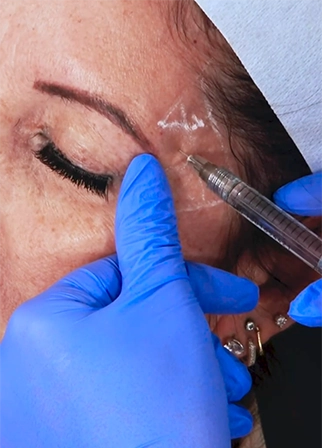
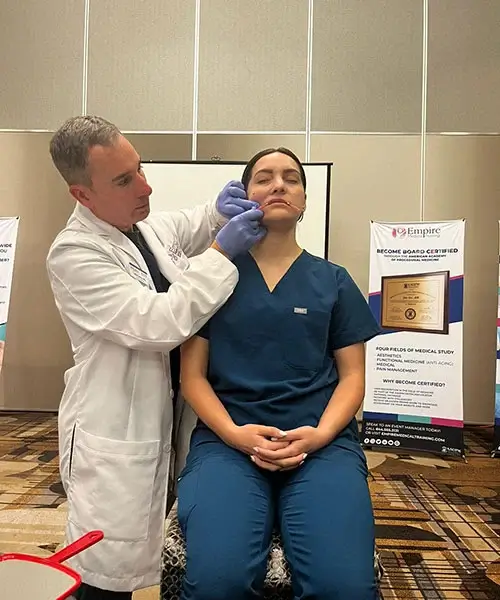
- Live-patient hands-on injection. Non-negotiable. You cannot learn needle control, depth, and tissue feedback from a slide deck or a mannequin. If a program doesn’t put a syringe in your hand and a real patient in front of you, it is not injection training — it’s a lecture about injection training.
- Serious facial anatomy. Muscle origin and insertion, layers and planes, danger zones, vascular anatomy, and how diffusion behaves in each. Dosing is anatomy-dependent: the same number of units does different things in different muscles and different faces.
- Complication management. Ask directly what a program teaches about recognizing and managing ptosis, asymmetry, brow heaviness, and adverse events. Every injector eventually sees a complication. The difference between a good injector and a liability is knowing what to do at that moment.
If you’re unclear on the fundamentals before you start, our primer on what Botox is and how it works covers the pharmacology and mechanism.
State Law Is the Variable You Cannot Ignore
Every question in this article ultimately routes back to your state. Who may inject, who must supervise, what supervision means in practice, who may purchase and stock product, whether a chart review is required, whether the supervising physician must be on site — all of it is state law, and none of it is uniform.
We won’t summarize fifty statutes here, because a summary is exactly the kind of thing that goes stale and gets someone in trouble. Start with our overview of Botox laws by state, then confirm current rules directly with your state medical or nursing board before you inject. When your state board and a blog post disagree, the board wins.
Building a Career as a Botox Injector
Once you’re trained and legally cleared, the settings open up quickly. Certified injectors work in:
- Medical aesthetic practices focused on facial rejuvenation — wrinkle reduction, contouring, combination treatment planning.
- Medical spas, where neurotoxin for glabellar lines, crow’s feet, and forehead lines is often the highest-volume service on the menu.
- Dermatology offices, alongside acne treatment and skin rejuvenation.
- Plastic surgery clinics, where neurotoxin complements and refines surgical results.
- Your own practice, or independent contracting — the route many injectors take once they have volume and confidence.
If you’re still building hours, apprenticeships and job-shadowing under an experienced board-certified provider are an underrated way in. Injecting is a craft; reps compound.
Earnings Outlook: What to Expect
Be skeptical of anyone quoting you a precise Botox injector salary. Compensation varies enormously by license type, geography, practice setting, whether you’re salaried or take a percentage of collections, and whether you own the practice.
What can be said fairly: NPs and PAs already earn well as a baseline — six figures is common in the profession broadly — and aesthetics is generally a cash-pay service line without insurance reimbursement pressure, which is why so many clinicians add it. For a practice owner, neurotoxin is typically a strong-margin service. For an employed injector, earnings track volume, skill, and retention. Patients return to the injector they trust; that’s where the economics actually live.
Frequently Asked Questions
Can I become Botox certified if I am not a physician or dentist?
Yes and no — it depends on your medical degree and your state. Non-physicians can become certified and inject in many states, but the authority flows from your license, not the certificate. RNs will always require physician supervision and may inject in most states, though not all. NPs with prescriptive authority can generally purchase Botox and inject it. PAs are usually able to inject under physician supervision, sometimes with restrictions on acquiring and dispensing the medication. Estheticians generally cannot inject. Confirm your situation with your state medical or nursing board.
Is there a board certification in Botox injections or aesthetic medicine?
Not through the ABMS, which does not recognize aesthetic medicine as a specialty. Plastic surgeons and cosmetic dermatologists are not board certified in aesthetic medicine through their accrediting bodies either. Various boards and societies offer aesthetic medicine credentials — Empire, with the AAOPM, offers a Board Certification in Aesthetic Medicine that is recognized within the aesthetics community and by malpractice carriers — but these are self-directed specialty credentials, not ABMS specialty board certification.
Do I need to be certified in Botox administration to perform the procedure?
Certification is not a legal license to inject, and board certification isn’t required to purchase medications or perform procedures. In practice, though, you want it. Certification shows malpractice carriers, manufacturers such as Allergan, and patients that you’ve completed the learning objectives and hands-on technical training to administer Botox safely. Manufacturers will not sell product to a provider they believe is unqualified, so certification is often what makes actually operating possible.
How long does it take to become a Botox injector?
If you already hold a clinical license, training is typically a matter of days to weeks. If you’re starting from scratch, the clock is dominated by the underlying degree — roughly two years for an ADN, four for a BSN, longer for NP, PA, physician, or dentist pathways. The Botox training itself is the short part.
How much do Botox injectors make?
There’s no single reliable figure, and be wary of sources that give you one. Earnings depend on license type, region, setting, compensation structure, and patient volume. NPs and PAs commonly earn six figures in the profession generally, and aesthetics is a cash-pay service line, which is part of its appeal. Practice ownership and patient retention drive the upside far more than the procedure itself.
What states allow RNs to inject Botox?
Most states permit RNs to inject under physician supervision or delegation — but not all, and the definition of adequate supervision varies considerably. Because these rules change and the details matter, we won’t list them here. Review our Botox laws by state overview and then verify directly with your state board of nursing.
Looking for a Role, or Hiring for One?
Empire runs a placement service for exactly this. The Medical Match is free to Empire graduates and works in both directions: clinicians looking for a position complete a job opportunity form, practices looking to fill one complete an employer form, and Empire matches against its database of healthcare professionals.
Empire members also get Empire Jobs, the job board inside the Empire portal — browse and apply to current postings, or post a role and manage the applications if you are the one hiring.
Start Your Aesthetics Career with Empire Medical Training
Empire Medical Training has trained healthcare professionals since 1998, and our Botox Training & Certification course is CME-accredited with live-patient, hands-on injection under expert supervision. You leave having injected real faces — because that’s the only way competence with a needle is built.
If you’re an RN, our Medical Training for Registered Nurses track is built around the scope and supervision realities you’ll actually work within, and our guide to Botox certification for nurses covers the specifics. If you want to move faster and broader across aesthetics rather than one procedure at a time, look at the Empire Clinical Fellowship.
Your license is what makes this legal. Your training is what makes you good. Get both right, and the rest of the career follows.



.webp)
 Claim Your Prize!