







 Medically reviewed by
Betsy Greenleaf, DO
Board-Certified OB/GYN & Urogynecologist; Empire Director of Anti-Aging
Medically reviewed by
Betsy Greenleaf, DO
Board-Certified OB/GYN & Urogynecologist; Empire Director of Anti-Aging Platelet-rich plasma (PRP) sits at the intersection of two powerful forces in modern sexual medicine: a genuinely interesting regenerative premise and a fast-moving, claim-heavy marketplace. For clinicians, the responsible posture is to hold both ideas at once. The biology is plausible and the procedure is low-risk because it uses the patient's own blood — but the controlled human evidence remains early, limited, and mixed, and PRP is not FDA-approved for any sexual indication. This guide, part of Empire's sexual health resource center, lays out the science and the honest evidence so you can counsel patients accurately and decide where PRP belongs in your practice.
It is clinical education, not medical advice, and it deliberately stops short of reproducing PRP preparation, injection volumes, or step-by-step technique — those are taught hands-on in Empire's course. The goal here is to teach the why and to be candid about what is and isn't established.
What is PRP — and the regenerative premise
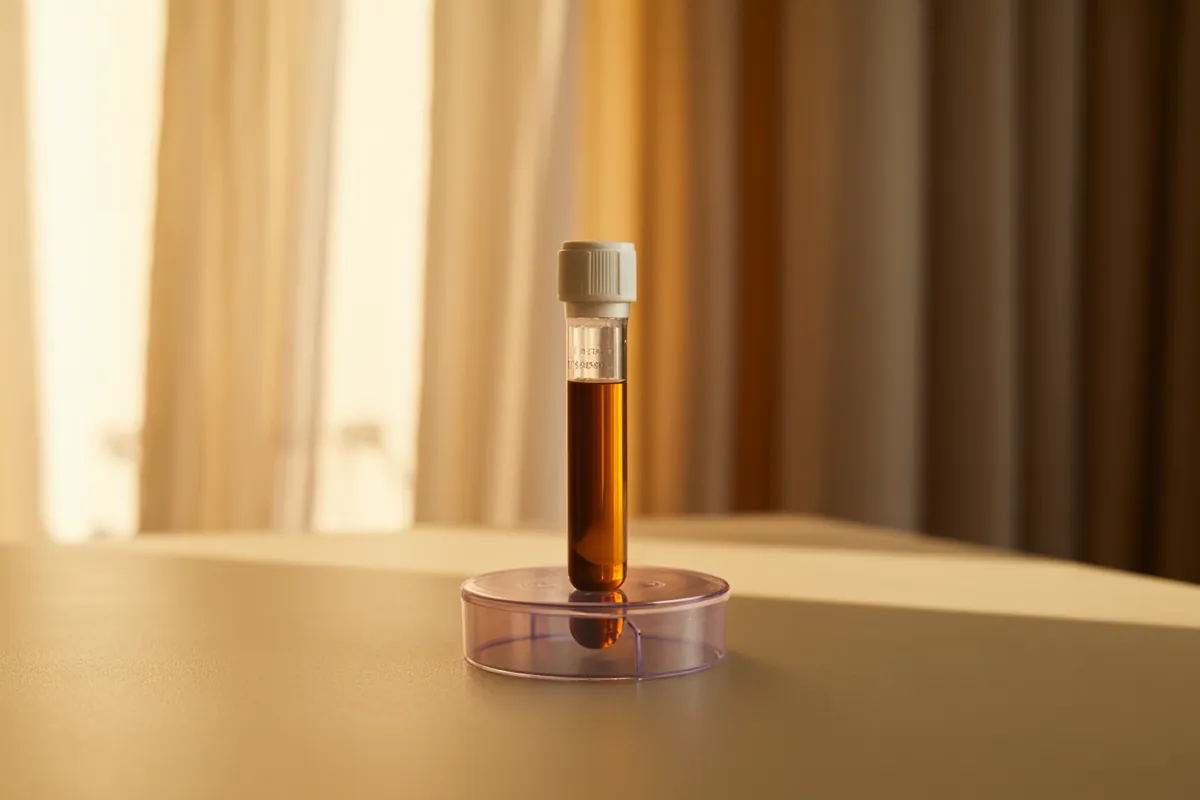
PRP is a concentrate prepared from a patient's own blood. A small volume is drawn, then spun in a centrifuge to separate and concentrate the platelets — in Dr. Greenleaf's curriculum, often using a double-spin system — producing a few milliliters of platelet-rich plasma for injection. Because the material is autologous, derived entirely from the patient, it carries none of the immune-rejection or foreign-material concerns of a synthetic product.
The regenerative premise rests on what platelets do once activated. Platelets are not just clotting cells; they are reservoirs of growth factors — signaling proteins that orchestrate tissue repair. When concentrated and delivered into tissue, the theory holds, those growth factors recruit the body's own healing machinery. In genital tissue specifically, the proposed mechanisms are the same trio that governs normal sexual physiology: angiogenesis (the growth of new blood vessels), tissue remodeling, and increased nitric oxide production. Since nitric oxide is the central mediator of vasodilation and engorgement in both male and female arousal, a therapy that plausibly enhances it is biologically interesting.
This is also why results, when patients report them, are framed as gradual. As Dr. Greenleaf notes in the procedure, any immediate change is mostly from the volume of the injection itself; the real effect, if it occurs, comes from growth-factor release at the microvascular level and takes roughly four to six weeks to develop. That timeline is itself a useful counseling point — PRP is not an on-demand treatment like a PDE5 inhibitor.
PRP for men: the P-Shot
In men, genital PRP is marketed primarily for erectile dysfunction and sometimes for Peyronie's disease, the fibrous-plaque condition that causes penile curvature. The most familiar brand name is the P-Shot. It is worth being precise about that term: P-Shot is a trademarked name for a specific, licensed PRP protocol. Clinicians can perform penile PRP using their own technique, but the registered name may only be used by licensed providers of that branded method — a distinction that matters for both marketing and compliance.
Mechanistically, the rationale tracks the regenerative premise: PRP is proposed to improve erectile function by promoting angiogenesis, tissue remodeling, and nitric oxide production in the penis, thereby supporting blood flow. In practice, penile PRP is typically delivered after topical or injectable anesthesia — sensitive cases may need a penile block — across several points along the shaft. The specific injection map, needle selection, anesthesia approach, and whether PRP is paired with shockwave therapy are procedural details taught in Empire's hands-on training, not reproduced here.
PRP for women: the O-Shot
In women, genital PRP is marketed for a broad list of concerns: arousal and orgasm difficulties, genitourinary syndrome of menopause (GSM) and vaginal dryness, decreased libido, painful intercourse, and even mild urinary incontinence. The trademarked brand name here is the O-Shot. As Dr. Greenleaf puts it plainly in the course, PRP can be placed in the same anterior vaginal-wall region the O-Shot targets — “you just can't call it that, because the O-Shot is a licensed name.” The treatment is genital PRP; the name is the trademark.
The proposed mechanism mirrors the male side. Injected into vulvovaginal and clitoral tissue, PRP is theorized to stimulate collagen and elastin production, improve blood flow, and support tissue rejuvenation, with the downstream goals of better lubrication, sensitivity, and orgasmic response. Dr. Greenleaf describes the clitoral injection as making tissue “more easily stimulated” via growth-factor release — offered as a potential aid for women who have had difficulty reaching orgasm. PRP is also positioned as a non-hormonal option, which can make it attractive for menopausal patients who prefer to avoid or cannot use hormones. Those claims, however, must be weighed against the evidence below before they reach a patient consultation.
What the evidence actually shows
Here is where honesty matters most. The regenerative mechanism for PRP is plausible and supported largely by animal studies — which is encouraging but not the same as proof in humans. When you move to controlled human data, the picture is decidedly mixed.
For erectile dysfunction, the most rigorously studied indication, the evidence is genuinely conflicting. Some studies have shown improvement in erectile function with PRP compared with placebo. But, as Dr. Greenleaf is careful to point out, at least one recent randomized, placebo-controlled trial found no significant difference between PRP and placebo. Across the literature, sample sizes are small, study designs are heterogeneous, and the overall quality of evidence is limited. Basic parameters — optimal PRP preparation, injection protocol, and which patients are best suited — remain unsettled and need further investigation. For the female applications, the controlled evidence base is even thinner; much of what is reported is patient-reported satisfaction from small or uncontrolled series.
The clinically honest framing for patients is therefore neither dismissal nor hype. PRP is a reasonable, low-risk option a well-informed patient may choose to try — but it should be presented as investigational, with realistic and modest expectations, not as a proven cure. Setting that expectation up front protects the patient, the relationship, and the practice.
Who PRP may suit
Because the evidence is preliminary, candidate selection is as much about expectations and motivation as about diagnosis. PRP tends to interest patients who:
- Want a non-hormonal, autologous option using their own tissue — common among menopausal women wary of hormones, or men seeking an alternative to or adjunct for daily medication.
- Have mild to moderate concerns — early erectile changes, reduced sensitivity or arousal, mild GSM symptoms — rather than severe, end-stage dysfunction.
- Understand and accept that the treatment is investigational, that results (if any) build over four to six weeks, and that maintenance sessions are typically anticipated.
- Are appropriate for a combination approach — PRP is frequently paired with shockwave therapy or hormonal optimization rather than used in isolation.
Just as important, PRP is not a substitute for working up the underlying problem. Dr. Greenleaf's central teaching applies here: sexual dysfunction is usually the symptom of a larger issue — cardiovascular disease, diabetes, hormonal deficiency, medication effects, or psychological stress. ED in particular can be an early warning sign of cardiovascular disease. PRP should never short-circuit that evaluation.
Safety and the procedure
PRP's strongest selling point is its safety profile. Because it is autologous, the risk of allergic or immune reaction is minimal, and across the published studies no major adverse events have been reported. The documented side effects are minor and local: bruising, mild swelling or induration at injection sites, transient discomfort, and, for vaginal PRP, occasional temporary discharge. As with any injection, there is a small risk of bleeding or infection.
Conceptually, the procedure follows a consistent arc: a blood draw, centrifugation to concentrate the platelets, topical and/or local anesthesia of the treatment area, and a series of small-gauge injections into the target tissue, after which patients can generally resume normal activity quickly. A practical detail Dr. Greenleaf emphasizes is that injecting through a small-gauge needle can itself activate the PRP, so some protocols add no calcium at all. Treatment is usually delivered as a course of sessions, with maintenance considered over time.
Deliberately, this overview stops at the conceptual level. Exact blood-draw and final injection volumes, the specific injection-point maps for men and women, anesthesia formulations and penile-block technique, double-spin parameters, and the activation decision are procedural specifics taught hands-on in Empire's course — they require supervised instruction, not a web page.
The business and compliance reality
For a practice, PRP for sexual health is a cash-pay service. It is not covered by insurance, and because it is not FDA-approved for these indications, it lives squarely in elective, out-of-pocket aesthetic and regenerative medicine. That creates real opportunity in a large and growing sexual-wellness market — but it also raises the compliance stakes.
The single biggest pitfall is marketing claims. Given the limited, mixed evidence, advertising PRP as a proven or guaranteed treatment for ED, orgasm, or incontinence is both clinically unsupportable and a regulatory liability. The defensible posture is to describe PRP accurately as emerging and investigational, to document informed consent that reflects realistic expectations, and to use the trademarked names P-Shot and O-Shot only if you are a licensed provider of those branded protocols — otherwise describe the service in generic terms.
Clinically and commercially, PRP rarely stands alone. It is most often offered as part of a regenerative and functional sexual-medicine menu, combined with shockwave therapy for ED and with hormonal optimization — and, for libido and arousal specifically, sometimes alongside peptides such as PT-141. Building that menu responsibly — the technique, the candidate selection, and the honest patient conversation — is exactly what structured training provides.
Learn PRP for sexual health the right way
Empire Medical Training's sexual dysfunction training teaches PRP injection technique hands-on — preparation, anatomy, anesthesia, injection technique, candidate selection, and the honest evidence and compliance landscape — in a CME-accredited program developed by board-certified OB/GYN and urogynecologist Dr. Betsy Greenleaf, DO. Enroll to add this to your practice.
Enroll in the Sexual Dysfunction Training → Claim Your Prize!