







 Medically reviewed by
Betsy Greenleaf, DO
Board-Certified OB/GYN & Urogynecologist; Empire Director of Anti-Aging
Medically reviewed by
Betsy Greenleaf, DO
Board-Certified OB/GYN & Urogynecologist; Empire Director of Anti-Aging For most men, the first prescription for erectile dysfunction is an oral PDE5 inhibitor, and for most men it works. But a meaningful share of patients either do not respond to oral therapy or cannot take it, and for them the conversation does not end — it moves to second-line treatment. This is one of the most reassuring messages a clinician can deliver: erectile dysfunction is a treatable condition, and the options that follow oral medication are effective, well understood, and often more reliable for refractory disease.
This guide is part of Empire Medical Training's sexual health resource center and is written for clinicians who want an accurate overview of injection therapy, intraurethral medication, vacuum devices, and penile implants. It is clinical education, not medical advice, and it deliberately stops short of specific doses, injection volumes, and step-by-step technique — those are taught, hands-on, in Empire's erectile dysfunction training.
When first-line therapy fails
Erectile dysfunction is the most common sexual dysfunction in men, affecting more than half of men between the ages of 40 and 70. The standard first step is an oral PDE5 inhibitor — sildenafil, tadalafil, vardenafil, or avanafil — which works by preventing the breakdown of cyclic GMP and allowing the natural vasodilation of an erection to proceed. These medications are effective and convenient, and they are the right place to start.
They do not work for everyone. Some men have vascular or neurogenic disease severe enough that enhancing the natural pathway is not sufficient. Others have contraindications — most importantly concurrent nitrate therapy — or cannot tolerate side effects. And a particularly important population is men who have undergone radical prostatectomy or other pelvic surgery, where nerve injury can blunt the response to oral agents. For all of these patients, the clinically honest message is that oral failure is not treatment failure; it simply means moving to a more direct mechanism.
One framing worth keeping front of mind: erectile dysfunction is frequently the canary in the coal mine for cardiovascular disease, often preceding overt heart disease by several years. A man who is not responding to oral therapy deserves not only a discussion of second-line options but a thorough look at the vascular, metabolic, and psychological roots beneath the symptom. Sexual dysfunction is rarely an isolated problem.
Intracavernosal injection therapy
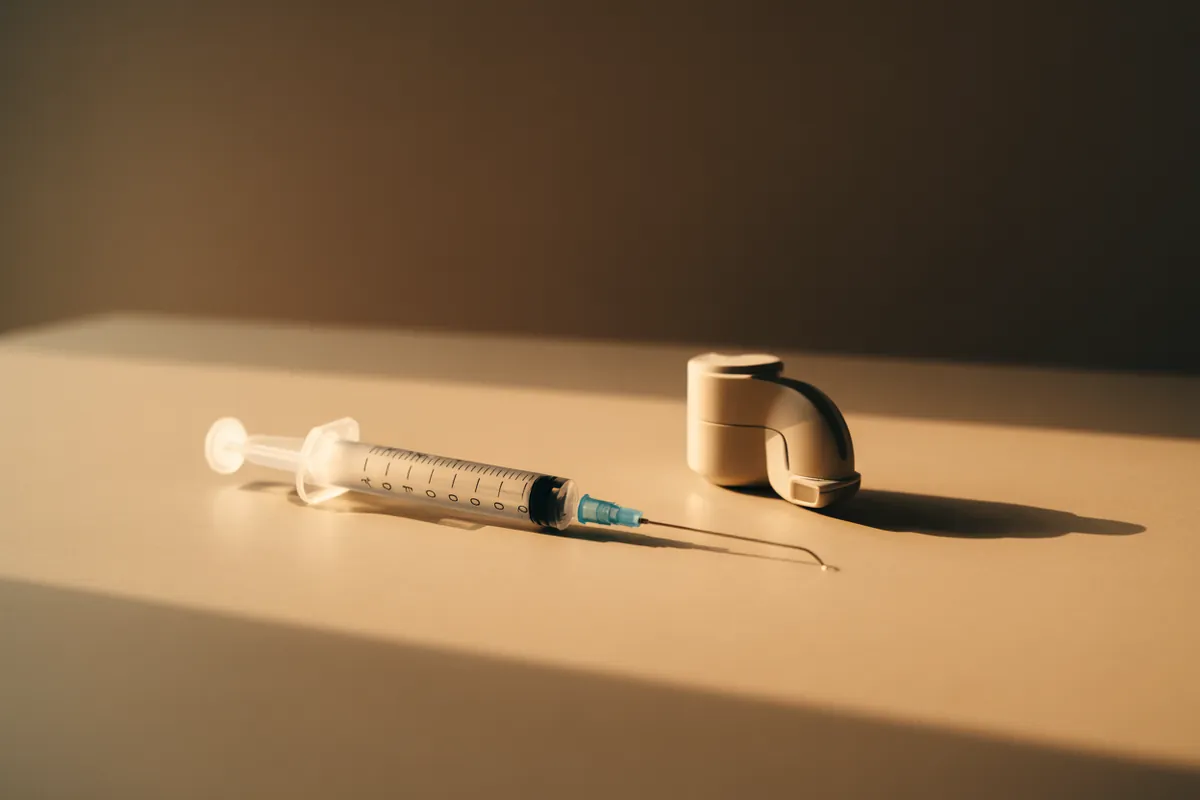
Intracavernosal injection therapy is, for most refractory patients, the most effective non-surgical option. Rather than enhancing a signal the body initiates, it delivers a vasoactive medication directly into the erectile tissue of the penis, producing vasodilation and an erection that does not depend on sexual stimulation or an intact PDE5 pathway. Because it bypasses the upstream signaling that oral drugs rely on, it works in many men for whom pills do nothing.
The workhorse agent is alprostadil, a prostaglandin with a well-established safety profile, a rapid onset measured in minutes, and a relatively short duration — characteristics that make it a sensible starting point. Where a single agent is insufficient, clinicians turn to compounded combinations. Trimix — typically combining alprostadil with papaverine and phentolamine — recruits more than one mechanism of smooth-muscle relaxation and is often more effective than any single agent, making it suitable for more severe disease. Related compounds such as Bimix and Quadmix extend the same logic. These combination products are custom-compounded and titrated to the individual.
This page intentionally does not give injection volumes, concentrations, or titration schedules. Those are not details to learn from an article — getting the dose right is the difference between a good outcome and a complication, and the specific protocols, dose-finding logic, and injection technique are taught hands-on in Empire's course. What matters conceptually is that injection therapy is powerful, direct, and highly effective, and that its power is precisely why it demands proper training and careful patient counseling.
Intraurethral therapy (MUSE)
For patients who want a medication-based approach but are uneasy about self-injection, intraurethral alprostadil — known by the brand MUSE (Medicated Urethral System for Erection) — offers an alternative route. The same vasoactive agent used in injection therapy is delivered as a small pellet inserted into the urethra, where it is absorbed and produces vasodilation in the adjacent erectile tissue.
Intraurethral therapy avoids the needle, which some patients find decisive. In practice it tends to be less reliably effective than intracavernosal injection, and patients should understand that trade-off up front: the more comfortable delivery route generally comes with a more modest and variable response. It nonetheless fills a real niche for men who decline injection but have exhausted oral options, and it can be combined with a constriction band to improve results. As with injection therapy, patient selection and counseling are where outcomes are decided.
Vacuum erection devices
A vacuum erection device (VED) is a mechanical, non-pharmacologic option and one of the few ED treatments available without a prescription. The device consists of a plastic cylinder placed over the penis, a hand or battery pump, and a constriction band. The pump removes air to create a vacuum, which draws blood into the penis and produces an erection; a constriction band is then slipped to the base to trap the blood and sustain the erection during activity.
Studies suggest that roughly 50 to 80 percent of men are satisfied with vacuum-device results, and the device works across a wide range of underlying causes — poor blood flow, diabetes, and post-surgical ED among them. Its great advantages are that it is non-invasive, drug-free, and inexpensive, which makes it a natural fit for men who cannot take or do not respond to oral medication, or who prefer to avoid systemic drugs entirely.
The trade-offs are honest ones. The erection produced can feel different from a natural one — sometimes described as cooler or hinged at the base — and the constriction band can blunt ejaculation, though orgasm remains possible. The band must not be left in place longer than about 30 minutes to avoid tissue injury. Vacuum devices also have a second use worth knowing: as part of a penile rehabilitation regimen after prostate surgery, regular pumping is used to promote blood flow and preserve tissue health while nerves recover.
Penile implants
The penile implant, or penile prosthesis, is the definitive surgical treatment for erectile dysfunction. It is reserved for men who have not responded to or cannot tolerate medications and devices, and for some men with severe Peyronie's disease. Candidates should be free of active infection and have conditions such as diabetes well controlled before surgery, since infection is the most consequential complication.
There are two broad categories. Semi-rigid (malleable) implants are rods of metal or silicone that hold the penis in a permanently semi-erect state that can be positioned by hand; their simplicity makes them a good choice for patients with limited manual dexterity. Inflatable implants are more sophisticated: a two-piece system pairs cylinders with a scrotal pump, and a three-piece system adds a fluid reservoir in the abdomen. Inflatable devices give the most natural look and feel — rigid when inflated, flaccid when not — and are the most widely chosen.
Because it is surgery, the implant carries real risks: infection, mechanical malfunction over time, and, rarely, erosion of the device. But the outcomes are striking. Patient satisfaction rates run around 95 percent, the devices typically last about 10 to 20 years, and they restore spontaneous, on-demand sexual activity in a discreet way. For the man who has tried everything else, the implant is frequently the treatment that finally works.
Priapism: the key risk
No discussion of injection therapy is complete without priapism — a prolonged, often painful erection that persists beyond roughly four hours and is unrelated to sexual stimulation. It is the most important risk associated with intracavernosal injections, and every clinician who offers injection therapy must be able to recognize and respond to it.
The reason priapism is an emergency is physiologic. In the most common (ischemic, low-flow) form, blood becomes trapped in the corpora cavernosa and is not exchanged; it grows progressively oxygen-depleted and acidotic, and prolonged ischemia injures the erectile tissue itself. Left untreated, that injury can cause permanent erectile dysfunction — the very outcome the treatment was meant to prevent. Time matters, which is why a patient with a sustained, unwanted erection should be evaluated urgently rather than told to wait.
The conceptual reason injection therapy is dosed conservatively and started low follows directly from this: shorter-acting agents and careful dose-finding exist in large part to minimize the risk of a prolonged erection. The actual emergency management — aspiration, the use of a diluted sympathomimetic agent, and when to escalate — is precisely the kind of high-stakes, hands-on skill that belongs in supervised training, not on a web page. Recognizing priapism, counseling patients to seek care promptly, and knowing how to intervene are core competencies covered in Empire's course, and they are a central reason injection therapy should be offered only by trained providers.
Choosing the approach
There is no single best second-line treatment — the right choice depends on the patient's anatomy and disease severity, their tolerance for needles or surgery, their partner and relationship context, and their goals. The table below summarizes how the major options compare at a glance.
| Option | Mechanism | Best suited for | Key consideration |
|---|---|---|---|
| Intracavernosal injection | Vasoactive agent injected into erectile tissue | Oral non-responders wanting the most effective non-surgical option | Risk of priapism; requires training |
| Intraurethral (MUSE) | Alprostadil pellet absorbed via urethra | Men who decline injection | Less reliably effective than injection |
| Vacuum erection device | Vacuum draws blood in; band traps it | Drug-free preference; penile rehabilitation | Band limited to ~30 minutes; erection may feel different |
| Penile implant | Surgically placed prosthesis | Refractory ED after other options fail | Surgical risk; ~95% satisfaction; definitive |
A practical way to think about the ladder: start with the least invasive option that has a reasonable chance of working, escalate when it does not, and remember that addressing the underlying causes — cardiovascular health, metabolic disease, hormones, stress, and relationship factors — is part of every step, not a separate conversation. Beyond these established therapies, emerging options such as shockwave therapy are being studied, and centrally acting agents like the peptide PT-141 address desire and arousal rather than the mechanics of blood flow. Where low testosterone is a contributor, testosterone replacement therapy may be part of the picture.
Adding ED treatment to your practice
For a clinician, the appeal of offering second-line ED care is twofold. It meets a genuine, underserved patient need — sexual dysfunction is common, underreported, and profoundly affects quality of life — and it does so in a large and growing cash-pay market. But injection therapy and implant referral are not techniques to improvise. The same direct potency that makes intracavernosal injection so effective is what makes a complication like priapism possible, and confident, safe practice depends on structured, hands-on training.
The competencies that separate a safe ED practice from a risky one are concrete: appropriate patient selection and workup, correct injection and device technique, the reasoning behind agent selection and conservative dose-finding, recognition and management of priapism, and clear informed consent. These are best learned under supervision, with hands-on reps, rather than from reading. That is exactly what Empire's erectile dysfunction training is built to provide.
Learn ED injections & devices hands-on
Empire Medical Training's Erectile Dysfunction & Sexual Health course teaches intracavernosal injection technique, device fitting, agent selection, and priapism management hands-on — so you can add second-line ED care to your practice safely and confidently. Taught by board-certified faculty, for physicians, NPs, and PAs.
Explore the ED Training Course → Claim Your Prize!