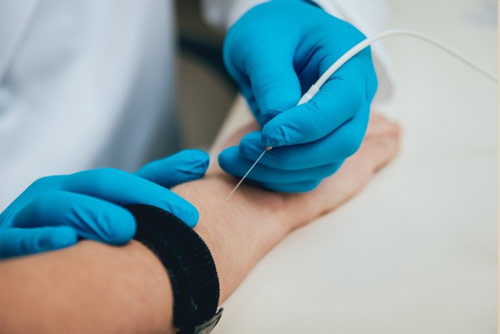
Nerve conduction velocity (NCV) studies and electromyography (EMG) sit in an unusual position in outpatient medicine. They are genuinely useful — among the few tools that turn a patient’s subjective report of numbness, weakness, or burning pain into objective, localizing data. They are also one of the most heavily scrutinized billing areas in Medicare, with a history of enforcement actions against practices that ran them as a revenue line rather than a diagnostic one.
Both things are true at once, and any honest discussion of adding these services has to hold them together. This guide covers what NCV and EMG measure, which practices they fit, the clinical case for in-house testing, what interpretation requires, and the compliance realities that determine whether this becomes an asset or a liability.
What NCV and EMG Actually Measure
Electrodiagnostic testing is two complementary studies, usually performed together because each answers a question the other cannot.
Nerve conduction studies (NCS/NCV) assess the peripheral nerve itself. A nerve is stimulated at one point and the response recorded at another, measuring conduction velocity, amplitude, and latency. The pattern carries diagnostic meaning: slowed conduction points toward demyelination, reduced amplitude toward axonal loss. Because stimulation and recording happen at defined anatomical points, the study localizes a lesion along the nerve — distinguishing, for example, median nerve compression at the wrist from a problem higher up.
Electromyography (EMG) assesses the muscle and its innervation directly. A fine needle electrode records electrical activity at rest and during voluntary contraction. Abnormal spontaneous activity at rest, and changes in motor unit potential morphology and recruitment, distinguish neurogenic from myopathic processes and indicate chronicity.
Run together, they answer questions a physical exam and imaging often cannot: Is this nerve, muscle, or neither? Where is the lesion? Is it demyelinating or axonal? How old is it? How severe?
Common Clinical Indications
Electrodiagnostic studies are appropriate in the workup of:
- Radiculopathies — specifically the question imaging cannot answer: whether an MRI finding is physiologically relevant to this patient’s symptoms.
- Focal compressive neuropathies — carpal tunnel syndrome, ulnar neuropathy at the elbow, peroneal neuropathy at the fibular head.
- Peripheral polyneuropathy — characterizing pattern, fiber type, and severity.
- Myopathies — distinguishing muscle disease from neurogenic weakness.
- Neuromuscular junction disorders — myasthenia gravis, Lambert-Eaton syndrome.
- Post-surgical or post-traumatic nerve injury — documenting severity and following reinnervation.
What unites this list: the study is ordered because its result will change what happens next. That is the standard everything downstream depends on.
Which Practices Actually Fit
Electrodiagnostic testing belongs in practices that already generate the questions it answers. The fit is a function of your patient population, not the equipment.
- Interventional pain management is the most natural fit. Pain physicians constantly face the question electrodiagnostics addresses: is this radicular pain with an identifiable level, a peripheral entrapment, a polyneuropathy, or a non-neurogenic pain generator? That distinction determines whether an epidural injection is indicated, at which level, and whether it is likely to help at all.
- Physical medicine and rehabilitation has electrodiagnostics embedded in the specialty’s training, and PM&R physicians are among the most common interpreters.
- Neurology is the traditional home of these studies, with both the volume and the expertise.
- Orthopedics — particularly hand, spine, and foot-and-ankle — generates steady volume around compressive neuropathies and pre-surgical decision-making.
- Podiatry sees substantial diabetic neuropathy and lower-extremity entrapment, though scope-of-practice limits vary by state and must be verified with your board.
The practices where this does not fit are the ones that would have to generate volume to justify the equipment. If you are working backward from a machine to find patients for it, the answer is no — and that reasoning is precisely what enforcement actions in this area have targeted.
The Clinical Case for Testing In-House
Assuming appropriate volume already exists, the argument for performing studies in-house rather than referring them out is real.
- Time to diagnosis. An outside referral commonly adds weeks between the visit where the question arose and the visit where you can act on the answer. For a patient in significant pain, that delay is not neutral.
- Clinical correlation. These studies are not a standalone lab result — they are an extension of the neurological examination, and they are meaningfully more useful when the interpreter knows the patient.
- Targeted protocols. When the person ordering the study performs it, the protocol can be shaped to the actual clinical question rather than run as a template.
- Objective documentation. In workers’ compensation, personal injury, and disability contexts, electrophysiological findings carry weight subjective reports do not — which cuts both ways, and is exactly why the documentation must be defensible.
All four benefits accrue to the diagnostic process. Anything framed primarily around what the studies bill is a different argument, and a considerably more dangerous one.
What Staffing and Interpretation Actually Require
The most common misconception about electrodiagnostics is that modern equipment has made them easy. Automated report generation, normative curve plotting, and improved signal processing have made the studies faster and cleaner. None of that makes them self-interpreting — and these are operator-dependent studies to an unusual degree, with failure modes that are not obvious to the untrained:
Ready to put this into practice?
Explore Empire's hands-on, CME-accredited Pain Management & Interventional Therapies courses — live patients, expert faculty, and ongoing mentorship.
- Technical artifact masquerades as pathology. Suboptimal electrode placement, supramaximal stimulation errors, and volume conduction all produce abnormal-looking data from a normal nerve.
- Limb temperature changes the answer. Cool limbs slow conduction and can manufacture a demyelinating pattern that does not exist. Temperature monitoring is basic technique, and skipping it produces confidently wrong results.
- Anomalous innervation is common. Normal variants — Martin-Gruber anastomosis being the classic — read as pathological to someone who does not know to look for them.
- Needle EMG requires real skill. Muscle selection, needle placement, distinguishing insertional from genuine spontaneous activity, and assessing motor unit morphology are pattern-recognition skills built through supervised repetition.
The practical consequence: this is not a service you delegate to an untrained technician and sign off on. A trained technologist may perform components of nerve conduction studies under appropriate supervision, but needle EMG is a physician-performed study and interpretation is a physician responsibility — and a signature on a report you did not truly evaluate is a compliance exposure and a patient-safety problem at once. Verify your state’s requirements on who may perform and interpret which components. These rules vary and they change.
The Compliance Reality — Read This Part Twice
Electrodiagnostic testing has a documented history of billing abuse. Federal payers have repeatedly identified it as a high-risk area, and it has produced enforcement actions, audits, and prepayment review. Any clinician adding these services is entering a scrutinized space. What draws attention:
- Templated, high-volume testing. Studies ordered reflexively on every patient with a given complaint, rather than in response to a specific clinical question, look exactly like what they are.
- Excessive units. Billing large numbers of nerves tested without documented justification for each is a well-worn audit trigger.
- Thin documentation. A report lacking the history, exam findings, and reasoning that establish medical necessity does not support the claim — even if the study was appropriate.
- Supervision mismatches. Billing for studies performed by personnel not qualified to perform them, or interpreted by someone who did not do the work.
- Results that never change management. If the result had no bearing on what you did next, the necessity of the study is a fair question — and an auditor will ask it.
The discipline that protects you is not complicated, but it has to be habitual: document the specific clinical question before the study, justify the protocol and the nerves tested, correlate findings to the examination in the report, and let the result actually influence the plan.
One more point worth being blunt about: this article contains no reimbursement figures or equipment costs, deliberately. Those numbers move with payer, geography, code set, and year, and any content quoting them as fixed is either out of date or selling something. Get current numbers from your own payers and vendors — after establishing that the clinical need exists.
Getting the Sequence Right
If you are evaluating this seriously, the order of operations matters more than any single decision.
- Start with your patients. Review your own charts. How many patients in the last six months presented with a question electrodiagnostics would have answered? If that number is small, stop here.
- Establish interpretive competence before equipment. Equipment without competence is the expensive path to a bad outcome.
- Verify scope and supervision rules with your state board, for your specialty and setting.
- Build the documentation standard on day one. Retrofitting compliance onto a year of thin reports is not a project you want.
- Then evaluate the economics — with real volume, real payer mix, and real current reimbursement, not a vendor’s projection.
Clinical need first, economics last. Reversed, that sequence produces the exact pattern that draws audits.
Frequently Asked Questions
What is the difference between NCV and EMG?
NCV studies stimulate a nerve and record the response to measure conduction velocity, amplitude, and latency — assessing the nerve itself. EMG uses a needle electrode to record electrical activity within muscle at rest and during contraction, assessing the muscle and its innervation. They are typically performed together because each answers questions the other cannot.
Can a technician perform NCV and EMG studies?
A trained technologist may perform components of nerve conduction studies under appropriate supervision, depending on state rules and payer requirements. Needle EMG is a physician-performed study, and interpretation is a physician responsibility in either case. Verify current requirements with your state board and payers.
Is electrodiagnostic testing an audit risk?
It is a recognized high-scrutiny area with a documented history of billing abuse and enforcement activity. That is not a reason to avoid it if the clinical need is genuine — it is a reason to document medical necessity rigorously, justify the nerves tested, and never let volume outrun indication.
How much does an NCV/EMG unit cost, and what do these studies reimburse?
We do not publish figures: they vary by vendor, payer, geography, code set, and year, and any fixed number in an article is likely wrong by the time you read it. Get current quotes from vendors and rates from your own payers — after confirming the clinical volume exists.
Build Service Lines on Clinical Need First
Adding any service well looks the same: identify a question your existing patients are already generating, build genuine competence to answer it, document to a standard that would survive review, and let the economics follow from the clinical work rather than lead it. Practices that get that order backwards eventually find out why it matters.
Empire Medical Training has trained physicians since 1998 in procedural skills and in the operational side of running a practice around them. Our Business & Marketing Masterclass covers evaluating and launching new service lines, documentation and compliance discipline, and the practice economics that determine whether an addition works. For the same logic applied to a different service line, see our discussion of adding aesthetic injectables to an existing practice, and our Empire Clinical Fellowship for physicians building a broader procedural skill set.