







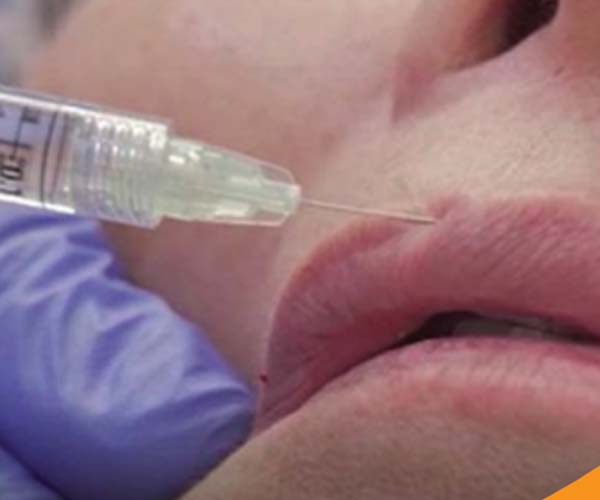
Lip shapes are the recognizable patterns lips fall into — full, thin, wide, round, heart-shaped, downturned, and several others — defined by how volume is distributed across the upper and lower lip and how the surrounding anatomical landmarks relate to each other. Almost everyone’s lips match one or more of these patterns, and no two pairs are identical.
Knowing which category yours fall into is useful whether you’re choosing a lip liner or sitting in a consultation chair. For clinicians it’s foundational: shape assessment underpins every lip treatment plan, and the difference between a natural result and an obvious one usually traces back to whether the injector read the anatomy before picking up a syringe. This guide covers the anatomy that defines lip shape, how to identify each named shape, how shape shifts with age, and how it informs clinical decisions.
The Anatomy Behind Every Lip Shape
Every named shape is just a description of how a handful of anatomical landmarks are arranged. Once you can name the landmarks, you can describe any pair of lips precisely instead of guessing at a category.
The Vermilion and the Vermilion Border
The vermilion is the reddish-pink tissue of the lip itself, and the vermilion border is the sharp line where it meets facial skin. It’s the most important landmark on the lip: a crisp border reads as youthful regardless of how much volume is present, while a blurred one reads as aged. The amount of visible vermilion — vermilion show — is what people are actually describing when they call lips “full” or “thin.”
The Cupid’s Bow
The cupid’s bow is the double-curved contour at the center of the upper vermilion border, with two peaks and a dip between them. Its sharpness, width, and height vary enormously and drive much of what people perceive as lip “shape” from the front.
The Philtrum and Philtral Columns
The philtrum is the vertical groove running from the base of the nose to the upper lip, bounded by two raised ridges called the philtral columns that flare outward and terminate at the peaks of the cupid’s bow. Both the distance between the columns and the length of the philtrum shape how the upper lip presents. A narrower or less pronounced philtrum is common in top-heavy lips.
The Wet-Dry Border
Also called the wet line, this is the transition inside the vermilion where dry, keratinized lip surface gives way to moist mucosa. Largely invisible in conversation, it matters clinically as the practical boundary of where product can sit without rolling the lip forward unnaturally.
The Oral Commissures
The commissures are the corners of the mouth, where the upper and lower lips meet. Whether they sit level, angle upward, or turn downward at rest defines downturned lips — and often determines whether a resting face reads as neutral or displeased.
Proportion Between Upper and Lower
Aesthetic convention often treats a lower lip somewhat fuller than the upper as the balanced default. It’s a reference point, not a rule — plenty of balanced faces sit outside it, and proportion norms vary meaningfully across ethnicities. Treat it as one input among many, never a target to force.
How to Identify Your Lip Shape
You know what your lips look like. Describing them accurately is harder. Assessment works best with a relaxed face and no makeup — lipstick, liner, and gloss all alter perceived proportion enough to send you to the wrong category. To identify your lip shape:
- Stand in front of a large, well-lit mirror.
- Relax your face and close your mouth. Don’t smile, purse, or pose.
- Measure the height of your lower lip — from where the lips meet down to the bottom of the vermilion, at the center.
- Do the same for your upper lip.
- Measure the distance between your two philtral columns.
- Assess overall volume in each lip, and compare them to each other.
- Check the corners of your mouth at rest: level, up, or down?
- Look at symmetry side to side.
Subtle asymmetry is normal — nearly universal — and often contributes character rather than detracting from it. Noticing it simply helps guide makeup placement or treatment planning. This isn’t a scientific exercise and won’t give you a perfect answer, but it will give you enough to place yourself in one or two of the categories below.
Lip Shape Names: The Main Types and How to Recognize Each
None of these shapes is a defect. They’re descriptions, not diagnoses. Most people match more than one — wide and bottom-heavy, thin and downturned — and how a given pair of lips relates to the nose, chin, and jaw is what actually determines facial harmony.
Full Lips
Full lips carry generous vermilion show with volume spread fairly evenly between top and bottom, a well-defined border, and forward projection on profile. Identifying marker: substantial pink tissue on both lips at rest, without either dominating.
Thin Lips
Thin lips show less vermilion and less projection, reading as a narrow band rather than a body. The cupid’s bow may still be sharply defined. Identifying marker: limited vertical height in both lips at rest. Thin lips are one of the more commonly observed shapes, and they may be lifelong or the result of age-related vermilion thinning.
Wide Lips
Wide lips extend further horizontally, giving the characteristic “ear to ear” smile. Width is independent of fullness — wide lips can be thin, full, or between. Identifying marker: a long horizontal span between commissures relative to face width.
Small Lips
The inverse: a shorter span, with the mouth appearing compact relative to surrounding features. Also independent of volume. Identifying marker: a narrow smile, commissures sitting well inside the pupillary lines.
Round Lips
Round lips have even volume and softly rounded edges, producing a circular or oval mouth. They’re proportional but read “vertical,” which can make the mouth look small beside other features. Identifying marker: height and width close to equal, no sharp angles at the corners.
Heart-Shaped Lips (Cupid Lips)
A pronounced philtrum and sharply peaked cupid’s bow above a narrower, tapered lower lip, suggesting an inverted heart. Identifying marker: high, distinct bow peaks with a lower lip that narrows toward the center.
Bow-Shaped Lips
The same pronounced cupid’s bow, paired with a fuller lower lip than heart-shaped lips carry. Identifying marker: defined bow peaks with substantial, evenly distributed lower-lip volume.
Ready to put this into practice?
Explore Empire's hands-on, CME-accredited Aesthetic & Injectable Training courses — live patients, expert faculty, and ongoing mentorship.
Top-Heavy Lips (Wide Upper Lip)
More volume in the upper lip than the lower, reversing the conventional ratio. The philtrum may be narrower or less pronounced. Identifying marker: the upper lip is visibly taller than the lower at the midline.
Bottom-Heavy Lips (Wide Lower Lip)
The lower lip dominates, with noticeably more volume below the mouth line than above. Identifying marker: an upper lip that reads as a thin band against a full, projecting lower lip.
Downturned Lips
Downturned lips angle subtly downward at the commissures, and the upper lip may appear to overhang the lower slightly at the corners. They tend to be longer than they are full. Identifying marker: at complete rest, the corners of the mouth sit lower than the midline of the lip. This is the shape most likely to be misread as a mood — a perfectly content person with downturned commissures gets asked what’s wrong a lot.
Uneven or Asymmetric Lips
One side carries more volume, sits higher, or has a differently shaped border than the other. Some degree of this is present in nearly everyone. Identifying marker: a visible left-right difference in vermilion height, border position, or commissure level when the face is relaxed and centered.
How Lip Shape Changes With Age
Lip shape isn’t fixed. The changes are predictable enough that an experienced clinician can often estimate a patient’s decade from the perioral region alone. Four things happen, largely in parallel:
- Vermilion thinning. Visible pink tissue reduces as collagen and elastin decline. Lips that were full at 25 read as moderate at 55 — which is why “thin lips” is a category some people are born into and others arrive at.
- Philtral lengthening. The distance from the base of the nose to the upper vermilion border increases, and the upper lip rolls inward slightly. The result is less tooth show at rest and in speech — a reliable aging marker most patients notice without being able to name.
- Loss of cupid’s bow definition. The philtral columns flatten and the bow peaks soften, blurring the crisp border that reads as youthful. Radial perioral lines often develop alongside this; our guide to facial wrinkle names covers where these sit in the broader map of facial aging.
- Commissure downturn. The corners descend with soft-tissue laxity and continued depressor anguli oris activity. Lips that were level at 30 can read as downturned at 60 — meaning “downturned” can be congenital or acquired, and the distinction matters for how it’s addressed.
Sun exposure and smoking accelerate all four.
How Lip Shape Informs Treatment Planning
This is where shape assessment earns its keep. The point is not that any shape needs correcting — it’s that the same volume of product placed in two differently shaped lips produces two entirely different outcomes. A few principles hold across the board:
- Shape dictates placement, not just volume. Product that would restore a thinned vermilion beautifully will exaggerate an already top-heavy lip. Whether the deficit sits in the body, the border, the bow, or the commissures determines where it goes.
- Border definition and volume are separate goals. A patient whose real complaint is a blurred vermilion border does not need more volume, and adding it will make things worse.
- Document asymmetry before treatment, not after. Pre-existing asymmetry that goes unrecorded gets attributed to the injector. Photograph it and discuss it at consultation.
- Aging changes need a different plan than congenital shape. An acquired downturn driven by laxity and muscle activity differs from a lifelong commissure angle, even though they look similar at rest.
- Conservative wins. Under-treating and reassessing produces more natural results than doing everything in one session. The lip is unforgiving of over-correction.
Hyaluronic acid fillers are the workhorse here because they’re temporary and reversible, with results generally requiring maintenance every few months. Different products suit different goals: Restylane®-L provides a structural base for repeated treatments, while Restylane Kysse is formulated for softening and adding subtle volume. For how HA compares to older options, see our breakdown of collagen injections vs. fillers, and our filler price list for typical costs. Anyone considering treatment should understand common lip filler reactions and how to avoid them, and work only with a provider trained in perioral anatomy.
Working With the Shape You Have: Makeup and Topicals
Most shape refinement requires no needle at all. Liner and color shift perceived proportion considerably:
- Wide lips: blend a lighter shade at the center with a darker one toward the edges — or just use a clear balm or gloss, since the lips are already prominent.
- Thin lips: a darker liner around the border adds apparent volume; follow with a softening balm.
- Top-heavy lips: lighter shade near the upper border, darker across the lower lip extending slightly over the vermilion border, drawing attention downward.
- Bottom-heavy lips: reverse it — darker on the upper vermilion border, lighter below, to visually lift the upper lip.
- Round or heart-shaped lips: darker liner extended slightly horizontally counteracts the vertical read; shade out the corners.
- Bow-shaped lips: a darker stain following the natural lip line accentuates the cupid’s bow.
- Uneven lips: the thin-lip technique applied to the smaller side alone often balances things.
- Full lips: definition rather than volume — subtle contouring in a shade that complements skin tone.
Plumping glosses and serums containing capsicum or menthol create temporary fullness by stimulating blood flow and causing mild swelling. HA-based products work similarly — Dior Addict Lip Maximizer uses hyaluronic acid spheres to hydrate and plump, while Jan Marini Hyla3D Lip Complex combines hyaluronic acid, peptides, and retinol. Exfoliation improves texture; hydrating balms and oils smooth fine lines so lips appear fuller. As a rule, glosses and balms enhance fullness while matte finishes soften prominent shapes, and lighter shades suggest volume while deeper tones refine and contour. With liner, blending beats sharp outlining.
Frequently Asked Questions
What is my lip shape?
Assess with a relaxed, makeup-free face in a well-lit mirror. Compare the vertical height of your upper and lower lips at the midline, note the distance between your philtral columns, check whether your commissures sit level or turn down, and look at left-right symmetry. Match what you see against the categories above — most people land in two or three at once, such as wide and bottom-heavy.
What is the most common lip shape?
Thin lips are among the most frequently observed shapes, but there is no reliable global census of lip-shape distribution, and it varies with age and ancestry. Vermilion also thins with age, so the population skews thinner over time regardless of what people were born with.
What is the most attractive lip shape?
There isn’t one, not as a matter of fact. Perceived attractiveness in lips is shaped by culture, era, and personal taste, and the current preference for full, defined lips with a sharp cupid’s bow is a trend, not a truth — thin lips were the fashionable ideal within living memory. What consistently reads well is proportion: lips that suit the nose, chin, and jaw of the face they’re on. That’s achievable at any volume.
Can lip fillers change your lip shape?
They can modify it meaningfully — adding volume, sharpening a blurred vermilion border, defining the cupid’s bow, improving symmetry, or supporting downturned corners. What they can’t do is replace your underlying structure: filler works with the bone, muscle, and dentition already there, and results are temporary. The realistic goal is refinement of your shape, not substitution of someone else’s.
Does lip shape change with age?
Yes, predictably. The vermilion thins, the philtrum lengthens and the upper lip rolls inward (reducing tooth show), the cupid’s bow loses definition as the philtral columns flatten, and the commissures descend. Someone with full, level, sharply defined lips at 25 may read as thinner and downturned decades later without their bone structure changing at all.
What lip shape is best for filler?
No shape is inherently a better or worse candidate — the question is what a patient wants changed and whether their anatomy supports it. Thin or age-thinned lips with intact structure often respond predictably. Asymmetric lips can be improved but require precise mapping and realistic expectations. Already-full lips are where restraint matters most, since additional volume is where results tip into looking done. Candidacy has more to do with clear goals, healthy tissue, and an injector who assesses before treating than with which category your lips fall into.
Master Lip Anatomy and Injection Technique
Reading lip shape correctly is the first skill in lip augmentation, and the one most often skipped. Vermilion border definition, cupid’s bow architecture, philtral column support, commissure management, vascular anatomy, and complication recognition are all learnable — but not from lecture slides.
Empire Medical Training has trained healthcare professionals in aesthetic medicine since 1998. Our Complete Dermal Filler Training course is CME-accredited and hands-on, covering perioral anatomy and lip technique with live-patient injection under expert supervision — because assessing a lip and treating one are different skills, and both are learned with your hands.



 Claim Your Prize!