







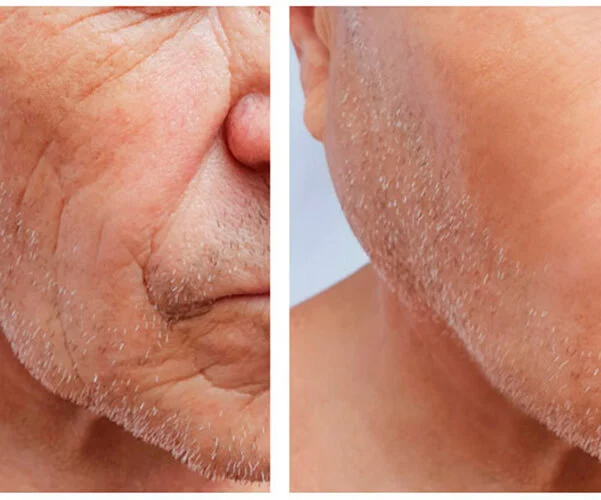
What does collagen do for your skin? Collagen is the protein that gives skin its structure, firmness and bounce. Together with elastin it forms the scaffold in the dermis, the deeper layer of skin, that holds everything up. When collagen is plentiful and well organized, skin is smooth, firm and recovers quickly when you press it. As collagen declines, skin thins, lines deepen, the face loses volume and the jawline and cheeks begin to sag.
Collagen matters most where aging shows first: the face, neck and hands. Here is what collagen does in skin, why it declines, what actually rebuilds it and what does not, so you can spend money on the things that work.
What Collagen Does in the Skin
Collagen is the most abundant protein in the body, roughly 30 percent of total protein, and the dermis is mostly collagen. Skin relies chiefly on two types: type I, thick, strong fibers that provide tensile strength, and type III, finer fibers that are abundant in young skin and in healing tissue. Fibroblasts, the cells of the dermis, produce both.
In the face, collagen does four things:
- Firmness and thickness. Dense, organized collagen keeps the dermis thick, so skin resists folding and lines do not settle in.
- Elasticity, with elastin. Collagen provides strength while elastin provides snap-back. Both decline with age, which is why skin stretches more and recovers less.
- Support for volume. Collagen anchors the skin to the fat and muscle beneath. When it weakens, the soft tissue of the cheeks and jawline drifts downward.
- Hydration and wound healing. The collagen network holds water-binding molecules such as hyaluronic acid in place and provides the framework new tissue grows along after injury or a procedure.
Why Collagen Declines
- Age. Production slows and breakdown speeds up from the mid-twenties onward, at roughly 1 percent of skin collagen a year. Existing fibers also become fragmented and disorganized, which weakens them even when they are present.
- Menopause. Falling estrogen accelerates loss sharply; a large share of skin collagen is lost in the first years after menopause.
- Sun exposure. Ultraviolet light is the biggest controllable cause. UV activates enzymes that chew up collagen and suppresses new production, which is why sun-exposed skin ages far faster than protected skin.
- Smoking. Reduces blood flow to the skin and increases collagen breakdown.
- Sugar and glycation. High blood sugar stiffens collagen fibers through glycation, making them brittle and less able to be repaired.
- Sleep, stress and pollution contribute through inflammation and oxidative damage.
What Actually Rebuilds Collagen in the Face
Protect what you have: sunscreen
Daily broad-spectrum sunscreen is the single most effective collagen treatment, because preventing breakdown is easier than stimulating new growth. Every other item on this list works better in skin that is not being damaged every day.
Retinoids
Prescription tretinoin and over-the-counter retinol have the strongest evidence of any topical for increasing collagen production and improving fine lines over months of use. Start low, use at night, expect some irritation at first.
Topical vitamin C
Vitamin C is a required cofactor for collagen synthesis and an antioxidant that limits UV damage. Stabilized serums used in the morning have reasonable evidence for modest improvement in texture and tone.
Oral collagen supplements
Collagen powders and capsules are digested into amino acids and small peptides like any protein; they do not travel to your face intact. Several randomized trials and pooled analyses report modest improvements in skin hydration and elasticity after 8 to 12 weeks of hydrolyzed collagen peptides, but studies are often small or industry-funded. A reasonable summary: possibly a small benefit, not a substitute for sun protection or retinoids.
Collagen creams
Collagen molecules are far too large to pass through the skin barrier. Creams labeled "collagen" moisturize the surface and can make skin look plumper for hours, but they do not add collagen to the dermis.
¿Listo para ponerlo en práctica?
Descubra los cursos de capacitación en estética e inyectables de Empire, prácticos y acreditados con CME: pacientes reales, cuerpo docente experto y mentoría continua.
In-office treatments that stimulate collagen
Procedures work by creating controlled injury or heat in the dermis so fibroblasts respond by laying down new collagen over the following weeks and months:
- Microneedling, alone or with platelet-rich plasma (PRP), for texture, fine lines and scars.
- Radiofrequency microneedling and ultrasound for tightening of the lower face and neck.
- Fractional lasers and medium-depth chemical peels for lines, sun damage and texture.
- Biostimulatory injectables: poly-L-lactic acid (Sculptra®) and calcium hydroxylapatite (Radiesse®) are injected to trigger collagen growth, restoring volume gradually over two to six months with results that can last two years or more. Our guide to dermal filler brands explains how they differ from hyaluronic acid fillers, which add volume directly rather than building collagen.
Collagen injections
Direct collagen injections (bovine collagen fillers) were common in the 1990s and 2000s but have largely been discontinued in the United States in favor of hyaluronic acid and biostimulatory fillers. Today "collagen injections" almost always means collagen-stimulating treatments rather than injecting collagen itself. See our comparison of collagen injection costs and alternatives.
Lifestyle Habits That Support Collagen
- Eat enough protein, plus vitamin C sources (citrus, peppers, berries) and zinc, which collagen synthesis requires.
- Limit added sugar to reduce glycation.
- Do not smoke, and limit alcohol.
- Sleep 7 to 9 hours; collagen repair happens largely overnight.
- Wear sunscreen and a hat. It bears repeating.
Preguntas frecuentes
What does collagen do for your face?
It keeps facial skin thick, firm and elastic and anchors the soft tissue beneath it. Loss of collagen is the main reason skin thins, lines deepen and the cheeks and jawline sag with age.
At what age does collagen start to decline?
Production begins slowing in the mid-twenties and declines at roughly 1 percent a year, with a faster drop in the years around menopause. Sun exposure and smoking speed the process at any age.
Do collagen supplements work for skin?
Evidence suggests a modest improvement in hydration and elasticity after a couple of months of hydrolyzed collagen peptides, but the studies are small and often industry-funded. They are not a replacement for sunscreen and retinoids.
Does putting collagen on your face do anything?
Collagen creams moisturize but cannot penetrate to the dermis, so they do not rebuild collagen. Retinoids and vitamin C are the topicals with evidence for stimulating collagen.
What is the best treatment to rebuild collagen?
For most people: daily sunscreen plus a nightly retinoid. For visible laxity and volume loss, in-office options such as microneedling with PRP, radiofrequency or ultrasound tightening, fractional lasers and biostimulatory injectables like Sculptra® and Radiesse® produce larger, longer-lasting gains.
For Providers: Collagen Stimulation Is a Core Skill
Patients increasingly ask for "collagen" rather than for a specific procedure, which makes assessment and honest expectation-setting the first job. Empire Medical Training's hands-on courses cover the full range of collagen-stimulating treatments for physicians, nurses, dentists and other licensed healthcare professionals: Platelet-Rich Plasma (PRP) Training, Microneedling Training and Facial Contouring with Sculptra and Radiesse.



 ¡Reclame su premio!