







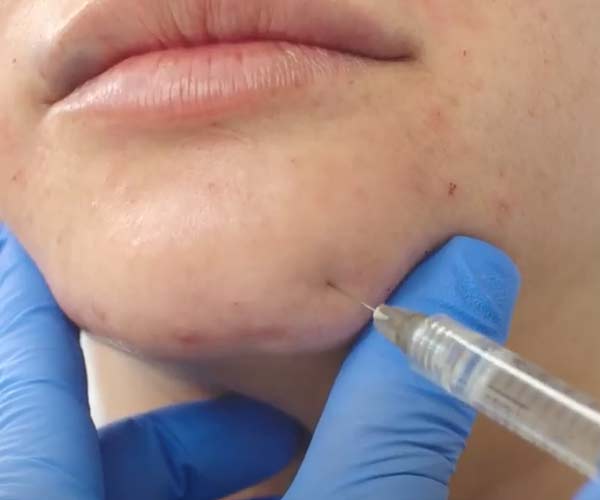
The top dermal filler brands in the United States fall into four families, defined by what the filler is made of: hyaluronic acid fillers (Juvéderm®, Restylane®, the RHA® Collection, Belotero® and Revanesse® Versa), the calcium hydroxylapatite filler Radiesse®, the poly-L-lactic acid biostimulator Sculptra®, and the semi-permanent PMMA filler Bellafill®. All are approved by the U.S. Food and Drug Administration for specific facial indications; which one an injector chooses depends on the area, the depth, how long the result should last and whether it needs to be reversible.
This guide explains each family, the brands within it and what they are typically used for, so you can have an informed conversation with your provider. Pricing varies by product and market; our dermal filler price guide covers costs.
Hyaluronic Acid (HA) Fillers
Hyaluronic acid is a sugar molecule naturally found in skin. HA fillers are smooth gels that add volume, smooth lines and define features. They are by far the most widely used fillers because results are immediate, they typically last 6 to 18 months depending on the product and area, and they are reversible: hyaluronidase dissolves HA filler within about a day if correction is needed. Each brand offers a range of gels from soft (fine lines, lips) to firm (cheeks, chin, jawline).
Juvéderm® (Allergan Aesthetics / AbbVie)
The largest filler family in the U.S. market. Juvéderm Voluma® XC is approved for cheek augmentation and chin; Vollure® XC for nasolabial folds; Volbella® XC for lips and under-eye hollows; Volux® XC for jawline definition; Ultra and Ultra Plus XC for lips and folds. SkinVive® by Juvéderm is a thin HA microdroplet injectable approved to improve cheek skin smoothness rather than add volume.
Restylane® (Galderma)
The original HA filler brand in the U.S., now a full range: Restylane Lyft for cheeks and hands, Restylane Kysse for lips, Restylane Defyne and Refyne for folds that need flexibility, Restylane Contour for cheeks, Restylane Eyelight for under-eye hollows, and Restylane-L for lips and lines.
RHA® Collection (Revance)
Resilient hyaluronic acid fillers designed to flex with facial movement, making them popular for dynamic areas such as the lower face and around the mouth. RHA 2, 3 and 4 are approved for moderate to severe wrinkles and folds; RHA Redensity is approved for perioral (lip) lines.
Belotero® Balance (Merz)
A soft, highly integrating HA gel used for fine lines and superficial placement, including vertical lip lines and under-eye areas where firmer gels can show.
Revanesse® Versa (Prollenium)
An HA filler approved for nasolabial folds and lips, noted for a smooth, uniform gel and lower reported swelling in company data.
Calcium Hydroxylapatite: Radiesse®
Radiesse (Merz) is made of calcium hydroxylapatite microspheres, the same mineral found in bone, suspended in a gel. It provides immediate volume and then stimulates collagen as the gel is absorbed, with results that commonly last 12 to 18 months. It is approved for moderate to severe facial folds, for the hands (the first filler approved for hand rejuvenation), and in diluted form is widely used off-label for skin tightening on the neck, chest and body. It is firmer than HA fillers, suits the jawline, chin and cheeks, and is not reversible with hyaluronidase, which makes injector experience especially important.
¿Listo para ponerlo en práctica?
Descubra los cursos de capacitación en estética e inyectables de Empire, prácticos y acreditados con CME: pacientes reales, cuerpo docente experto y mentoría continua.
Poly-L-Lactic Acid: Sculptra®
Sculptra (Galderma) is a biostimulator rather than a classic filler. Poly-L-lactic acid microparticles trigger the body to build its own collagen over several months. Results develop gradually across two or three sessions spaced weeks apart and can last two years or more. It is approved for facial folds and wrinkles and for cheek volume, and is often used for diffuse volume loss in the temples and mid-face, as well as off-label for the buttocks and body. It is not reversible, and nodules are a known risk if it is not reconstituted and massaged correctly.
PMMA: Bellafill®
Bellafill (Suneva) combines polymethylmethacrylate microspheres with bovine collagen. The collagen gives immediate correction while the PMMA spheres remain permanently and support long-term collagen. It is approved for nasolabial folds and for moderate to severe atrophic acne scars, with studies showing results lasting five years. Because it is permanent and cannot be dissolved, it requires a skin test for collagen allergy beforehand and is reserved for patients and areas where permanence is appropriate. It is not approved for the lips, where migration and nodules are serious concerns with permanent products.
Fillers to Avoid
Liquid injectable silicone is not FDA-approved for cosmetic injection into the face or body, and the FDA has warned against it because of migration, chronic inflammation and disfigurement. Unapproved fillers purchased online or injected in non-medical settings carry the same risks plus the possibility of counterfeit product. Fillers should be purchased by licensed providers through authorized U.S. distributors only.
How Injectors Choose a Filler
- Area and depth: firm, high-lift gels for cheeks, chin and jaw; soft, flexible gels for lips and fine lines; thin products for superficial lines and under-eyes.
- Movement: flexible HA products (Restylane Defyne/Refyne, RHA) for areas that move constantly.
- Longevity vs. reversibility: HA fillers trade shorter duration for the safety of being dissolvable; Radiesse, Sculptra and Bellafill last longer but cannot be undone.
- Goal: immediate volume (HA, Radiesse), gradual collagen building (Sculptra, Radiesse), or skin quality (SkinVive, hyperdilute Radiesse).
- Patient history: prior fillers, allergies, autoimmune conditions and medications all influence product choice.
Preguntas frecuentes
What is the most popular dermal filler brand?
Juvéderm and Restylane are the two most widely used filler families in the United States, both hyaluronic acid based with products for nearly every facial area.
Which dermal filler lasts the longest?
Bellafill is permanent, with studies showing results at five years. Among non-permanent options, Sculptra typically lasts two years or more and Radiesse 12 to 18 months. Most HA fillers last 6 to 18 months depending on the product and area.
Which filler is safest?
All FDA-approved fillers have good safety records in trained hands. Hyaluronic acid fillers have the added safety of being reversible with hyaluronidase, which is why they are the standard choice for lips and for first-time patients.
Is Juvéderm or Restylane better?
Neither is better across the board. Both offer a range of gels, and experienced injectors choose specific products from either line based on the area, the patient's tissue and the desired feel of the result.
For Providers: Product Knowledge Is Half the Skill
Matching gel properties to anatomy and treatment goals is central to good filler outcomes and to avoiding complications. Empire Medical Training's hands-on Dermal Filler Training and Facial Contouring with Sculptra and Radiesse courses cover product selection, injection technique and complication management for physicians, nurses, dentists and other licensed healthcare professionals.

 ¡Reclame su premio!