







Almost everyone has slightly uneven lips. A fuller lower lip than upper lip is normal, and small left-to-right differences are part of every face. When the asymmetry bothers you, the fix depends on its cause: differences in volume respond well to lip filler, differences in how the lips move respond to small doses of botulinum toxin or, in some cases, to retraining, and makeup can balance either one in minutes. Here is how to figure out which kind of unevenness you have and what actually works for it.
What Makes Lips Uneven?
- Genetics. Lip shape, border definition and the size ratio between upper and lower lip are inherited. Many people have one side of the upper lip's Cupid's bow higher than the other, or one corner of the mouth that sits lower.
- Aging. Lips lose volume and definition over time, and they rarely lose it symmetrically. Years of sun exposure or smoking accelerate thinning and vertical lines, often more on one side.
- Muscle habits. Chewing on one side, a habitual crooked smile, or speaking patterns can make one side of the mouth more active and the resting position asymmetric.
- Dental and jaw structure. Tooth position and bite affect how the lips rest and move.
- Injury or surgery. Scars from cuts, piercings or cold sores can tether the lip border.
- Nerve conditions. Bell's palsy and other facial nerve problems weaken one side of the face, including the mouth. New asymmetry that appears suddenly needs a medical evaluation first, not a cosmetic one.
- Previous treatments. Unevenly placed filler, or neurotoxin that affected a lip muscle, can create or worsen asymmetry. See our guide to a crooked smile after Botox.
Step One: Static or Dynamic?
Look in a mirror at rest, then smile, then say "ooh." If the unevenness is there with your face completely relaxed, it is static, which usually means a volume or structural difference. If the lips look balanced at rest but go crooked when you smile or speak, it is dynamic, which means a muscle on one side is pulling harder. Many people have a little of both. The distinction decides the treatment.
Cómo corregir la asimetría de los labios
Makeup (immediate, temporary)
A lip liner one shade close to your natural color, drawn slightly outside the border on the thinner side and exactly on the border on the fuller side, evens the outline. Fill with lipstick, then add a touch of gloss or a lighter shade to the center of the thinner lip to add visual volume. Matte dark colors emphasize differences; satin and medium tones hide them. Semi-permanent lip blush tattooing can do the same job for one to three years, but it is harder to adjust if your preferences or your lips change.
Lip exercises (free, modest effect)
Exercises cannot add volume, but they can help with mild dynamic asymmetry from muscle habits, and they are harmless. Practice smiling evenly in a mirror, hold a pencil horizontally between your lips for 30 seconds, and alternate puckering and wide smiling for a minute or two daily. Expect subtle improvement over weeks, not a transformation. Our article on lip exercises covers what they can and cannot do.
Hyaluronic acid lip filler (the standard treatment for volume differences)
For static asymmetry, filler is the most predictable fix. An experienced injector places small amounts of hyaluronic acid gel exactly where volume is missing: a flattened section of the upper lip, a lower corner, an uneven Cupid's bow or a border that fades on one side. Correcting asymmetry often takes far less product than a full lip augmentation, sometimes a fraction of a syringe.
Results appear immediately (allowing a few days for swelling), last roughly six to twelve months in the lips, and are reversible: hyaluronidase dissolves hyaluronic acid filler within a day if you dislike the result. That reversibility is why HA fillers are the first choice for lips. Risks include bruising, swelling, lumps and, rarely, injection into a blood vessel, which is why the injector's anatomical training matters more than the brand of filler. See our guide to lip shapes for what balanced proportions look like.
Botulinum toxin (for movement asymmetry)
If one side of the mouth pulls up or down more than the other when you speak or smile, one to a few units of botulinum toxin in the overactive muscle can balance the movement. A "lip flip," a small dose along the upper lip border, can also even out an upper lip that curls under on one side. Effects last about three to four months. Dosing in the lower face is delicate, and too much causes a stiff or crooked smile, so this should be done by an injector experienced in perioral anatomy.
Surgical options (permanent, for structural causes)
A lip lift shortens the space between nose and upper lip and can be designed to correct an asymmetric Cupid's bow. Scar revision releases tethered tissue after injury. Fat grafting adds long-lasting volume but is less precise and less adjustable than filler. Permanent implants are rarely recommended for asymmetry because they cannot be fine-tuned. Surgery suits patients who have a clear structural cause and have already tried reversible options.
¿Listo para ponerlo en práctica?
Descubra los cursos de capacitación en estética e inyectables de Empire, prácticos y acreditados con CME: pacientes reales, cuerpo docente experto y mentoría continua.
Treating the cause
Asymmetry from dental alignment may improve with orthodontics. Facial nerve weakness needs a physician's diagnosis and treatment plan first; cosmetic treatments come later, if at all.
Choosing a Provider
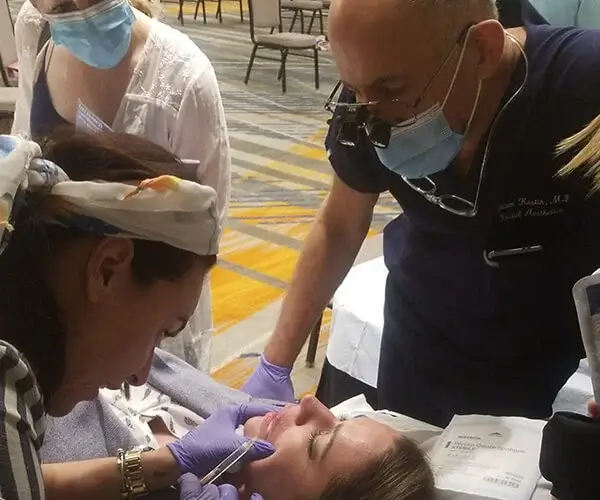
For filler or neurotoxin, look for a licensed medical professional (physician, dentist, nurse practitioner, physician assistant or registered nurse under supervision) who has completed formal, hands-on injectable training and who treats lips regularly. Ask to see before-and-after photos of asymmetry corrections specifically, not just full augmentations, and expect a conversation about what is realistic. Perfect symmetry does not exist in nature; the goal is balance that looks like you.
Preguntas frecuentes
Can uneven lips be fixed without filler?
Mild differences can be balanced with makeup, and movement-related asymmetry can sometimes improve with exercises or a small dose of botulinum toxin. True volume differences need filler or, for structural causes, surgery.
How much filler does it take to fix uneven lips?
Often much less than a standard lip augmentation. Many corrections use a portion of one syringe placed precisely where volume is missing.
Can lip filler make lips uneven?
Yes, if it is placed unevenly or migrates. The advantage of hyaluronic acid filler is that it can be dissolved with hyaluronidase and redone.
Why is one side of my lip higher than the other when I smile?
Usually because the muscles that lift that side of the mouth are stronger or more active. This is dynamic asymmetry and responds to small doses of botulinum toxin in the overactive muscle rather than to filler.
For Providers: Asymmetry Is a Precision Skill
Correcting uneven lips demands assessment at rest and in motion, conservative volumes and a confident command of perioral anatomy. Empire Medical Training's hands-on Dermal Filler Training and Advanced Lip Filler Techniques courses teach lip assessment, injection technique and complication management to physicians, nurses, dentists and other licensed healthcare professionals.



 ¡Reclame su premio!